
Tech
Spanish data centres face new demands to demonstrate that their projects are viable
The government is tightening energy and environmental requirements for facilities with a capacity of over one MW and imposing conditions on projects that have already applied for grid access


The Spanish government is seeking to tighten the environmental and viability criteria for data centres and new projects.
It has granted access and connection rights ... to the electricity grid for data centres totalling more than 12 GW, far higher than what the official forecasts for the roll-out of artificial intelligence (AI) indicated.
The government's strategy estimates that Spain will have 2.5 GW of computing power by 2030, for which it estimates an electricity demand of between 3.5 and 4 GW. The two figures are not directly comparable, as one refers to access rights and the other to projected demand, but they give an idea of the scale of projects that have applied for connection to the grid.
Related story
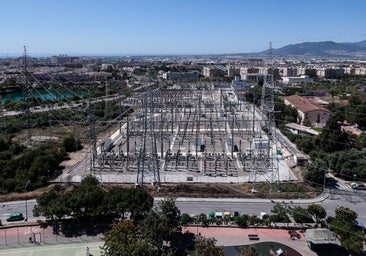
Not all of those megawatts will end up being used for data centres. Having access rights does not mean that a facility has been built, nor does it guarantee that it will consume all the allocated power.
Since 2021, the government has granted more than 12 GW of access and connection rights to this type of facilities, with the majority concentrated in Madrid and Aragon.
On Thursday, the government launched a public consultation, under urgent procedure, on the draft royal decree which tightens the requirements for "data centres" and which may jeopardise some already announced projects.
The requirement likely to have the greatest impact on developers' plans is the energy requirement. Until renewables account for at least 90 per cent of the electricity mix, data centres must cover at least 80 per cent of their demand with new renewable generation. The electricity must come from facilities commissioned within the 18 months prior to the centre becoming operational, either through self-consumption or fixed-term supply contracts.
This is a significant difference for an industry that has managed to secure a much larger share of the network than the demand the Government itself had anticipated for AI. The Ministry notes in the project documentation that the allocation of capacity to data centres may divert network resources needed for other uses, including industry, transport and the electrification of households.
Energy and water efficiency
The draft also introduces new energy and water efficiency requirements for larger facilities. Until the European classification scheme comes into force in August 2027, these facilities will be required to meet transitional limits equivalent to the most stringent levels currently set out in the European draft.
Projects that are already in progress are not automatically cancelled. The draft gives them six months to adapt to the new requirements and demonstrate compliance. This period is reduced to three months for projects awaiting the outcome of a tender for grid access.
Alternatively, developers may waive their rights to access and connection without the corresponding security deposits being forfeited.
The situation varies depending on the project. In Aragon, the Green IT project proposes three centres with 216 MW of computing power. The project documentation estimates a requirement of around 10,000 cubic metres of water per year to meet the routine needs of the three facilities, although it is also considering misting systems for the chillers which, if implemented across all three buildings, would increase demand to 450,000 cubic metres per year.
In Madrid, a Microsoft project in Alcalá de Henares, with 57.6 MW of computing power, anticipates 1,937 cubic metres of water per year and a closed-loop cooling system.
In Talavera de la Reina (Toledo), Meta has opted for a different solution: its data centre campus project incorporates dry-air cooling, designed to consume little or no water, according to the environmental impact statement the regional government of Castilla-La Mancha published.
These three data centres were already up and running before the government put the regulation on the table. They are not equivalent facilities, nor are they necessarily at the same stage of the regulatory process, but they do provide an insight into what lies behind the gigawatts that have been set aside in the grid.
![[]](http://static.vocstatic.com/voc26/latest/assets/images/favicon/surinenglish/apple-touch-icon-57x57.png)