
Energy
Malaga province's electricity generation capacity remains at zero despite government measures to increase it
The availability of supply in the province has not increased following the introduction of new financial quotas for certain guaranteed reserves

Málaga
The lack of electricity capacity in Malaga is holding back the province's development, despite the government's measures to increase it. It does not ... seem like a solution will arrive in the short term.
In recent months, the government has implemented certain measures to encourage the release of electricity. This initiative, however, has not yielded the expected results in the case of Malaga.
In March, a royal decree came into force to replace the financial guarantee, which until then had enabled developers to reserve an electricity supply for a project, with the payment of a monthly fee that increases significantly over time.
Related story
The Ministry for Ecological Transition set a deadline in mid-June for developers who did not wish to be obliged to pay this fee to relinquish the electricity they had reserved.
If they did not do so, they were obliged to join the new monthly payment scheme in order to ensure their electricity supply remained secure. The new monthly payments represent an increase of between 300 per cent and over 1,000 per cent per year in the cash flow required to retain those megawatts, compared with the cost of financing the bank guarantee.
Despite this increased financial burden on certain projects yet to be carried out, the province's electricity capacity remains at zero, as per data from the first days of August, compiled by e-distribución.
This strain on the electricity supply caused by new developments remains unchanged in the data for the last three months. In May, sources at the Ministry for Ecological Transition were confident that the new, economically expanding reserve of grid access capacity "would encourage the relinquishment of allocated rights that are not backed by firm projects", allowing "others to make use of the grid capacity".
However, in the case of Malaga, this effect has not yet materialised because, as expert sources have predicted, in the current energy crisis "those with an electricity reserve hold a treasure", meaning that some people are willing to pay whatever it takes to keep it.
Furthermore, the money from the new instalments is not a non-refundable payment: it is recovered as it is considered an advance payment for access to electricity. That said, failure to pay a single monthly instalment results in the automatic expiry of the reserved permits.
Another factor to bear in mind is that, in principle, this does not concern large-scale residential, public or commercial projects, which reduces the number of cases in which some capacity could be freed up to accommodate new developments. Malaga city council estimates that around 13,000 planned homes are on hold due to a lack of electricity capacity.
"The Spanish government expects that during June a large proportion of the electricity usage rights that have been granted but are not currently being utilised will be released. That, of course, will be great news for the companies that do wish to utilise those rights," government sub-delegate Javier Salas said in May, confident that this approach would resolve the "electricity deficit" within a matter of weeks.
So far, this has not been the case and the solution to this serious problem continues to rely on expanding the infrastructure. The saturation of the electricity transmission grid, which is the result of poor planning, has for over a year led Endesa to issue reports refusing to authorise operations exceeding five megawatts of power (equivalent to around 750 homes).
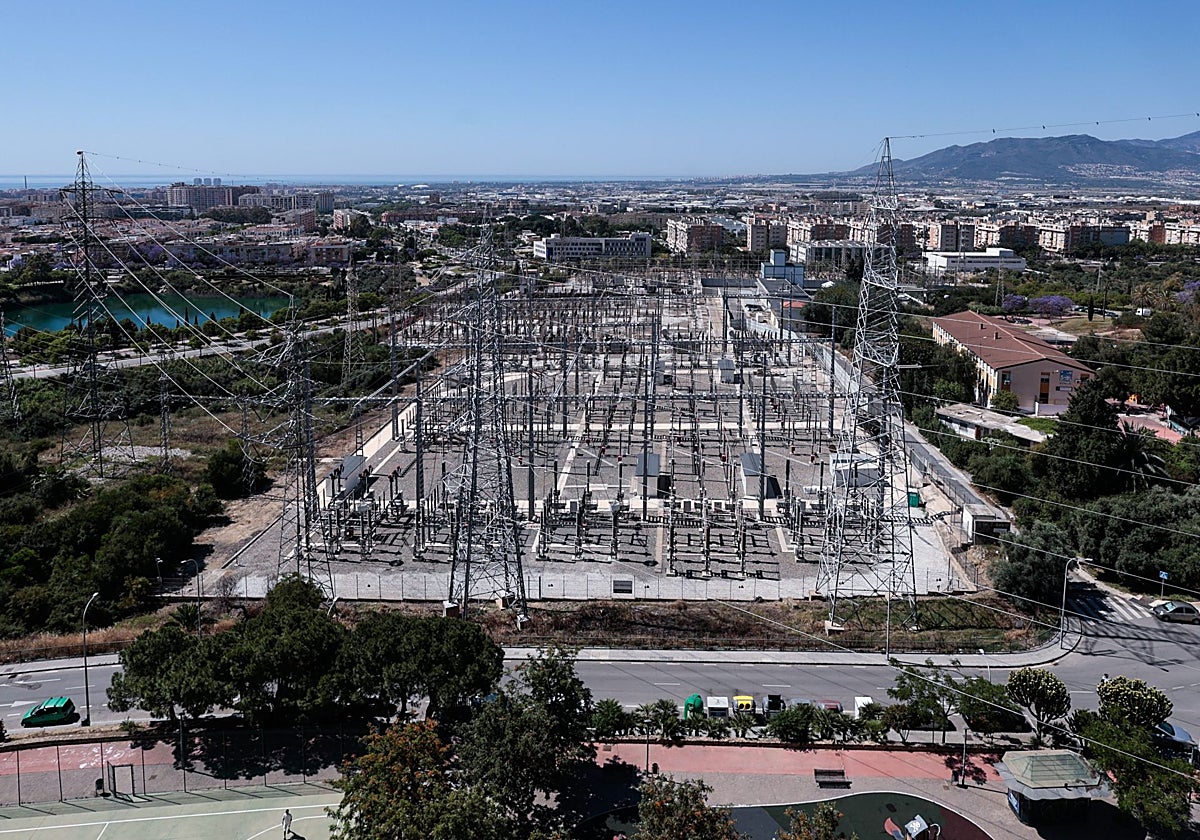
The limit is reduced to one megawatt (around 150 homes) in the case of the Costa del Sol and in some projects in Malaga city, as grid congestion is further exacerbated by delays to two substations.
Infrastructure delays
It does not appear that a definitive solution to this pressing problem is on the horizon. According to expert sources, it could take five years or more to complete the infrastructure works on the high-voltage grid. Five years is the minimum time it usually takes for, for example, an electrical substation to be approved and built.
The proof is that, of the three substations in Red Eléctrica's current five-year plan (2021-2026) for the Costa del Sol, only one, in Marbella, is operational. The other two have not yet been commissioned.
The one in Benahavís has been ready for seven years now but legal disputes involving land owners are holding it up. The one in Mijas is still awaiting environmental permits from the regional government, although the application process has made progress in recent months.
Since last year, a new five-year plan running until 2030 has been under consideration. It is a Red Eléctrica proposal that the government has to approve. The details, however, are not yet known.
![[]](http://static.vocstatic.com/voc26/latest/assets/images/favicon/surinenglish/apple-touch-icon-57x57.png)