
Spain wildfires 2026
Spain faces another heatwave that threatens to undo five days of relentless firefighting efforts
The authorities have extended the evacuation of some 60,000 people in Madrid and Ávila by another day, while firefighteres take advantage of the night to work with conditions that are "not too bad"
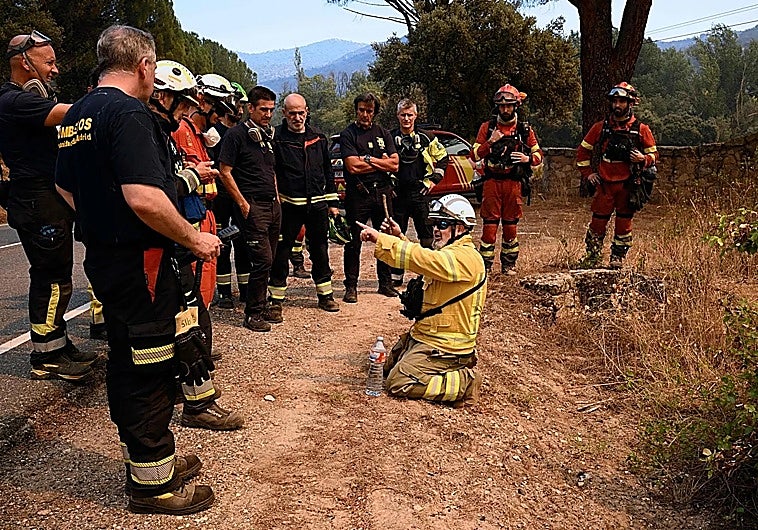

Madrid
While the more than 3,000 workers fighting relentlessly against the spread of the fires in the region of Madrid and the province of Ávila ... were keeping a close eye on wind conditions over the weekend, on Monday their concern shifted to the temperatures.
The warning of a new heatwave starting on Wednesday, which will push temperatures above 40C across much of the country, could make matters even more complex.
Monday's update on the situation at the two major fire hotspots ravaging the centre of mainland Spain did not bring any major news to celebrate. After five full days and nights of relentless firefighting efforts on the ground and from the air, Tuesday could mark a turning point.
Related story

Related story
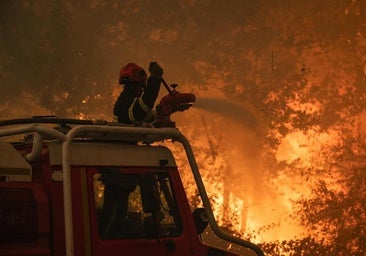
It is time to work against the clock to prevent the heatwave from undoing the progress made so far in containing the flames.
"Today and tomorrow are absolutely crucial days," Interior Minister Fernando Grande-Marlaska said on Monday.
On the first day of the week, the wind was less strong than on previous days, which allowed for a "more proactive" response on the ground, the minister noted. Monday night, which was also more humid, looked "favourable".
A light breeze on Tuesday should provide ideal conditions for the teams to make progress in containing the kilometre-long fire fronts, as well as the most stubborn hotspots in the town of Cebreros, Ávila, in certain parts of the Tiétar Valley and at the San Juan reservoir in Madrid.
Once the heatwave reaches its full intensity on Wednesday, the adverse conditions could undo the work of so many days.
This alone will raise the risk of forest fires to "extreme levels", Aemet meteorological officials warned on Monday. The heat fuels the fire and further dries out the vegetation, in addition to the lack of moisture during the summer months.
The biggest problem lies not just in bringing forest fires such as the one in Ávila under control. Although José Luis Gutiérrez, technical director of firefighting operations for the civil protection plan for forest fire emergencies in Castilla y León, said that the situation was "considerably more favourable than it had been" in previous days, the fire had already gone down in history as the largest in Spanish history.
The real danger lies in the possibility of more forest fires joining the "demonic" current situation, as president of the regional government of Madrid Isabel Díaz Ayuso said on Monday.
This would place even greater strain on the emergency response system than it is already under.
An unprecedented device
The deployment of resources on the Madrid and Ávila fronts is "unprecedented in the country's history": more than 3,000 people, more than 1,000 ground-based resources, 12 forest fire brigades, four helicopters, five ground-based cargo aircraft, 12 amphibious aircraft, three coordination aircraft, one mobile analysis and planning unit and two assessment and advisory teams.
Firefighters from Portugal also joined the effort on Monday afternoon. Just a few weeks ago, Spain offered its own resources to fight fires in Portugal.
They are all working together to bring the outbreaks under control: outbreaks which, in reality, are now effectively just one.
More towns joined the lockdown alert. With Monday's figures, the number of people this historic fire has affected, has so far exceeded 100,000.
The number of people in lockdown who are unable to leave their homes exceeds 30,000, but there are many more people who are unable to return home (63,152).
By the end of the day on Monday, only a small proportion of the evacuees were allowed to return: the residents of nine of Toledo's eleven municipalities.A small group who had been evacuated from a campsite in the El Escorial area were also able to return during the day.
The rest were unable to see the state of their homes, nor could they go to collect belongings. After five nights, fatigue is beginning to take its toll on the spirits of those awaiting news of their homes while staying in the public shelters that provide them with basic meals, beds and psychological support.
Grande-Marlaska urged the evacuees to make one "final effort to be patient" so that the firefighting operations could be as effective as possible during these crucial hours.
He urged people to comply with evacuation orders. In some cases, such as in the town of Zarzalejos, it was necessary to remind residents that they were not allowed to return to the town for the time being.
One of the reasons why so many people have had to evacuate is not so much the fire itself but rather the risk of inhaling smoke.
Road closures
Of the 49 secondary roads that the authorities had closed due to the fires or to facilitate the teams' efforts, only the CM-5006 and the TO-1358 remained closed on Monday.
Traffic authorities, nonetheless, call for caution and recommend avoiding, if possible, travelling through the affected areas.
The Interior Ministry maintains the ban on any type of agricultural activity using machinery in the provinces affected by the fires.
![[]](http://static.vocstatic.com/voc26/latest/assets/images/favicon/surinenglish/apple-touch-icon-57x57.png)