
Wildfires in Spain
More than 88,000 people evacuated or locked down in their homes due to wildfires in Spain
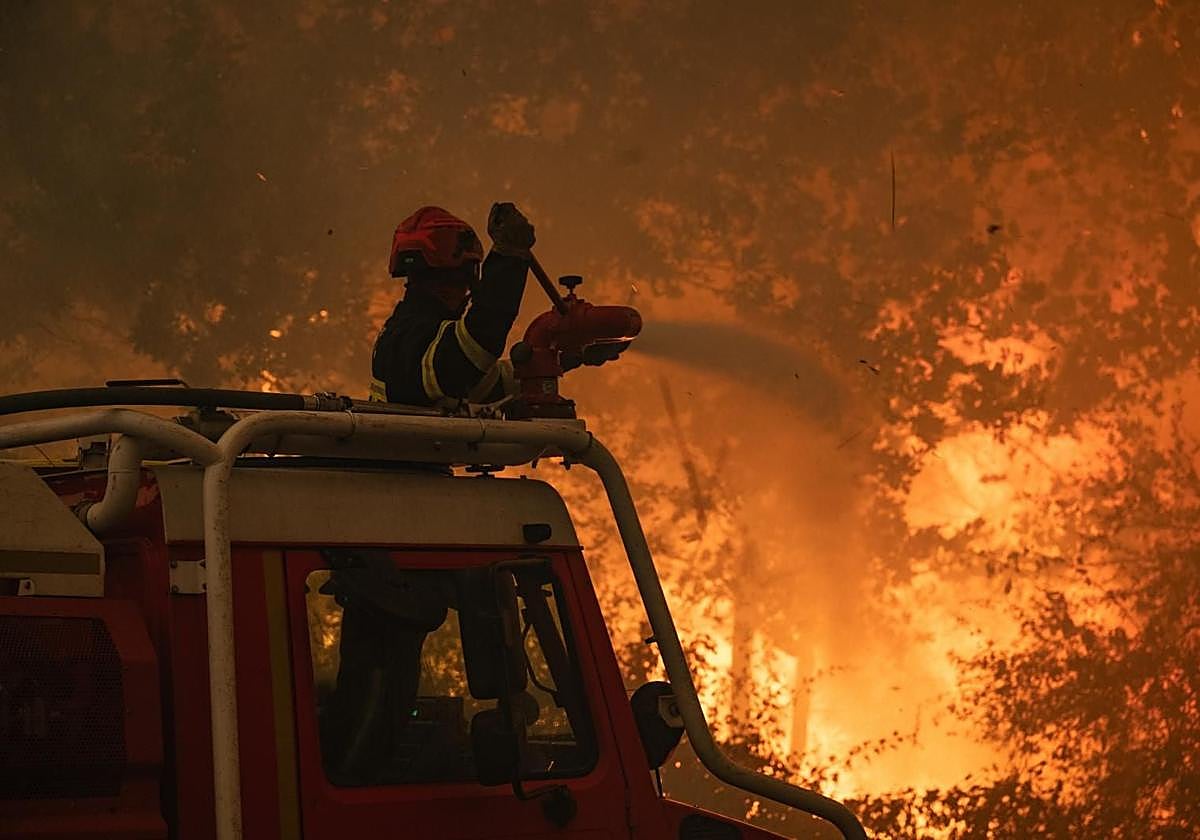
The firefighting operations in Madrid and Ávila involve 2,737 personnel, as well as 426 ground vehicles and 19 aircraft

Madrid
The ferocity of the wildfires affecting the province of Ávila, in Castilla y León, and the region of Madrid led, for the first time in ... Spain’s history, to a national state of emergency being declared on Friday. On Saturday evening the area affected by the state of emergency was extended to Toledo
By Saturday afternoon lockdown orders affected nearly 85,000 people, according to the latest figures provided by the government representative for the region of Madrid, Francisco Martín, and his counterpart in Castilla y León, Nicanor Sen.
In Madrid, by Saturday afternoon some 29,488 people had been evacuated and more than 20,262 told to stay in their homes, while in Ávila the figures stood at around 30,000 people evacuated and 8,000 locked down.
More villages in Ávila were evacuated on Saturday evening.
As for the number of hectares affected, this is now estimated to be around 46,000, according to the latest estimate carried out by the Ministry for Ecological Transition (Miteco).
The fire in Burgohondo, in the province of Ávila, is now believed to have affected some 21,000 hectares and to have a perimeter of 112 kilometres, while the fire in Villa del Prado and San Martín de Valdeiglesias, in the region of Madrid, is now said to have reached 24,000 hectares with a perimeter of 99 kilometres.
Given the seriousness of the situation and in an unprecedented decision, the UME (Spain's military unit for emergencies) ordered a unified command to be set up on Saturday morning to tackle the two fires and speed up decision-making, even though the fires have not yet merged. That had been the main concern throughout Friday.
The early hours of Saturday were difficult but favourable following a drop in temperatures, which gave the firefighters some respite. However, throughout Saturday, the highly changeable wind conditions once again made it difficult to control the flames.
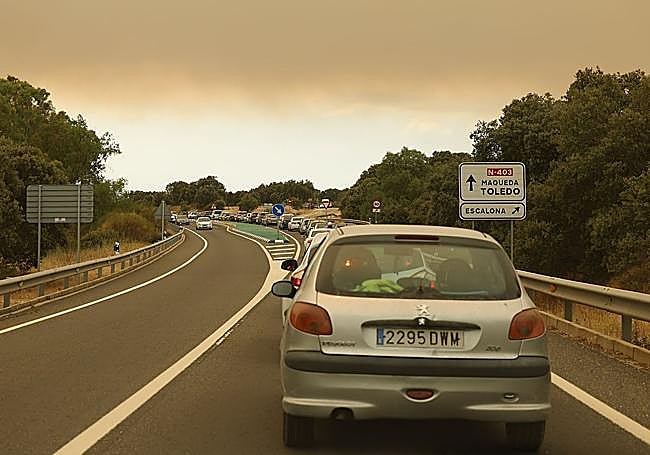
In Ávila, there was great concern over a finger of fire on the southern front that threatened to reach the Tiétar Valley, prompting the emergency coordination centre to evacuate seven municipalities, in addition to the three that had already been evacuated.
In the region of Madrid, the spread of the flames through the western mountain range resulted in eleven municipalities being evacuated and four placed under lockdown. The latest municipalities to be evacuated, joining the list, were Cadalso de los Vidrios, Rozas de Puerto Real and Cenicientos - the small town where the forward command post was located, before it had to be moved to Navalcarnero. Approximately 6,000 residents were heading to seek refuge in Móstoles, Alcorcón and Sevilla la Nueva.
Lieutenant-Colonel Pablo Samaniego of the UME commented in the early afternoonof Saturday that although the two major fires are physically close to one another, “there is still some distance between them”.
“We are working to prevent them from merging, but it is the weather conditions this evening – when the wind gusts reach their peak – that will determine the course of events,” he noted.
Man dies in fire in Valencia
A 78-year-old man has died in a fire in Manises, Valencia, the local town hall has confirmed. It is reported that firefighters found his body in a car in the area of a ravine. Local sources also confirmed that this fire is now under control.
Fire-fighting operation
On Saturday afternoon the operation to tackle the fires affecting the region of Madrid and the province of Ávila involved 2,737 personnel, as well as 426 ground vehicles, 21 aircraft and a comprehensive scientific and civil protection support network. The military emergency unit, UME, has 1,201 personnel and 405 ground vehicles deployed, while the Guardia Civil has added 1,085 officers, 60 vehicles and two helicopters. For its part, the National Police has mobilised 220 officers and Civil Protection has deployed 110 personnel.
The Ministry for Ecological Transition (Miteco) has deployed 103 specialists, organised into four forest fire reinforcement brigades (BRIF), as well as 11 aircraft, eight helicopters and a mobile analysis and planning unit (UMAP).
In addition to this deployment, 18 researchers from the Spanish National Research Council (CSIC) are advising the emergency services on how to manage a fire that is now affecting both Madrid and Ávila. Ten Spanish regions have provided resources, as have Italy, Greece, Portugal and Turkey.
The president of the region of Madrid, Isabel Díaz Ayuso, called on residents to show “understanding and patience”, advising them not to approach the area so as to keep access routes and roads clear, and described the situation as “entirely unprecedented and never seen before”, which could lead to “much worse situations in the coming hours”.
She avoided political confrontation, as did Prime Minister Pedro Sánchez, and insisted that the time to draw conclusions would come once the fire was under control, but she did point out that it was due to a “combination of circumstances” such as the need to “continue clearing the forests” or “prevent villages from being abandoned”.
In any case, “it is not the regional government’s fault that summer arrived in May”, and she highlighted that the region of Madrid is “the region in Europe that makes the most resources and personnel per hectare available to protect its natural heritage”. Ayuso concluded her speech by calling for an analysis of the causes that have led to this situation, to prevent similar incidents from recurring “here or in the rest of the country”.
The effects of the fire in the mountains around Madrid have been felt in the city.
“Air quality in Madrid today is poor, with PM2.5 levels well above those recommended by the WHO,” said Minister for Health Mónica García on her X account, noting that there are airborne particles with a diameter of less than 2.5 micrometres as a result of the fires.
The health minister recommended wearing FFP2/95 face masks and goggles to protect the eyes when leaving the house in areas close to the fires, which include virtually the whole of the region of Madrid.
“Seek medical attention if you experience breathing difficulties, chest pain or shortness of breath. Pay particular attention to vulnerable people around you. Stay informed through official sources and follow the instructions of the emergency services,” the minister concluded.
Subsequently, it was the government that issued an appeal to the public, also via X: “Avoid exposure, take special care to protect the most vulnerable, and if you experience any breathing difficulties or feel unwell, seek medical attention.”
One of the few pieces of good news was that, so far on Saturday afternoon, no one had been seriously injured in the Ávila or Madrid fires. The region of Madrid reported in a statement that Summa 112 had treated 80 patients. Of these 80 people, 65 were discharged at the scene and 15 were taken to public hospitals, all with minor injuries. Between 6pm on Friday and 8am on Saturday, emergency teams attended to a further 18 people, including a baby and several firefighters, none of whom had serious injuries.
![[]](http://static.vocstatic.com/voc26/latest/assets/images/favicon/surinenglish/apple-touch-icon-57x57.png)