
Population
Workplace fatalities on the rise in Malaga as 23 lose their lives in 2025
There were 61 accidents per day on average in 2025, with 263 workers seriously injured
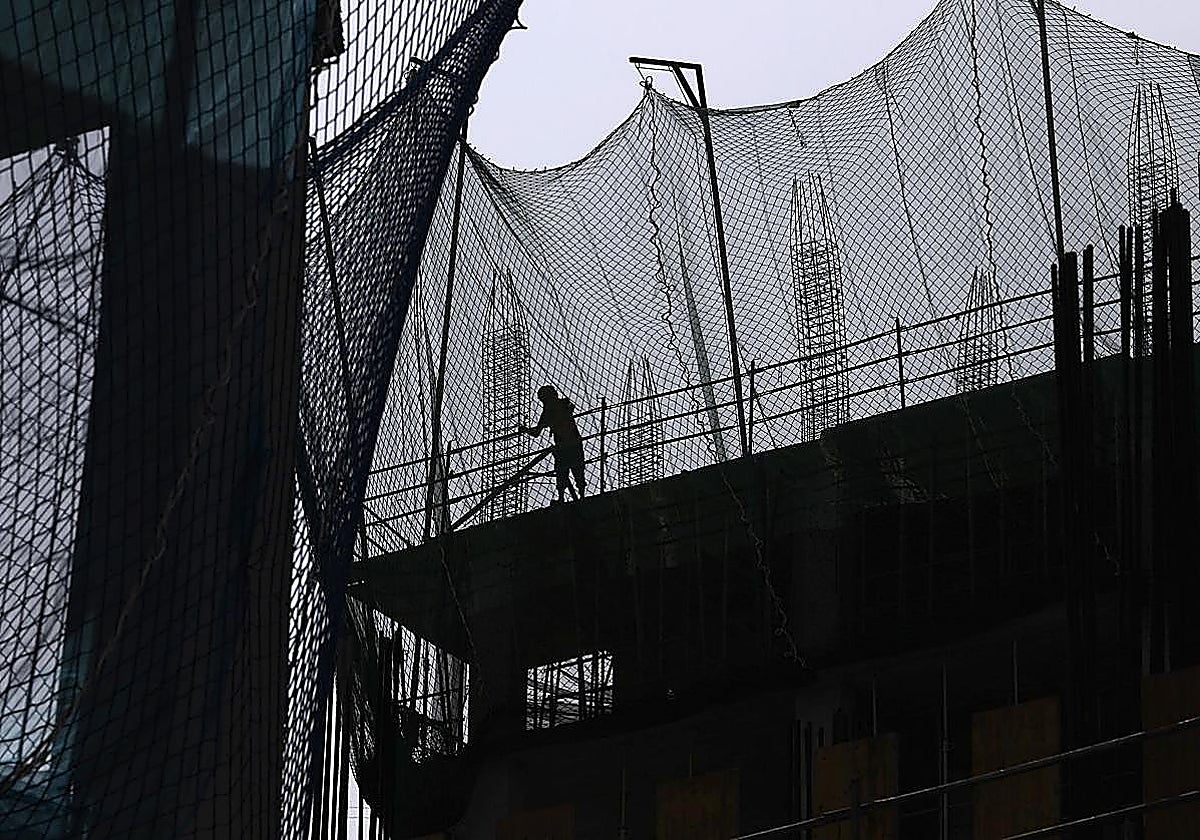

Workplace accidents led to a rise in the number of fatalities in the province of Malaga last year, when 23 people lost their lives either at work or on the way to and from work.
This makes Malaga the second Andalusian province with the highest number of fatal accidents, only behind Seville (33).
The daily average of work-related accidents in the province last year was 61, which led to a total of 22,314 accidents. All of this data comes from the regional ministry of labour, which clarifies that 19 of the aforementioned 23 fatal accidents occurred during the working day, while the other four happened during commute times.
Last year was the second consecutive year in which workplace deaths increased (17 in 2023 and 20 in 2024). Just last week, one worker died and another was seriously injured after the collapse of a wall at a construction site in the Ronda district.
Malaga's records list two years with a particularly high number of work-related deaths: 2022 with 30 and 2007 with 44.
According to regional delegate for employment Carmen Sánchez, there was a rise of 1.1 per cent in work-related accidents in Malaga province last year. However, the rise is more striking in absolute numbers than in relative terms, considering that business activity has increased by 3.5 per cent in a province as dynamic as Malaga.
Related story

Although the majority of accidents were of a minor nature, there were also 263 seriously injured workers, nine more than in 2024. The total number of accidents during the working hours, however, experienced a decrease last year: 18,041, compared to 18,141 in 2024 and 18,171 in 2023.
In 2025, a total of 4,273 accidents occurred on the way to and from work, 360 more than in 2024. These also resulted in four fatalities, as well as 79 serious injuries.
The sectors with the highest number of accidents
The services sector continues leading the way in terms of fatal accidents at work in Malaga, with eight deaths during the working day and three during commute times. Construction follows with nine deaths at work, followed by industry, with one death at the workplace and another 'in itinere'; and finally, agriculture, with one death at the workplace.
As secretary for occupational health of the CCOO union in Malaga Juan Francisco Girona has said, the construction sector saw the largest increase in workplace fatalities last year.
Regarding deaths among service sector professionals, the union points out that a significant proportion are related to heart attacks or strokes, as well as commuting. On this last point, the CCOO highlights the need for transport plans, given that these journeys can exacerbate the stress that workers already experience.
22,314
was the total number of work-related accidents in the province of Malaga in 2025
According to statistics, this sector has the highest number of commuting accidents, with 3,611 cases. This means that service workers accounted for 84 per cent of accidents occurring during commutes. On the other hand, the report explains that the decrease in agricultural fatalities is due to the increased use of industrial machinery for fieldwork, which also tends to lead to a reduction in hiring.
Director of prevention and corporate social responsibility Juan Carlos Rubio says that beyond the complexity of the data, the reality of workplace accidents is due to the province's economic structure, where the service sector, and specifically tourism, as well as the self-employed, bear the greatest burden. This would explain why it is the sector with the most accidents, although the construction sector continues accounting for the most severe cases.
In terms of sex, men accounted for 21 deaths, compared to two fatalities among women.
In addition, according to the statistics, the municipalities that grieved the deaths of workers were Alhaurín de la Torre (3), Archidona (1), Cártama (1), Coín (1), Estepona (1), Malaga city (10), Marbella (2), Rincón de la Victoria (1) and Vélez-Málaga (4).
Resources
According to the CCOO occupational health expert, the persistent problem is that "preventive action is still not truly effective". Francisco Girona says that companies "still fail to provide them [workers] with the necessary resources" to perform their jobs safely.
He also holds that the authorities' actions are more focused on sanctions through inspections than on prevention, which, according to Girona, is compounded by the fact that the number of inspectors is small. "They are taking corrective and punitive measures, but that happens when it's already too late. All of this leads to a situation where we see serious and fatal accidents on the rise again," he says.
Prevention as 'an investment'
Carmen Sánchez says that companies must treat prevention "as an investment" and not as an expense. According to her, it is also the job of institutions to improve the plans in this area.
Sánchez highlights the actions of the regional government, which launched the strategic health and safety plan at the end of 2024, with the aim of reducing accidents at work.
According to Sánchez, the accident rate in Andalucía has reduced by 5.4 per cent. According to the analysis of UMA expert Juan Carlos Rubio, there are aspects which are key to reducing occupational risks. One of them has to do with the subcontracting chain, which involves coordination between the large companies and the lower links. "The downstream chain is usually the one that is really exposed to risk," Rubio says. He adds that current legislation is more designed for compliance by large corporations, while prevention programmes in micro-companies today are more of a "formal compliance" and excessively documented, which does not guarantee effective safety.
![[]](http://static.vocstatic.com/voc26/latest/assets/images/favicon/surinenglish/apple-touch-icon-57x57.png)