
Rail transport
When will Malaga-Madrid high-speed rail services resume?
Initial estimates suggest track damaged in the Urda crash could be repaired within ten days from 20 November, though strict judicial conditions may push reopening into December
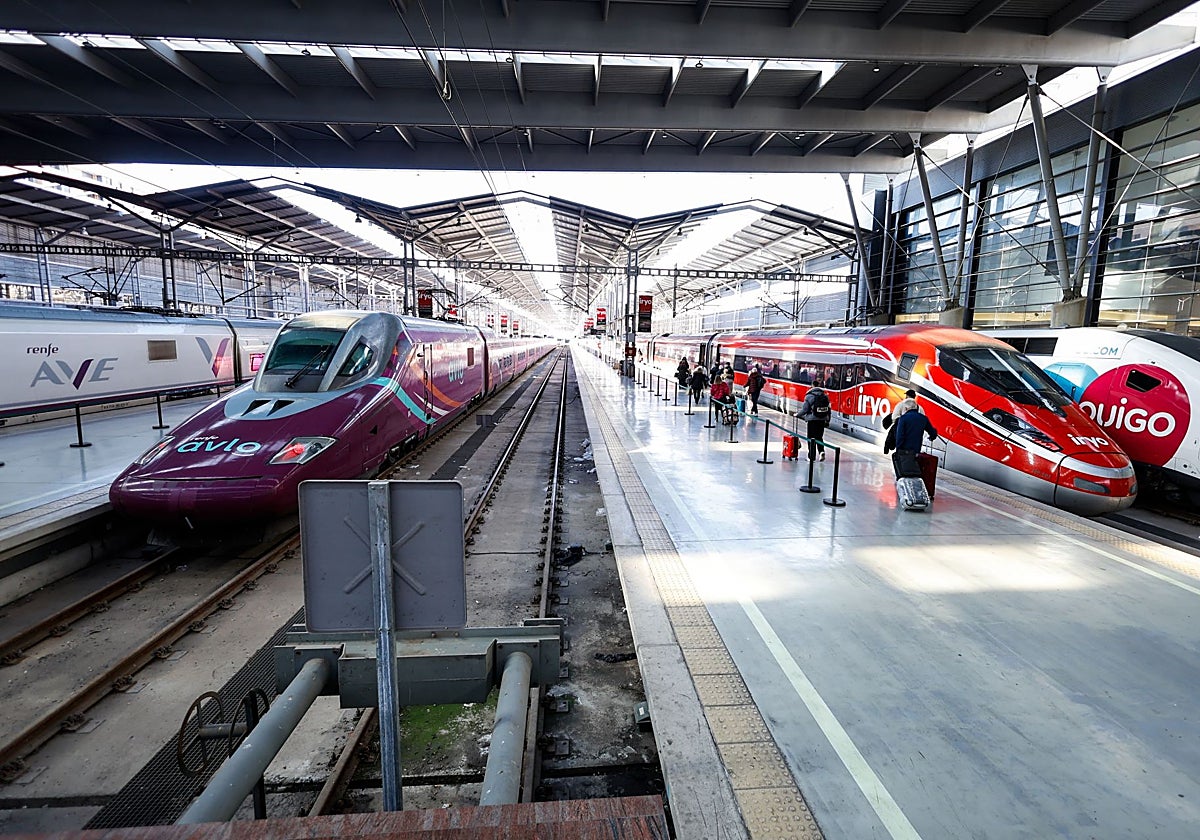

Málaga
The high-speed rail service between Malaga and Madrid has remained suspended since the tragic accident in Urda on 28 October. Since then, those ... who need to travel by train have had to resort to travelling by plane, car or bus.
This Thursday, 19 November, the judge in charge of the case gave infrastructure company Adif permission to begin work on replacing the damaged track. The resumption of rail services is one step closer, but how close? Well, while the state body has yet to announce an official date, there are several indicators that give us a rough idea.
The first is the announcement former Minister of Transport Óscar Puente made on 3 November. He said that the high-speed line between Madrid and Andalucía would reopen within a maximum of ten calendar days of the judge authorising the repair work.
Sources have told Sur that Adif still believes it is possible to restore the service within ten days, starting this Friday. However, a spokesperson preferred not to give a timeframe at this stage: "We only received authorisation a few hours ago to begin repairs. We need to start carrying out the initial work on site and see how it progresses before we can provide an accurate estimate."
The material damage to the tracks is actually relatively limited in scope and much less extensive than that at Adamuz. Adif workers will have to replace just over 40 metres of track, overhead line and signalling and safety systems, although the work area will extend to 400 metres. Under normal working conditions, this would take no longer than the ten days mentioned.
Given this timeframe, it would be reasonable to expect trains to resume service on 29 November (the day of the general election) or shortly afterwards, in the first week of December, even before the long bank holiday weekend (5-8 December).
Judicial supervision of the works
However, this scenario seems rather unlikely at the moment. This is because judge Ortiz Tiliakou has issued an order allowing Adif to begin the reconstruction and repair work in the area where Renfe's AVE train collided with an Iryo train from behind, but subject to strict conditions before, during and after the work.
The judge has imposed a series of requirements on Adif that are likely to delay the work. Even before repair work begins, the prosecution and the investigating judge have ordered Adif to carry out a topographical survey and provide a complete list of all damaged components, in the form of an inventory.
Furthermore, upon completion of the works, Adif must submit a precise list of every component that has been repaired or replaced, to be included in the case file.
Control over the work will be extremely tight, as can be inferred from the judge's orders. Consequently, sources believe hat these conditions will prolong the repair times.
At this stage, the date for the resumption of high-speed services is becoming even more uncertain, as Adif is still unable to estimate how long it will take to complete the administrative procedures. If the deadline for compliance were 15 days, there would still be time to reopen the service before the December bank holiday weekend. However, it could also take place during this same period, on Sunday, 6 December, for example, when passenger demand would be lower.
In the worst-case scenario, rail services could resume during the week of 7 December. Renfe is still sticking to its initial forecast and is not selling tickets for the AVE and Avlo services until the Sunday of that week, 13 December.
If Adif finishes the work earlier, Renfe will bring the sale of tickets forward. The private operators, Iryo and Ouigo, have followed Renfe's lead and have also set 13 December as the date for the time being.
Different operations model
When high-speed services resume, they will operate differently from how they did before the accident. The Ministry of Transport has planned for Adif to make changes to the train paths, meaning fewer trains will run than before. Service frequencies will be reduced considerably, at least until the roll-out of the ERTMS digital signalling and safety system is complete.
To compensate for the loss of services and seats, the proposal put forward to operators is that each service should be operated by double-unit trains (two trains coupled together), which would double their capacity, up to a maximum of 700 seats in the case of Renfe's S-112 trains, provided that passenger demand warrants it, on days of peak demand (weekends, public holidays, etc.).
