
Environment
Malaga province nighttime temperatures no longer fall below 20C in summer
Almost every night in June, July, August and so far this September has been 'tropical' or 'torrid', with a high of 28.5C

Málaga
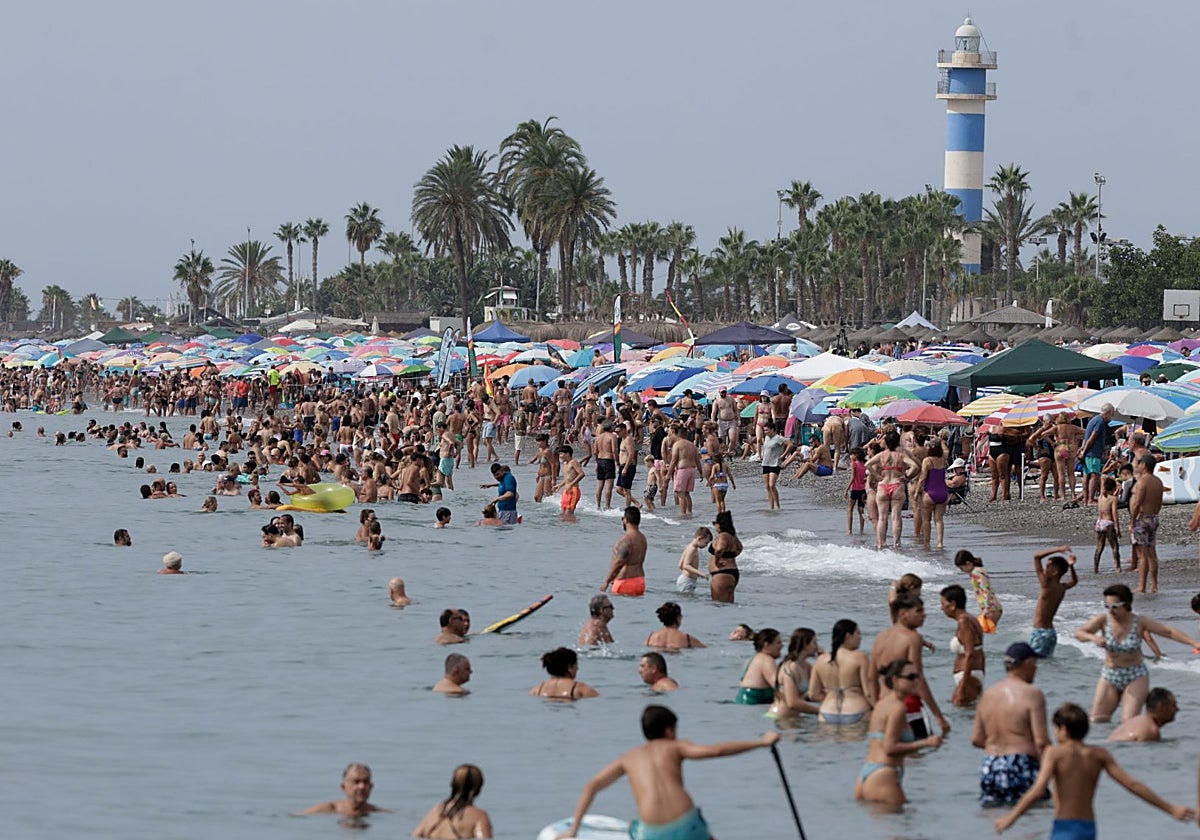
Summer is drawing to a close (it will officially end on 23 September), but temperatures have hardly changed over the past month. This is particularly ... true of nighttime temperatures, which remain unseasonably high, forcing people to continue using air conditioning and fans to help them get to sleep, especially in Malaga city and many parts of the Costa del Sol.
Nighttime temperatures rarely dropped below 20C during the Malaga summer. Virtually every night in June, July, August and so far in September has been classed as 'tropical' (minimum of 20C) or 'torrid' (minimum of 25C), according to data local weather expert José Luis Escudero has compiled.
Out of the 30 nights in June, 24 were tropical. In July, out of 31, 29 were tropical and one was torrid. In August (31 days), there were 20 tropical and six torrid nights. So far this month, up to Monday, 14 September, the temperature has remained at or above 20C every night.

Escudero has said that the worst night this summer was 4 August, when the temperature didn't go below 28.5C during the night.
Over the last 14 nights, not only have minimum temperatures failed to fall below 20C, but they have even reached 23-24C, due to a spell of land breeze.
The forecasts of Aemet (the state meteorological agency) for the rest of the week are not optimistic. At least until Sunday, 20 September, temperatures every night except Friday will remain in the 20-22C range.
"If this continues throughout the second half of the month, I very much fear that September could end up being one of the warmest on record," José Luis Escudero warned.
Unrestrained highs
The situation with maximum temperatures is similar, although this time the psychological threshold is 30C. Data from Aemet shows that there was only one day in July below 30C, with 29.7C.
In August, just one day recorded 29.9C, while the rest of the month held above 30C. Worse still, in the first two weeks of September, the 30C threshold was exceeded on eight occasions.
"As the contrast is so stark, people are now saying that it's more comfortable. We had a terrible time in August because of the very high relative humidity, but it's still hot in September," Escudero explained.
He also pointed to the high sea temperature, which reached 24.6C on Sunday and was expected to be around 25C on Monday. This, combined with the easterly wind, may bring back the stifling heat that has characterised the past few weeks.
Escudero expects no changes in the weather in Malaga province in the short term. "We'll continue with much the same pattern as in recent days: stable conditions, warmer than usual for this time of year and very little chance of rain. In fact, I don't expect any rainfall this week and, if the forecasts remain as they are now, we probably won't have any in the first few days of next week either," the weather expert said.
The province, however, is not expecting any further heatwaves in the short term. "With an easterly wind, maximum temperatures along the coast should generally remain below 29C, which will help reduce the humidity, although we'll still be talking about summer weather for a few more days."
Heat and falling branches
Extreme heat, particularly at night, is also one of the factors behind the incidents of falling tree branches that raised concerns among the residents of Malaga city between August and September.
Environment councillor Penélope Gómez said that these kinds of incidents are due to what botanists call "falling branch syndrome", which is the shedding of branches by certain species when they suffer from heat and drought.
Malaga city experienced 80 tropical nights over the summer, more than 50 of which were consecutive. "This puts the trees under severe water stress and causes some branches to break," Gómez said.
The problem is that, during previous inspections, those very same branches appeared green, so there was no indication that they were going to fall as a result of this natural defence mechanism, which several species activate, particularly eucalyptus trees.
![[]](http://static.vocstatic.com/voc26/latest/assets/images/favicon/surinenglish/apple-touch-icon-57x57.png)