
Transport
Two out of every three requests for a taxi or private hire vehicle on the Costa del Sol go unanswered
A study by the Pablo de Olavide university claims that the province of Malaga has the most serious problems with on-demand transport in Spain

Málaga
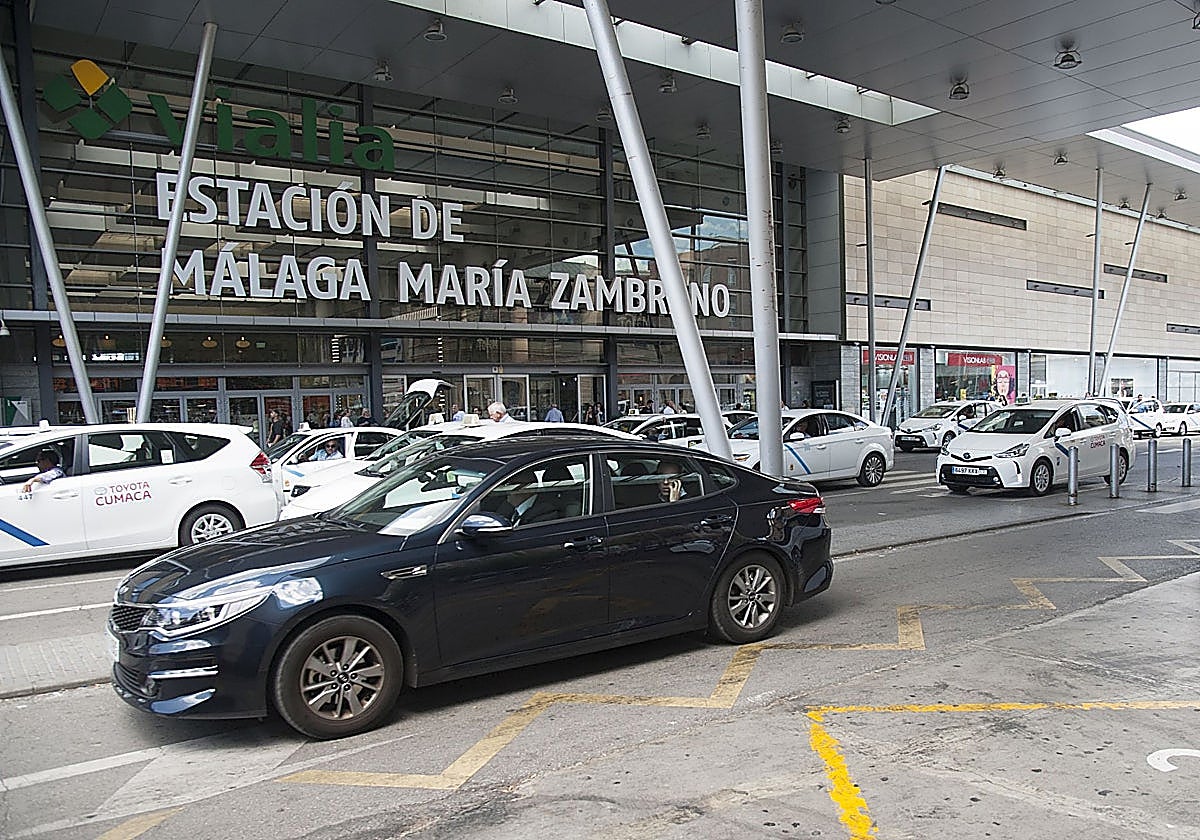
It's no secret that it's difficult to get a taxi or a private hire vehicle on the Costa del Sol, especially during the ... summer. Now, the Pablo de Olavide university has put figures to this reality. The report, 'The cost of scarcity: private hire vehicles, taxis and competition in urban mobility in Andalucía’, reveals a concerning picture of on-demand transport across Andalucía, with the most serious problems concentrated in three locations, in order of severity: Marbella, Malaga and Seville. The study was carried out by economist Manuel Alejandro Hidalgo Pérez, a professor at the university, in collaboration with the confederation of businesses of Seville.
To assess the system’s capacity, the research draws on a daily series of 1,219 days’ worth of operational indicators for the sector, covering the period from January 2023 to May 2026. The results reveal a severe imbalance: out of around ten million requests recorded, almost 6.5 million resulted in an actual journey. This means that 3.5 million requests went unfulfilled due to a lack of vehicles, highlighting a situation of acute scarcity in certain markets and at times of peak demand.
67.2%
unmet requests in Marbella
The situation on the Costa del Sol, and particularly in Marbella, reveals the most alarming figures in Spain, given that in this municipality, unmet requests account for 67.2 per cent of the total, meaning that approximately two out of every three requests go unmet
The situation on the Costa del Sol – and particularly in Marbella – reveals the most alarming figures in Spain, given that in this municipality, unmet requests account for 67.2 per cent of the total. In other words, two out of every three requests go unmet. The municipality currently has 347 taxi licences, according to figures provided by the town hall.
Related story
-
Traffic
José Carlos García
By a wide margin, the second location with the worst ratio in Andalucía is Malaga, where 35.6 per cent of requests go unmet, thereby affecting one in three users. This figure is close to the 34.5 per cent recorded in Seville.
Andalucía, a chronic deficit
A comparative analysis at national and international level confirms that Andalucía suffers from a chronic shortage of supply. Based on an aggregate indicator of taxi and private hire vehicle licences per thousand inhabitants, Dublin leads the way in terms of supply, with 30.8 vehicles. Paris has 23.8; Athens, 22.4; and Madrid is at the EU median, with 7.3. Below this are Rome and the province of Malaga, with 3.2; Berlin with 2.7; and Seville, with 1.37.
3.2
taxi and private hire licences per thousand inhabitants
Based on an aggregate indicator of taxi and private hire vehicle licences per thousand inhabitants, Dublin leads the European rankings with 30.8 vehicles. Paris has 23.8; Athens, 22.4; and Madrid is the European median, with 7.3. Below this are Rome and the province of Malaga, with 3.2; Berlin with 2.7; and Seville, with 1.37
The study also analyses the impact of the time lost by residents and visitors while waiting for a taxi or private hire vehicle at Andalusian airports. The shortage of these transport options leads to long waiting times and the need to seek out less convenient and slower alternatives. This translates into economic losses of 27 million euros a year at Andalusian airports alone. “This figure could be as high as 300 million a year if all tourist journeys in Andalucía were taken into account.”
The report was drawn up in Seville and, consequently, its author focuses on the problem facing the Andalusian capital. Thus, the collapse in service capacity is evident at major events such as the feria, where the most critical moment occurred on the first day of 2024, with a success rate of just 29.6 per cent, leaving almost seven out of ten users without service.
Official metrics are unable to detect this problem, as what is usually measured is the average waiting time, which takes into account completed journeys, even if they are delayed, but fails to reveal that cancellations due to "long waits" have risen from 14 - 21 per cent to currently account for 50 - 56 per cent of the total. Consequently, the researcher advocates moving beyond the regulatory debate on the ratio between private hire licences and taxis.
The old paradigm merely describes the distribution of supply, but does not take into account whether there is sufficient supply to meet the population’s actual needs. "The evidence compels a shift in the regulatory question: from how many private hire vehicles are surplus to requirements, to the cost of, and who bears the consequences when, there is an insufficient supply of on-demand vehicles across the territory?"
The document concludes that all of this has a negative impact on residential consumers and visitors, who bear the cost through higher tariffs, long waiting times and services not provided. The national commission for markets and competition (CNMC) has estimated losses of up to 60 million euros annually in Barcelona and 17.9 million in Malaga.
Insufficient supply
In addition to the above, the beBartlet public affairs consultancy has presented the findings of a survey on public perceptions of transport in Andalucía. The results show that the current limitations on the availability of taxis and private hire vehicles are causing recurring transport difficulties in the region’s major cities.
Consequently, only a third of the population of Andalucía considers that the current number of licences in their city is sufficient to meet demand. The Spanish average is 39 per cent, which is a far cry from the 56 per cent approval rate in Madrid. The shortage of supply is particularly noticeable during high-attendance events such as trade fairs, Holy Week, conferences, festivals, major concerts and peak tourist periods. Some 33 per cent of Andalusians say that it is during these times that the shortage of taxis is most felt. Similarly, 19 per cent point out that the gap between supply and demand is particularly evident at weekends and on public holidays.
Despite the perceived shortage at certain times, these transport services are increasingly being used by members of the public, who are seeking transport alternatives so as not to rely on private cars. More than half of the population of Andalucía (55 per cent) use taxis and private hire services for their regular urban journeys, in line with the national average (56 per cent).
The taxi service receives an average rating of 6.2 out of 10 from people in Andalucía, which is above the national average (5.9), reflecting a positive view of the service, despite the difficulties with availability identified at certain times.
![[]](http://static.vocstatic.com/voc26/latest/assets/images/favicon/surinenglish/apple-touch-icon-57x57.png)