
Traffic
Marbella taxi drivers attribute unanswered ride requests to traffic saturation in the Costa del Sol
A recent report identified Marbella as the area worst affected by unanswered ride requests in Andalucía, followed by Malaga and Seville
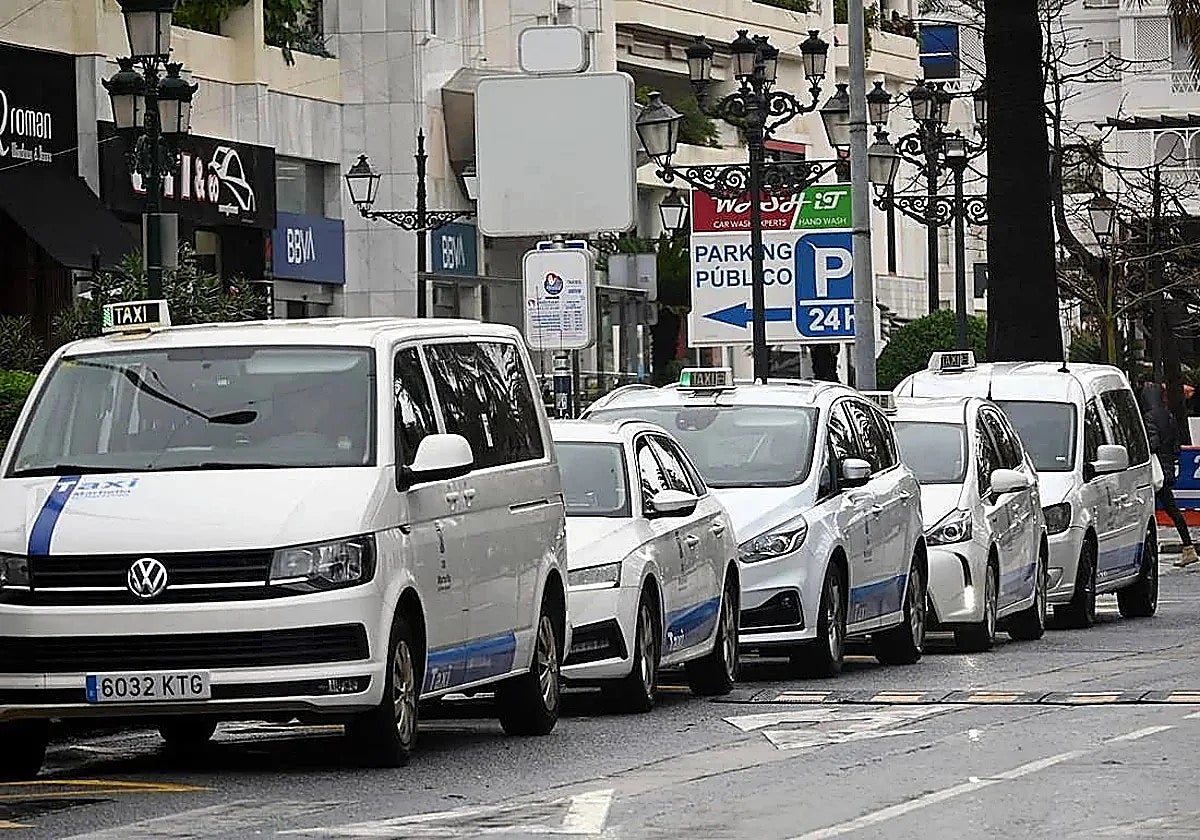
José Carlos García
The Costa del Sol taxi sector has rejected the conclusions of the Pablo de Olavide University study revealing that the majority of ride requests go unanswered.
The report, written by economist Manuel Alejandro Hidalgo Pérez and based on indicators collected over 1,219 days (from January 2023 to May 2026), identifies Marbella as the worst affected area, with 67.2 per cent of requests going unserved, far ahead of Malaga (35.6 per cent) and Seville (34.5 per cent).
Taxi associations have questioned those figures and denied the claim that rejected journeys reach such levels among licensed taxis. They have also pointed to ride hailing apps and pricing models that vary according to demand, arguing these factors may inflate the data, although they said they do not know the methodology behind the figures.
Related story

In Marbella, the president of Taxisol, José Antonio Cea, put a figure on so-called "lost" journeys (services not completed for any reason, including passengers not turning up at the agreed pick-up point). He said these have accounted for around 13 per cent so far this year.
Beyond this, taxi professionals said that self-regulation by shift patterns shows licences are not the issue. "In Malaga, around 270 taxis are off the road between November and March. In Torremolinos they stop for two days. If there was enough demand, why would we do that?" president of Aumat Miguel Ángel Martín said.
In Marbella, the town most heavily criticised in the university report, drivers work on a four-days-on, two-days-off rota. Guillermo Díaz, spokesperson for Elite Taxi Costa del Sol, went further when discussing supply: "In Malaga, with 600,000 residents, we have 11,500 taxis and 2,900 VTCs. In Madrid, with 3.5 million people, there are about 16,000 taxis and 9,000 VTCs."
Taxi drivers do acknowledge difficulties in specific situations, such as major events when large numbers of people try to travel to or from the same place at the same time. They cite events like the Malaga fair, concerts at Starlite or La Caridad in Marbella, Marenostrum Fuengirola and major conferences as examples.
They argue that the core issue lies in wider transport and traffic flow problems across both urban and interurban routes on the Costa del Sol. "The problem isn't that there aren't cars. It's that there's no way to move around," Díaz said, blaming politicians for the situation.
In Marbella, drivers point to access routes in areas such as San Pedro Alcántara and Puerto Banús. In Malaga, they highlight areas like Cerrado de Calderón, where "they keep building housing estates but the roads stay the same". They also mention other bottlenecks: "I can get from Plaza de la Marina to Teatinos in five minutes, but it takes me 40 minutes to get back. When am I supposed to do my next job?" Díaz said. He added that taxis often spend far longer empty than carrying passengers.
Drivers also cite other problem routes, such as journeys from central Malaga to the fair and conference centre, trips to El Palo or travelling through Carreterías on a Friday between 11am and 5pm, when queues, loading activity and congestion can turn a short journey into a 20-minute trip.
They also point to interurban routes as black spots, including the Higuerón hill in Fuengirola, where accidents occur frequently, and journeys between Fuengirola and Marbella, where traffic can force repeated stops on the motorway even without incidents. "The other day it took me an hour and 40 minutes to get from the airport to San Pedro Alcántara," Díaz said.
Access the broad Malaga and Costa del Sol news index
![[]](http://static.vocstatic.com/voc26/latest/assets/images/favicon/surinenglish/apple-touch-icon-57x57.png)