
Population
Malaga province's over-80s age group has tripled since 2000
Retirees now represent one in five people in the province, the numbers having doubled so far this century
Cristina Vallejo
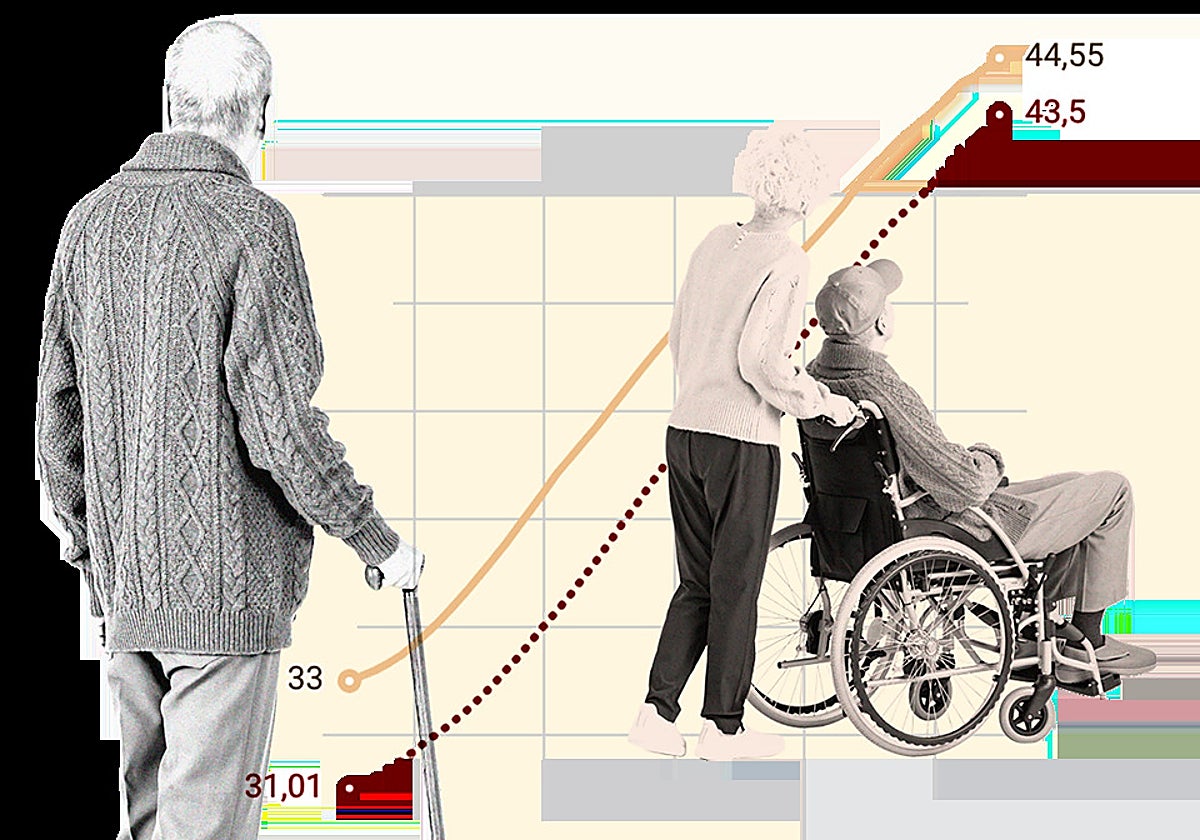
The population of Malaga province is ageing. While the average age of Malaga residents was 37.24 years at the beginning of this century, it had risen to 43.50 years by 2025.
There are good reasons behind this phenomenon, such as the increase in life expectancy, which, while only 78 years in 2000, now exceeds 83. The number of residents over 80 years of age has tripled this century: from just over 32,100 in 2000 to more than 92,267 in the spring of 2026, representing a 186% increase.
People in their 80s, 90s and beyond, including centenarians, have gone from representing 2.5% of Malaga's population to 5%.
Related story
This extends to the entire population over 65, which has doubled since 2000: while at the beginning of this century there were fewer than 170,000 people in that age group in the province, by 1 April 2026, that number had risen to over 351,000, according to the latest population survey by the national institute of statistics (INE).
In these 26 years, those who have reached retirement age or are about to reach it (taking into account its progressive increase to 67 by 2027 by law) have gone from representing 13.5% of the population to nearly 20%. This means that one in five residents of the province of Malaga has already reached 65 years of age.
Democratising ageing
Malaga University (UMA) Professor of Sociology Rafael Grande says that there has been a "certain democratisation" in reaching very advanced ages. Although inequalities persist, longevity is becoming increasingly widespread across social classes.
For this reason, he states, the growth of the population over 80 years of age, in particular, is more pronounced than that of the over-65 population as a whole. Grande warns that it will be even more intense among those over 90 and among centenarians.
To explain this increase in the elderly population, he adds other factors, such as the fact that the generation now reaching 65 is part of the baby boom, meaning it is very large. Life expectancy has increased and a very large number of people benefit from this as a consequence of a period of very high birth rates.
This increase in the proportion of people over 65 and over 80 in Malaga is due to their growth being much higher than that of the province as a whole. The increase in the population of Malaga province from 1.26 million in 2000 to the current 1.81 million represents a rise of 43%, which contrasts sharply with the 106% increase among over-65s or the 186% increase among over-80s.
The other factor explaining the aging population lies at the other end of the population pyramid, among those under 20. While their numbers are now higher than in 2000, having increased from 312,263 to 342,759, this represents a growth of only 9.75%, significantly lower than the older age groups and the overall population of Malaga.
Related story
-
Population
Encarni Hinojosa
While the elderly are increasingly represented in the population, young people are increasingly less so: 25 years ago they made up 25% of the inhabitants, but now they represent less than 19%.
Grande points to two possible reasons: the decline in the birth rate and the fact that the demographic boost immigration has provided is not sufficient to support these age cohorts.
Professor of Geography Juan José Natera says that the population under 20 years of age has grown more in the province than in Spain as a whole. He believes this is due to immigration and the fact that immigrant families have higher birth rates than the rest of Malaga's population.
Spain-Malaga comparison
Is what's happening in Malaga very different from what's happening in the rest of Spain? To begin with, the average age in the country is 44.55 years, slightly higher than in Malaga (43.50 years).
The increase in the average age nationally (12% since 2000, 39.51 years of age) is lower than that recorded in Malaga (17% since 2000, 37.24 years of age).
Behind this increase in the average age of Spain's population lies a similar, albeit less pronounced, phenomenon. The number of people over 80 in Spain has risen from 2.1 million to over 3.1 million since the beginning of this century, representing a 47.3% increase (almost tripling in Malaga).
Meanwhile, the number of people over 65 has increased by nearly 43% (doubling in the province), rising from 7.35 million to 10.5 million, meaning they now also comprise one in five inhabitants of the country.
In contrast, the number of people under 20 is now only 3% higher than a quarter of a century ago, meaning their share of Spain's population has fallen from 21.5% in 2000 to 18% in 2026.
The slower growth rate of the Spanish population at all ages and especially among older ages compared to Malaga is consistent with the greater rate of population growth in the province. So far this century, the demographic increase in Malaga (44%) has doubled that recorded at the national level (22.77%).
Why is the elderly population in Malaga growing faster than in Spain as a whole? Rafael Grande points to several factors.
First, Malaga has received a large influx of both national and international residents. Second, the province, along with Alicante, is a major recipient of retirees over 65 from various regions. Third, Malaga lagged somewhat behind the rest of the country in demographic terms: it was aging slower, as was Andalucía in general, and it is only recently that it has caught up with the demographic transition.
Juan José Natera notes that what has occurred in Malaga is a convergence with Spain in terms of the proportion of elderly people in the population. A similar phenomenon has impacted the under-20s age group, whose proportion in the province has also approached that of Spain in this first quarter of a century. So, gradually, Malaga has become more and more like the rest of the country.
Access the broad Malaga and Costa del Sol news index
![[]](http://static.vocstatic.com/voc26/latest/assets/images/favicon/surinenglish/apple-touch-icon-57x57.png)