
Weather
Malaga records lowest sea temperature in Spain
Early on Friday morning, the temperature dropped to 15.5C, the lowest ever recorded off the coast of Malaga in August
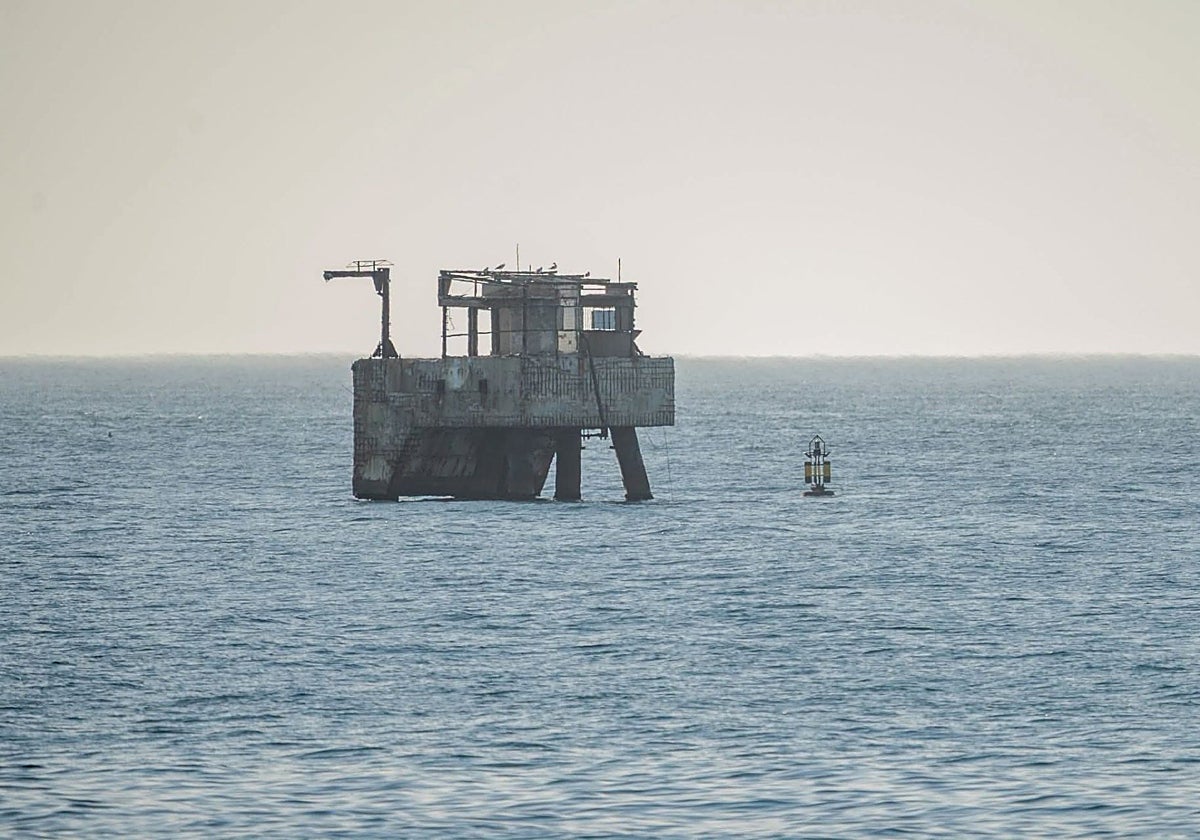

Malaga province recorded on Friday the lowest sea temperature in Spain as a whole, as SUR's weather expert José Luis Escudero reported.
"Just ... a few hours ago, we matched the record for the lowest water temperature on Tuesday, 15.6C. Today we have broken it once again: the temperature reached 15.5C. Watch out, because this drop seems to have its days numbered. Everything points to us starting September with a very significant rise in water temperature, with figures that could once again exceed 21-22C," Escudero wrote on his blog 'Tormentas y rayos'.
This is the second time that the buoy, situated off the coast of Guadalmar, has broken the record for the lowest temperature in August within a week. That's not all: early on Friday morning, when this occurred, the buoy recorded the coldest temperature in the whole country.
Related story
According to the Portus tool of Puertos del Estado, the temperatures at various points along the Spanish coastline were as follows: Valencia (25.47C), Tarragona (27.4C), Barcelona II (26C), Palos (26.86C), Gulf of Cadiz (20.7C), Cabo Silleiro (20.97C), Villanos-Sisargas (18.56C), Estaca de Bares (21.19C), Cabo de Peñas (21.01C), Pasaia (23.4C) and Tenerife South (24.19C).
These buoys are situated in the waters off Valencia, Catalonia, Andalucía, the Canary Islands, Galicia, Asturias, Cantabria and the Basque Country.
The temperature off the coast of Malaga has risen by 0.1C since the last reading, so it is likely to warm up somewhat as the day goes on.
In recent days, Malaga has been experiencing cool weather on land too. Despite the strong gusts of wind on beaches such as Huelin and San Andrés this week, only further scientific explanations will be able to justify this sudden upwelling.
Physicist from the Spanish institute of oceanography in Malaga Manuel Vargas gave some tentative hypotheses. "There is no doubt that it is upwelling water. The question is whether the upwelling is local, that is, whether it has occurred off the coast of Malaga, or whether it is influenced by the upwelling that usually occurs in the Strait, whose cold waters are then carried by the current. This current sometimes approaches the Malaga coast more closely than others. It's possible it's a combination of these two factors plus a third: the waves," he stated.
According to Vargas, the role of waves could also be significant. Waves mix the water and the heat that was accumulated in a very thin layer of water at the surface would have been distributed throughout a thicker layer of water. This could lead to a drop in surface water level and an increase in depth of between ten and 30 metres.
Will it affect the weather?
This cooling is unlikely to have any impact on the weather.
Andalucía's head of the Aemet state meteorological agency Juan de Dios del Pino said: "It could be significant if it coincides with an atmospheric event, such as a cold snap or any other pocket of cold air in the upper troposphere (five to 12 km). But nothing of the sort is expected in the immediate future. It may cause fog or low cloud, but nothing significant."
The Alboran Sea has its own characteristic currents and this isolated incident does not contradict the marine heatwave that Malaga has been experiencing since May.
This summer has seen extreme, with persistent anomalies in both surface and seabed temperatures. According to data, water temperatures have reached record highs of up to 28C, consistently lying between 4.5C and 5C above the usual average values.
![[]](http://static.vocstatic.com/voc26/latest/assets/images/favicon/surinenglish/apple-touch-icon-57x57.png)