
Environment
Malaga's El Palo district is among poisonous Mediterranean recluse spider's main habitats
Although the spider is a common secret inhabitant of homes and gardens, it rarely stings humans
Ignacio Lillo
Malaga
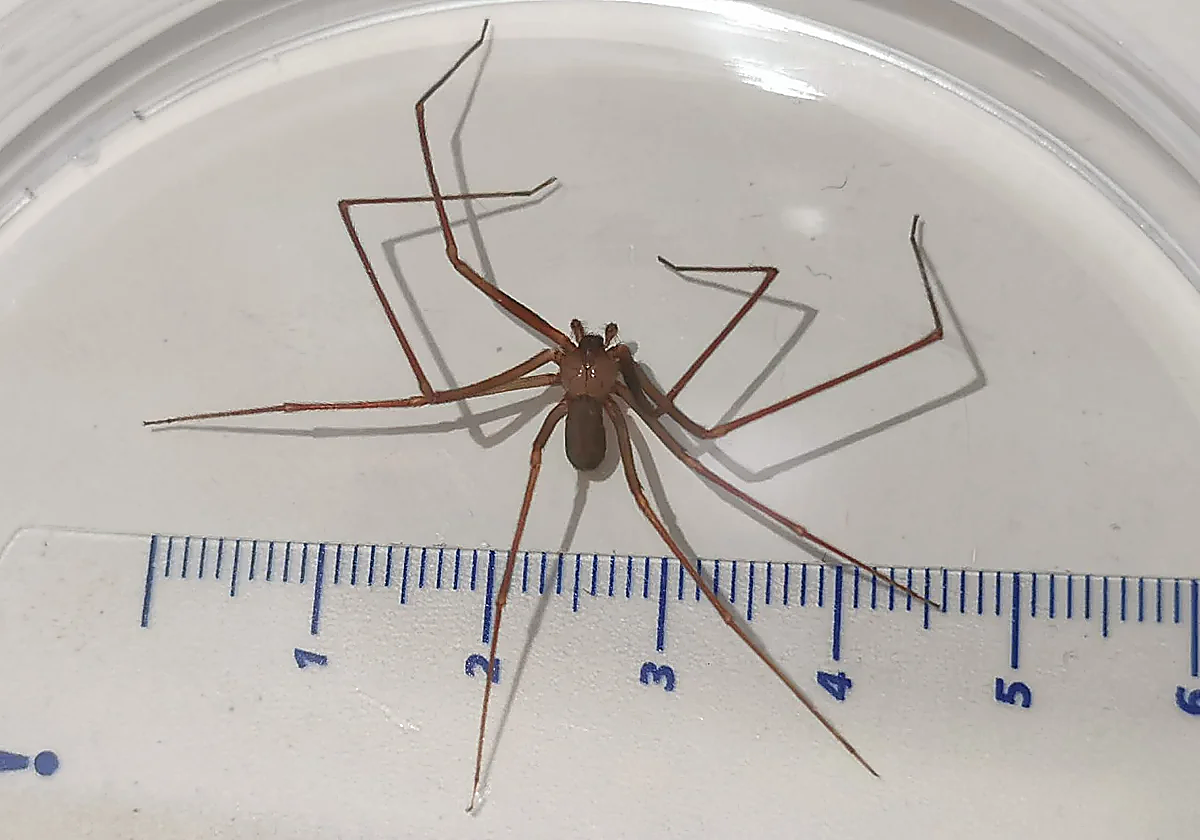
The Mediterranean recluse gets its nickname, the 'violin' spider, from a very distinctive dark marking that resembles a violin on the top of its cephalothorax (the part of the body that results from the fusion of the head and thorax into a single functional unit).
There are scientific records of this spider's presence in Malaga dating back almost 100 years. The first record in the biodiversity database appears in 1931, as UMA (Malaga University) Zoology Professor Raimundo Real explains.
Malaga city has a significant colony of this species in the El Palo district and its surroundings. This is precisely where the latest serious incident involving a human happened.
Recent studies by the university have documented its presence in Cueva del Humo in La Araña. Interestingly, the name of this area refers to the animal, although it actually takes its name from the La Araña beach.
Related story
The violin spider is entirely native to the area. Real says that this species, like all arachnids, generally avoids humans, as it feeds on insects and helps reduce pests, such as mosquitoes. Although it is more abundant in around Madrid and the Costa del Sol, it can actually be found almost anywhere in southern Spain.
Common in homes
The Mediterranean recluse spider's natural habitat is caves, "but houses act as artificial caves". Therefore, it can be somewhat normal to find it, especially in dark areas, such as under furniture, stones and flowerpots in gardens and on terraces.
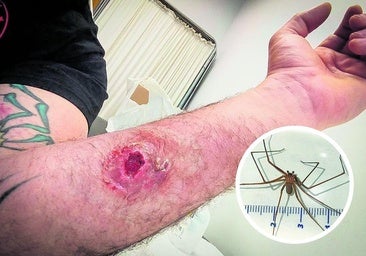
Although this species can sting people, as happened recently in the case of the 37-year-old man from El Palo who almost lost an arm following a sting, Real says that there are actually very few recorded historical cases. "It's very rare, although it can be potentially serious," he states.
The sting develops over time. At first, it's not very alarming: "it hurts at the moment it happens" but there's not much else to cause concern. However, as the hours pass, the venom begins to severely affect the skin in the area near where the chelicerae (a type of fang) penetrated the skin.
The recluse spider produces a proteolytic venom that causes significant local damage by breaking down cellular proteins. The spider uses this mechanism to dissolve and absorb the contents of its prey.
However, this venom is not neurotoxic (unlike that of other spiders and some viper species), which is the most dangerous type because it attacks the nervous system and can paralyse vital organs.
Real, however, is reassuring the Spanish population. "The spider doesn't seek to sting humans or other mammals. It creates its web to capture insects," he explains. "Stings only occur when it feels threatened or is touched unintentionally."
The key to prevention is cleaning: remove any spider webs from the house without touching them with your hands, using a broom. If you see the spider, sweep it up and remove it from the house.
Real says that this species should not be confused with the American brown recluse spider, which is from the same genus but a different species, more dangerous than the Mediterranean one.
More common spideers
Dozens of spider species live in the province of Malaga. Although almost all of them can bite, the vast majority are not dangerous.
Among those that can cause harm, in addition to the Mediterranean recluse spider, is the false black widow, which inflicts a painful bite that can produce moderate symptoms but not serious injuries.
Less common is the Mediterranean black widow, found only at the borders with the neighboring provinces of Cadiz and Granada, but its presence is not widespread in Malaga. Its bite is very painful and its venom is neurotoxic, causing paralysis, cramps and general malaise.
The venom of other spiders is not particularly serious. For example, the Mediterranean spider is not dangerous, although its bite causes moderate local pain.
It is also possible to find specimens of the European tarantula, but zoology experts have regulated its presence in mountainous areas, such as the Sierra de las Nieves. The bite causes immediate pain and alarm and the wound can progress, but it is not usually dangerous.
Other species that coexist in Malaga and pose no risk are the wolf spider, the tiger spider, the wasp and the giant house spider.
![[]](http://static.vocstatic.com/voc26/latest/assets/images/favicon/surinenglish/apple-touch-icon-57x57.png)