
112 incident
Malaga resident nearly loses his arm following Mediterranean recluse spider 'sting'
The 37-year-old man has suffered necrosis of the tissues surrounding the wounded area for which he is still under treatment
Juan Cano
Malaga
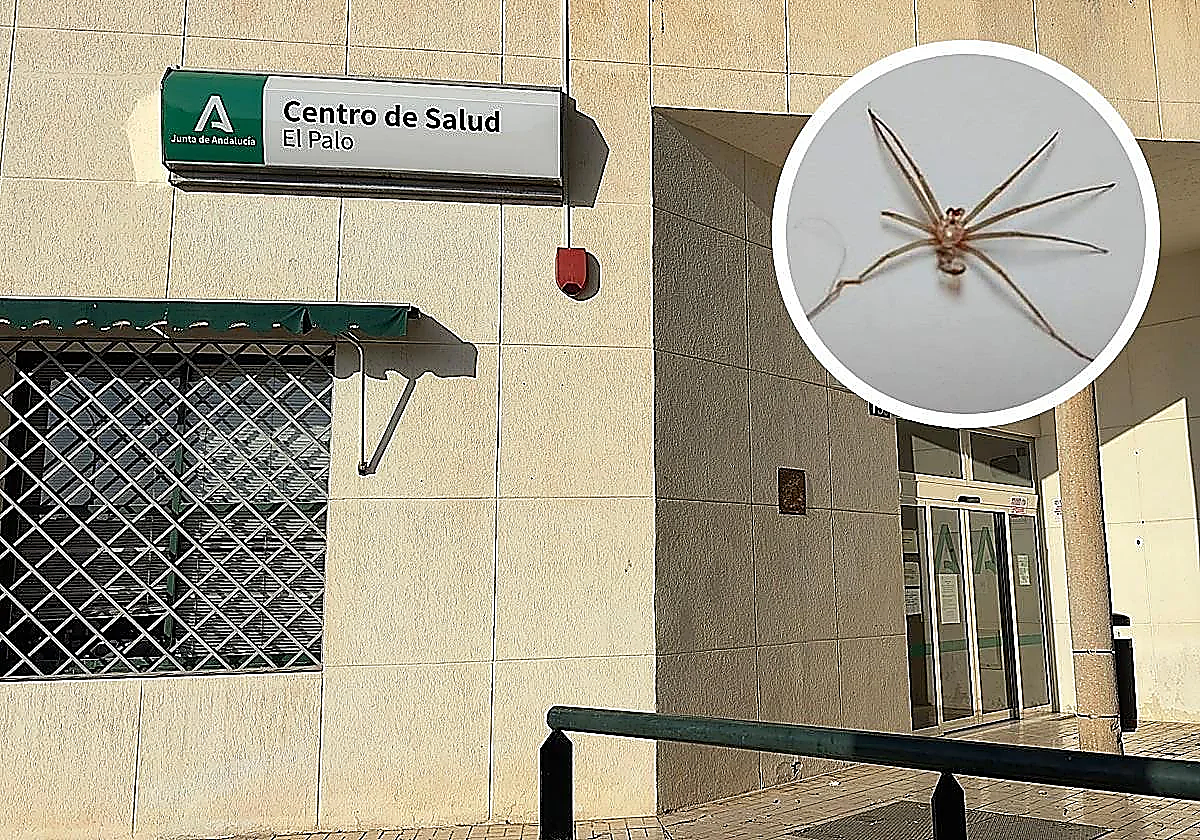
A 37-year-old resident of Malaga's El Palo district is undergoing serious treatment after a Mediterranean recluse spider sting nearly led to the amputation of his arm.
The victim was tending to some flowerpots at a friend's house when he felt a sharp pain. He thought it was a mosquito and didn't pay much more attention to it, until a few hours later when he started feeling the first symptoms.
According to his family, his arm swelled up and he developed a fever. The pain intensified and a kind of lump formed around the spot where the sting was.
Related story
-

Nature
Alberto Flores
Alarmed by his body reaction, he went directly to the El Palo health centre. That was a month and a half ago and although the symptoms have subsided, he is still recovering under sick leave.
At the health centre, the doctors confirmed the origin of the sting: a Mediterranean recluse spider. The wound required incisions so that the emergency crew could extract the venom and treat the arm with antibiotics and painkillers.
"When they opened the wound, it was full of pus," a relative said.
In the following days, the man continued having a fever and a second, smaller lump appeared next to the first one. "It was horrific; we've never seen anything like it," his family said.
His arm had bruises and the skin developed necrosis. The doctors told him that he had suffered a "very serious" sting and that he needed to be patient until he fully recovered.
"I thought he was going to lose his arm," the relative said.
Fortunately, the spider victim is now recovering. Last week, when he went for a check-up, the doctor told him that the wound was "already closing".
The Mediterranean recluse spider
The Mediterranean recluse spider (Loxosceles rufescens) is one of Spain's most feared and dangerous arachnids. Although not very common, it is native to the Mediterranean and can hide in dark places, such as storage rooms or under flowerpots. Its bite causes extremely painful skin necrosis and sometimes requires surgical treatment, although it is not fatal and does not usually cause limb loss. The American variant, Loxosceles laeta, can be lethal.
By 2024, Spain had documented 12 cases of Mediterranean recluse spider poisonings. One of the most serious incidents occurred in Ibiza in 2021, when a 19-year-old Welsh tourist lost two fingers on one hand. The young man told doctors that he had been watching the sunset when he put his hand between some rocks and felt a sharp sting.
In recent years, similar stories (though not involving amputation) have surfaced in the media, causing alarm. In 2024, the journal of the Spanish society of environmental health published a case in which a spider had attacked a 42-year-old man three times in his home in Vizcaya between May and September 2023.
No cause for concern
Experts, however, are reassuring the Spanish population. Professor of Zoology at Malaga University Raimundo Real says that the sting of the Mediterranean recluse spider is "not at all common" in Spain, as the spider does not usually attack humans nor does it feed on blood, as is the case with other insects. "It must have felt threatened," he told SUR.
Real confirms that this species is one of the most venomous spiders in the Mediterranean and that Malaga is within its habitat, but its presence in the province is uncommon. "It normally feeds on insects. It doesn't attack people spontaneously. If it does, it's because it feels threatened and is acting in self-defence," Real says.
In his opinion, it's not accurate to call it a "bite," since it technically lacks jaws, nor is it exactly a sting, although the term seems more appropriate to the arachnid's characteristics. The attack occurs with "chelicerae, a kind of fang", which it uses to pierce the exoskeleton, injecting its venom and then sucking out the contents of its prey.
Its venom is "proteolytic", meaning it "destroys proteins" and corrodes the flesh in the area surrounding the point where it pierces the skin. "It's not fatal, but it can cause very serious local lesions around the wound that require urgent medical attention. They are potentially dangerous," the professor says.
![[]](http://static.vocstatic.com/voc26/latest/assets/images/favicon/surinenglish/apple-touch-icon-57x57.png)