
Tech
Malaga's Google cybersecurity centre reaches max capacity with over 100 employees
Founder of VirusTotal, which the Google cybersecurity centre absorbed, Bernardo Quintero believes that finding more office space would not be an issue and instead focuses on productivity matters
Nuria Triguero
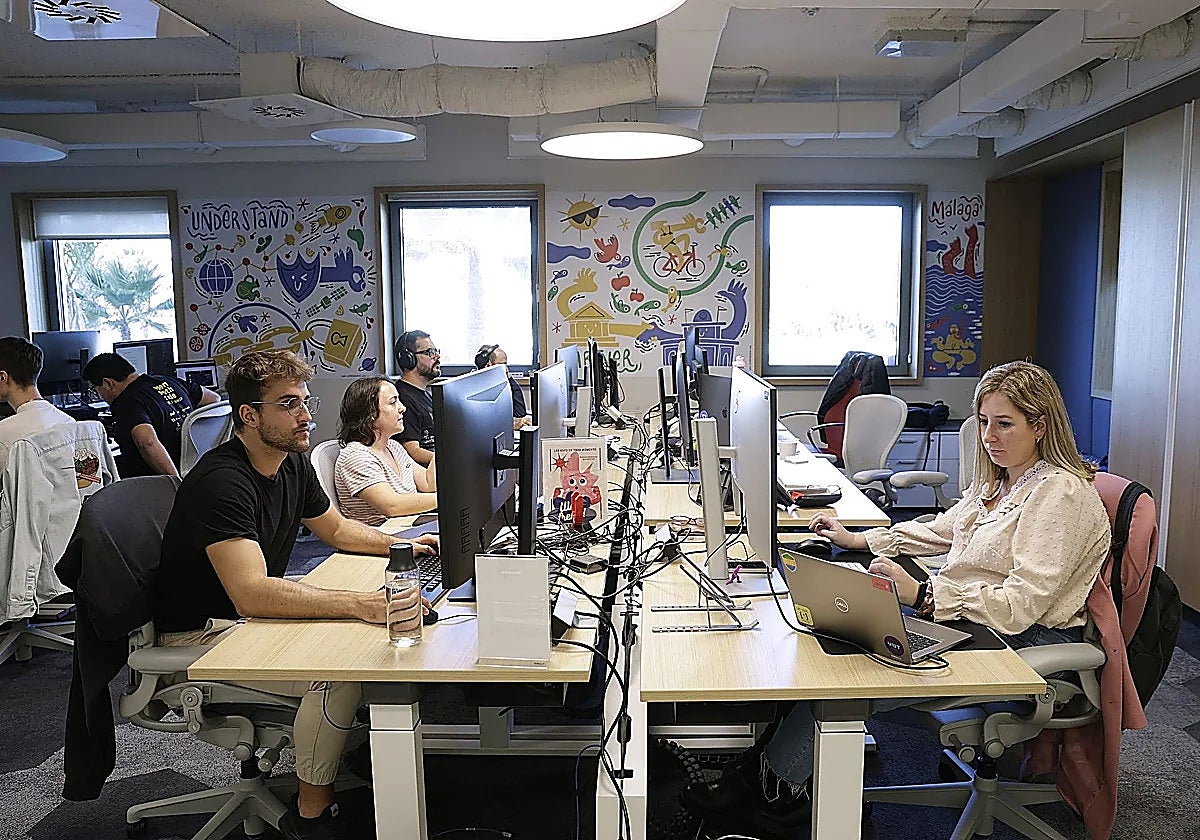
This November will mark three years since the inauguration of GSEC Málaga, one of the four security engineering centres that Google has around the world. The Malaga location was the third after Munich and Dublin. Another opened in India in 2025.
The multinational already had an office in the city since 2012, when it acquired the cybersecurity company VirusTotal and decided to keep its team in Malaga, fulfilling the conditions of VirusTotal founder Bernardo Quintero.
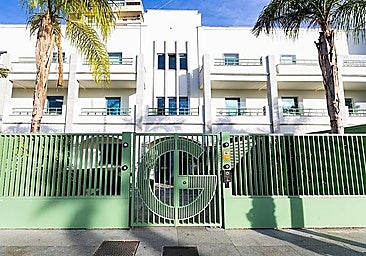
The centre, however, lacked a flagship headquarters, until the opening of the Paseo de la Farola location. It was inaugurated in 2023, starting with more than 60 employees, mostly from VirusTotal and other Google Cloud departments.
Related story
-
Employment
Nuria Triguero
They had plenty of space at the time, as the building has a capacity of around 100 people: a number the headquarters have already exceeded.
Since the inauguration, every time Mayor Francisco de la Torre visits the centre or meets with Quintero, he asks the same question: Are they already thinking about expanding the GSEC?
Now he has a compelling reason to ask because more than 100 people are working at the cybersecurity centre in Malaga, according to the company, which has not specified the exact number.
From that distant 2012 (when there were six people on the VirusTotal payroll) until now, Google has maintained a slow, discreet, but steady pace of contracting more workers.
Its managers have never promised to hire hundreds of people. The type of work at this highly specialised centre for detecting cyber threats doesn't lend itself to a very large staff, but it does require a highly qualified one (with high salaries).
Now, Google's Malaga office can be considered full. This doesn't actually mean there isn't room for even one more employee, as there's a very flexible policy regarding in-person work and many employees work remotely or in a hybrid model.
New vacancies
Just a few weeks ago, Bernardo Quintero announced 14 new vacancies at GSEC, among them software engineers of varying levels and specialisations, ranging from junior professionals with little experience to those with eight years of experience and a high level of specialisation in AI applied to cybersecurity.
Currently, Google's job portal allows applications for five positions in Malaga: Level III Software Engineer for GTI (Google Technical Infrastructure); Level II Software Engineer for Threat Intelligence; Principal Software Engineer specialising in AI and machine learning applied to security; Level III Software Engineer with a focus on AI and machine learning and threat intelligence; and Senior Threat Intelligence Software Engineer.
The growth in staff in Malaga seems to contrast sharply with the recent trends in the technology sector, marked by job cuts in numerous companies justified (or excused) by the impact of AI.
Globally, giants like Meta and Amazon are laying off staff en masse to reallocate resources to AI. This trend has now reached Malaga with the recent workforce reduction plan (ERE) announced by Magnific (formerly Freepik) affecting more than 100 employees.
The key to GSEC continued growth in Malaga is the same one that led Google to keep VirusTotal in Malaga: productivity. Bernardo Quintero's team have always boasted one of the highest performance rates within the company. Now, the strategy is precisely to multiply that productivity with AI.
What's next?
Returning to the question of maximum capacity at GSEC Málaga, what happens now? Has Google reached its limit in the city or will it look for ways to continue growing? Can the headquarters be expanded or will it have to find offices elsewhere in the city?
Bernardo Quintero has said that "office space won't be the deciding factor" and that "there are many ways to expand".
"What matters most is our productivity as an engineering team and then there are always factors beyond our control… so our focus is on what we can control: multiplying our productivity with AI," he stated.
The founder of VirusTotal isn't worried about the limited physical space available, since he doesn't believe it will be a problem to find other spaces, whether temporary or permanent, when the time comes. He said that this is not the centre of discussions right now: "the key is whether Malaga is more productive".
Read dedicated local reporting for Malaga city
![[]](http://static.vocstatic.com/voc26/latest/assets/images/favicon/surinenglish/apple-touch-icon-57x57.png)