
Infrastructure
Malaga's Armengual area gets fresh look as metro works give way to cycle lanes and new green spaces
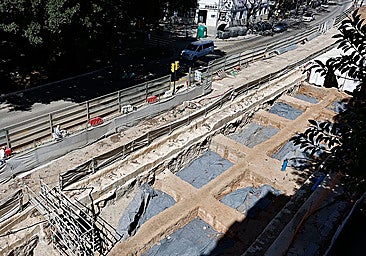
The first section of Malaga's extension to Hospital Civil has opened, although archaeological work continues further along Calle Hilera following the discovery of a Roman cemetery
Chus Heredia
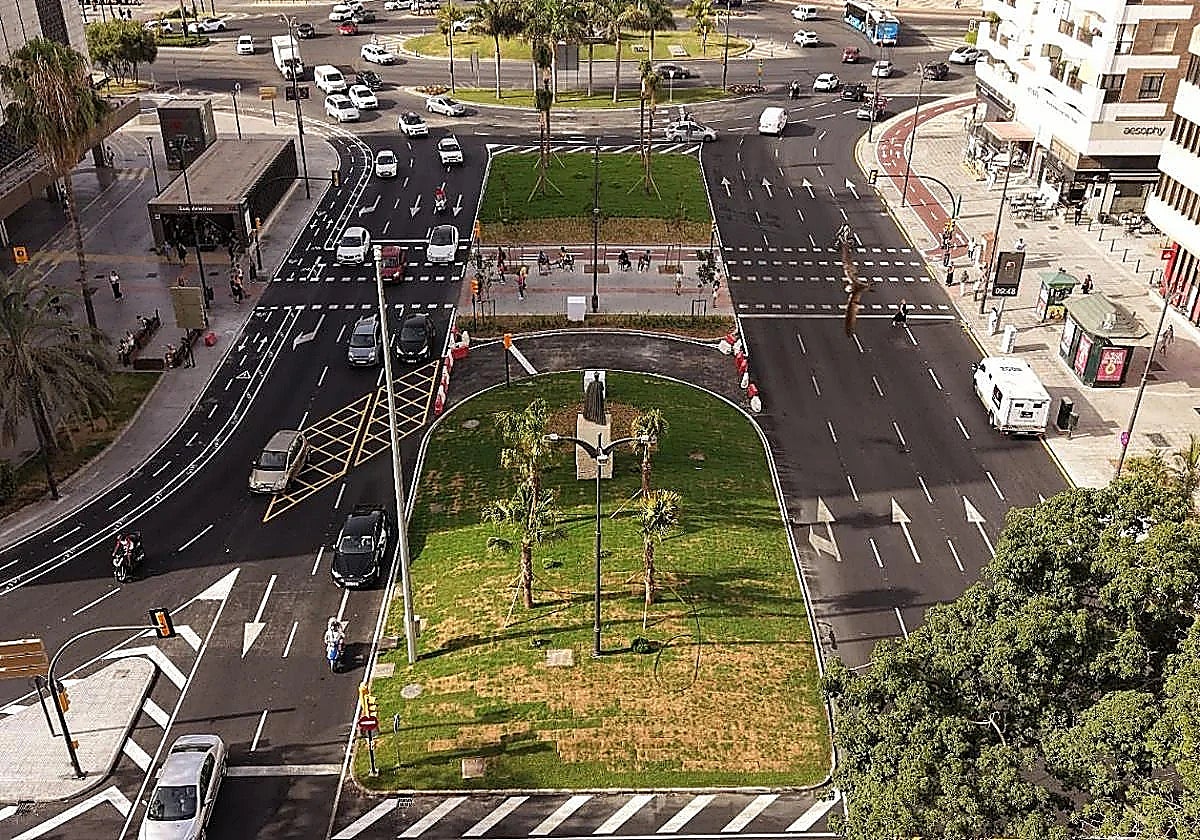
The stretch of Calle Armengual de la Mota affected by the first phase of Malaga metro's extension to Hospital Civil has reopened after months of major construction work.
While archaeological excavations continue on nearby Calle Hilera following the discovery of a previously unknown Roman necropolis, workers have spent recent weeks restoring Armengual to normal.
Construction crews have completed the underground structures that will carry line 2 of the metro, which currently runs from the Palacio de Deportes José María Martín Carpena to Avenida de Andalucía.
Related story
The Andalusian regional government (Junta) officially reopened the street on Thursday after completing the redevelopment of 11,450 square metres affected by the works. The project restores Armengual de la Mota between Plaza Poeta Manuel Alcántara roundabout and Calle Cerrojo, largely returning the road layout to how it looked before construction began in May 2024.
Regional minister of public works Mario Muñoz-Atanet said this marks the first major public space to reopen since work began on the metro extension to the future Hospital Virgen de la Esperanza, describing it as evidence that the project is progressing well. He also praised the close cooperation between the regional government and Malaga city council.
More green and public spaces
The road layout remains broadly unchanged, with four lanes heading towards Avenida de Andalucía and three towards Calle Mármoles, alongside a new on-road cycle lane. Authorities have also reinstated the left turn near the Santander building, which city buses regularly use.
The redevelopment places greater emphasis on landscaping and shade. New planted areas match those created during the earlier metro works towards the historic centre, while natural turf and additional planting have been installed in collaboration with the city council's parks department.
The project has also preserved two mature ceiba trees, which engineers carefully transplanted during construction. At the junction between the Santander building and El Corte Inglés, workers have created a new public space with benches and trees that will eventually provide substantial shade.
The statue of Tiburcio Arnaiz has also returned to its original location after restoration, following an agreement with the Padre Arnaiz foundation.
Before restoring the street, construction teams completed the first section of the underground tunnel using the cut-and-cover method, building the tunnel walls and roof before excavating beneath them.
One of the biggest challenges involved relocating water, drainage, electricity and telecommunications networks beneath the road. Engineers also upgraded drainage and reinforced the ground in nearby Compositor Lehmberg Ruiz passage, where they planted four new trees.
The 1.8-kilometre extension to Hospital Virgen de la Esperanza will run entirely underground and consists of three construction phases, each with its own station.
The overall investment amounts to 244 million euros, including railway systems and station architecture, with part of the funding coming from the EU Feder programme.
Construction is under way on all three sections and authorities expect the extended line to enter service in 2029 or 2030.
Read dedicated local reporting for Malaga city
![[]](http://static.vocstatic.com/voc26/latest/assets/images/favicon/surinenglish/apple-touch-icon-57x57.png)