
History
Malaga metro works uncover largest Roman necropolis in city's history, with almost 700 tombs
The metro extension work on Calle Hilera has so far unearthed several types of burials and funerary elements dating from the 1st to the 4th centuries
Ignacio Lillo
Malaga
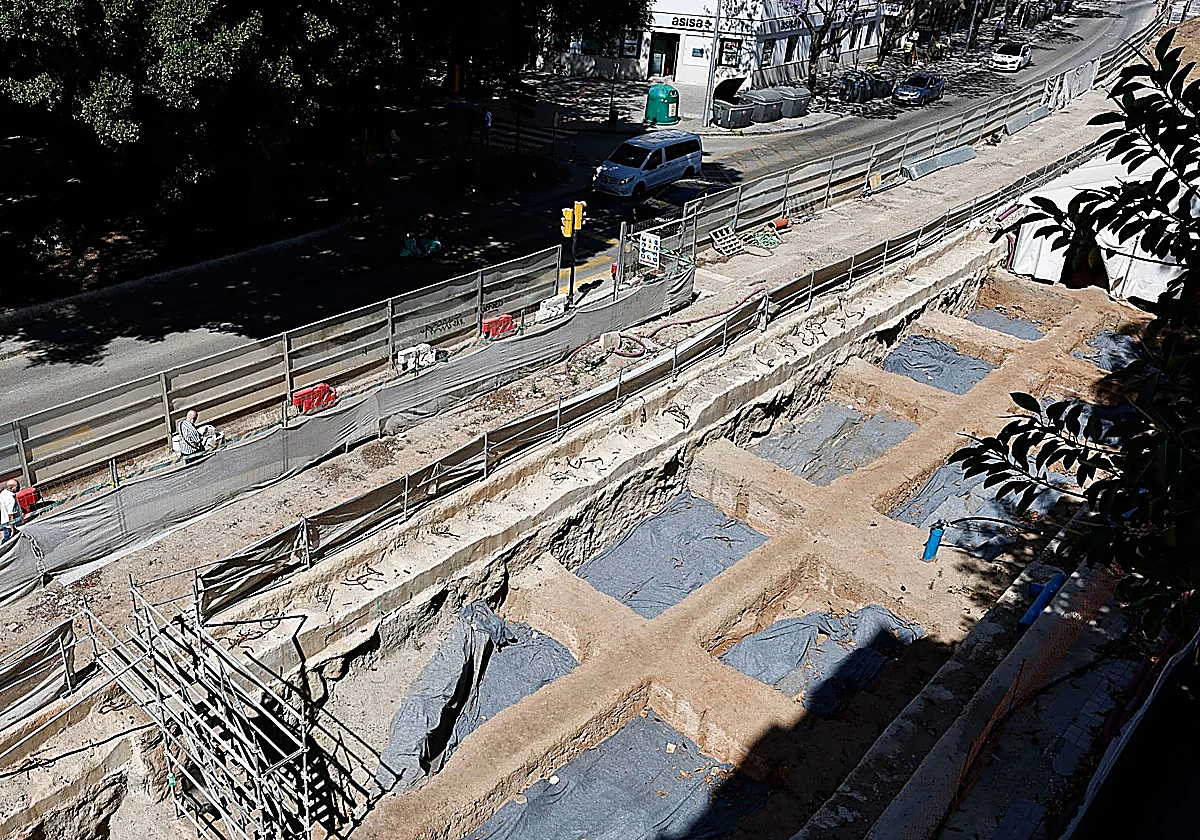
The work along Calle Hilera to extend the metro in Malaga towards Hospital Civil has uncovered the largest Roman necropolis in the city's history.
What began as a small site with about 20 tombs at the end closest to the Vértice building, at the intersection with Calle Santa Elena, soon revealed to be a large cemetery, with an initial estimate of almost 300 tombs.
After more than a year of excavations (since April 2025), the discovery has exceeded all expectations and initial estimates. Currently, the number stands at a total of 690 tombs of different types, according to data the Andalusian regional ministry of development has confirmed.
This places the Malaga site among the largest finds of its kind in Andalucía, as archaeologists SUR spoke to said.
Currently, work is under way simultaneously at both ends of Calle Hilera. The tarpaulins covering the remains have generated considerable interest among residents and passersby near the El Corte Inglés department store. Although the entire site is fenced off and covered, the burials are clearly visible from the surrounding buildings.
Remains continue emerging
The regional ministry stated that they cannot specify the final number of graves in the construction of the first section of the metro extension. "There are graves and funerary elements superimposed and we locate more as we excavate," sources said.
Archaeologists have delved deeper into the layers and have already uncovered remains dating from the 1st to the 4th centuries AD, all within the period of Roman rule.
They have documented both cremation and inhumation rituals. Among the latter, there is a very wide and striking variety of tomb types due to the four centuries of use of the same cemetery. These include some with gabled roofs, frame tombs, wooden tombs and lead tombs.
The excavation deadline remains the same
Despite these unexpected discoveries, the good news for residents and workers is that the planned schedule for the excavation and recovery of the best-preserved remains is still on track. Therefore, this phase should end at the end of the year, barring unforeseen circumstances, although there is no definitive date.
Related story

"This increase does not alter the roadmap and the work outlined in the first (and only) phase, as issued by the regional ministry of culture last December," sources said.
The archaeological excavations continue, while the regional ministry of public works finalises the technical proposal to ensure the temporary continuation of the works.
As it is a public infrastructure, all sources coordinate on-site to ensure the preservation of the remains. The regional ministry of culture's order is to exhume and store a selection of tombs for the future exhibition space of the metro, next to the Guadalmedina station.
Future museum
The future museum, which is not yet open to the public, already contains artifacts from many other periods, especially houses from the Andalusian suburb of Attabanim, which workers uncovered beneath Avenida de Andalucía. They have also found later artifacts from the industries that once operated in the area, along with two sections of walls, also dating from the Arab period.
As has happened on previous occasions, the metro construction is providing new insights into the city's history. Archaeologists didn't know the location of this Roman-era necropolis, let alone its size.
Previous studies placed it in the area of Calle Mármoles, so this discovery is allowing for a reinterpretation of the past.
This is not the first time Roman remains have appeared during the excavation work for the metro tunnels. It also happened at Calle La Unión and Avenida Juan XXIII: precisely in front of a former car dealership that, ironically, was called Garum Motor (garum was the Romans' favourite sauce).
![[]](http://static.vocstatic.com/voc26/latest/assets/images/favicon/surinenglish/apple-touch-icon-57x57.png)