
Air transport
Malaga to serve as testing ground for first passenger and cargo drone flights
Manufacturers Vertical and Odys will carry out the first trials with the new aircraft between Malaga, Marbella and Vélez in 2028

Málaga
Malaga is set to become Europe's testing ground for the future of aviation. The province will host the first test flights involving electric vertical ... take-off and landing (eVTOL) aircraft for passenger and freight transport.
The operations, which will connect Malaga city with Marbella, Vélez-Málaga and Almeria, are scheduled to take to the skies within two years, around November 2028.
This was announced on Thursday during the 'IAM Open Forum' at the Rayo Verde building at Malaga University, which brought together representatives from government bodies, industry and operators to discuss the future of air taxis and cargo drones in Europe.
Related story

This initiative forms part of the European Verti-Go programme. This three-year project is led by technology giant Honeywell. Work began in June and follows a clearly defined roadmap: in 2027, intensive flight and air traffic management simulations will validate safety systems and procedures; in 2028, the campaign of real test flights using air taxis will begin in the Malaga air corridor.
Malaga, a laboratory for the future
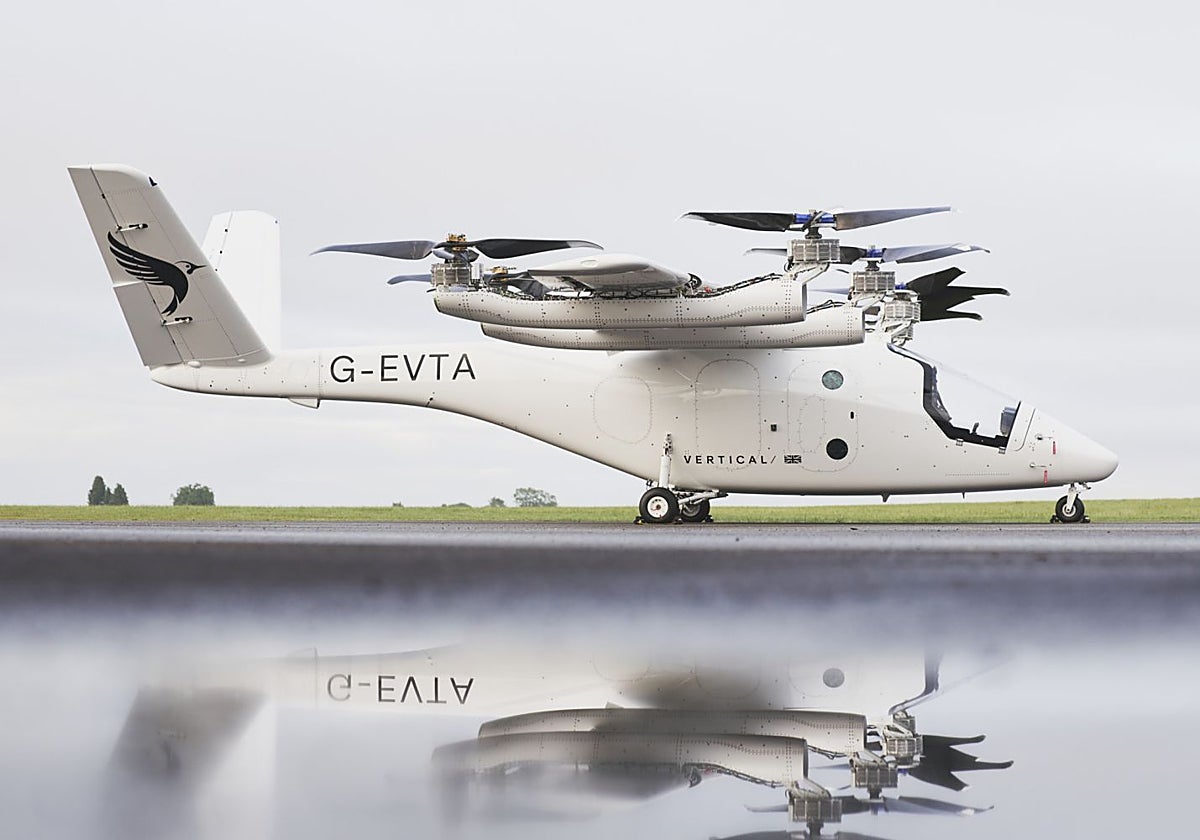
The project will test the two main aspects of future air transport: passenger and freight traffic. In the passenger sector, the British company Vertical Aerospace will deploy its manned electric air taxi, called Valo, on two initial routes: from Malaga Airport to a heliport in Marbella; and from Malaga city to the Axarquía aerodrome in Vélez-Málaga.
The major operational challenge will be to demonstrate the aircraft's ability to integrate into the infrastructure of a congested international airport such as this one, without interfering with normal commercial traffic or overburdening air traffic controllers.
In the second section, concerning freight logistics, US company Odys Aviation will trial a 200-kilometre unmanned route directly linking the ports of Malaga and Almeria. The initiative aims to lay the foundations for the commercial expansion of these express and priority freight operations on the maritime route between Malaga and Melilla, as well as to nearby cities in northern Morocco.
Vertical's air taxi is designed to carry between four and six passengers in a spacious interior, with a luggage compartment and a separate cockpit for the pilot. It reaches speeds of up to 240km/h and has a range of 160 kilometres in 100 per cent electric mode (extendable to 1,600 kilometres in hybrid mode). The platform is versatile and can also be configured for air ambulance and cargo transport.
Director at Vertical Aerospace Martin Jakes highlighted the paradigm shift that this technology represents. "We aim to replace 90-minute road journeys with electric flights lasting just ten minutes, offering a clean, quiet, safe and scalable experience. This is not a distant dream, but a reality driven by discipline, precision and strategic partnerships," he said.
Furthermore, it is a cost-effective technology: during an air show in England, the charging cost per demonstration flight was just seven dollars. "Although the final ticket price will be higher, this demonstrates operating costs that are substantially lower than those of conventional aviation."
Odys will take part in the programme with two cargo vehicles: Laila, an autonomous cargo drone with a payload capacity of 60 kilos and a range of 720 kilometres; and Alta, a hybrid aircraft with a range of over 1,900 kilometres.
The project builds on the province's track record in aeronautical experimentation, having previously served as a testing ground for air traffic control in the Malaga-Granada corridor, using helicopters as test simulators.
Head of the Enaire control tower at Malaga Airport David González Campos highlighted the programme's impact and the challenges facing the sector at this decisive stage. "With these projects, we are putting Malaga on the map for advanced transportation."
Beyond the regulatory framework and strict safety conditions, the manager of the Malaga control tower believes that the key is to gain public acceptance. "The public will understand and appreciate seeing drones flying over their homes for medical purposes or rescue operations," but not for large-scale home delivery operations. "We need proven and acceptable safety standards and people must be kept informed," González Campos said.
Several representatives from Enaire (the organisation responsible for managing airspace in Spain) took part in the 'IAM Open Forum' event on Thursday to publicly present the European Verti-Go project, which aims to accelerate the safe integration of air taxis and cargo drones with the rest of conventional air traffic.
During the event, the project's main use cases were presented, which will lead to the first European eVTOL (electric vertical take-off and landing) air taxis. For the time being, and until regulations allow otherwise, these will still have to be manned, at least for passenger transport.
