
Transport
Malaga to pioneer tests of first passenger drones to Marbella in 2028
The Costa del Sol Airport is going to test the integration of new electric aircraft and cargo drones
Ignacio Lillo
The future of urban air transport is in Malaga. More than a century after the inauguration of the Costa del Sol Airport in 1919, the facility is the only airport in the network still operating at its original location and the test platform for the future air taxis and cargo drones in Europe.
Spanish state air navigation service provider Enaire has announced its participation in the European project VERTI-GO: a new R&D initiative funded by European joint undertaking SESAR 3. The project aims to develop the procedures, services and technologies necessary to safely integrate advanced air transport aircraft into European airspace.
The total budget is 6.77 million euros, of which five million is EU funding.
Related story
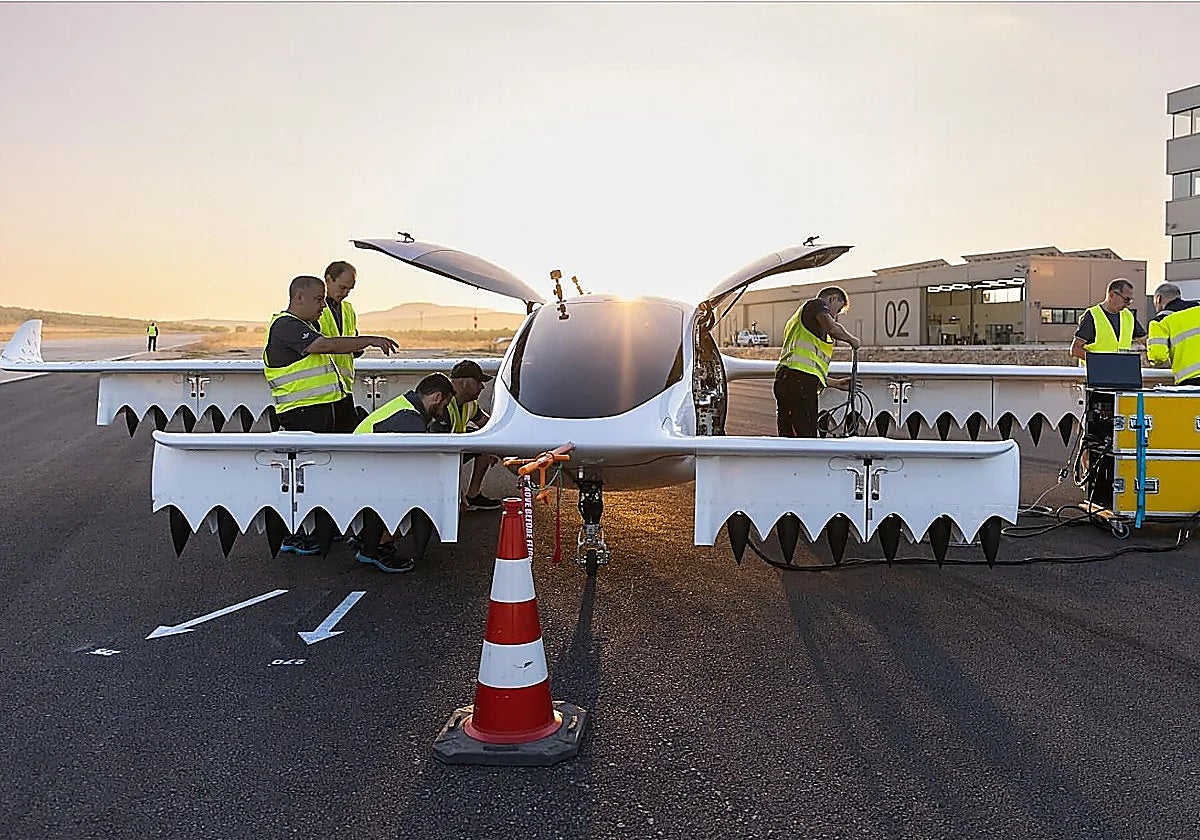
Among the most significant milestones of this initiative is the implementation of real-world tests with electric vertical takeoff and landing (eVTOL) air taxis on the corridor connecting Malaga and Marbella. These initial tests with medium-range passenger aircraft should take place in 2028, according to Enaire.
The short-haul air link for the western Costa del Sol is among the most sought-after projects currently under consideration in Europe. It's no surprise that the planned air route is already attracting several operators, who are preparing their bids to secure this lucrative contract.
The work, with the collaboration of a dozen international partners, will take place between June 2026 and May 2029. The goal is for air taxis and cargo drones to coexist smoothly and safely with conventional commercial aviation.
Malaga: a testing ground
Within the VERTI-GO operational framework, Malaga will consolidate its position as a strategic testing ground for this technology. Participation in this programme is a further step in Enaire's commitment to the deployment of U-space, the European Commission's set of digital services and procedures for the safe, efficient and automated management of drone operations in high-traffic environments such as this one.
Enaire has highlighted that U-space is "one of the fundamental pillars for the future integration of advanced air transport in Europe, as it will allow the provision of essential services such as remote aircraft identification, flight management, traffic information and coordination between operators and authorities".
Thanks to the experience from other SESAR projects and national drone integration initiatives, Enaire is contributing to building the European ecosystem that will enable the routine operation of air taxis and drones. The VERTI-GO programme will serve as the basis for future standards and procedures for European regulations, the deployment of the Digital European Sky and the integration of new aircraft into the system.
Last year saw several milestones in implementing procedures to facilitate the arrival of air taxis in Malaga. The first took place in May, when Enaire conducted an initial test using flight and tower simulators at its headquarters in Madrid. Malaga technicians played a key role in this test, which aimed to establish a future route between the Malaga and Granada airports.
This trial has already cleared up one of the first unknowns about the future of short- and medium-range air transport: the planned location for the vertiport (similar to a heliport, but equipped for air taxis).
As per the initial agreement, the vertiport will be near the end of runway 13 and the A-7 road, where the airport's long-stay car park is located.
In November, a helicopter underwent its first actual flight to test the air route that passenger air taxis will follow when they can legally operate. This flight was the first to test the air corridor that will eventually allow travel between the airports of Malaga and Granada. It was part of the 'OperA' advanced air transport project, which SUR has been reporting on for months.
Access the broad Malaga and Costa del Sol news index
![[]](http://static.vocstatic.com/voc26/latest/assets/images/favicon/surinenglish/apple-touch-icon-57x57.png)