
Infrastructure
Malaga launches Baños del Carmen beach extension and breakwater construction
The most noticeable changes will happen in the autumn, eventually leading to a fivefold beach expansion
Chus Heredia
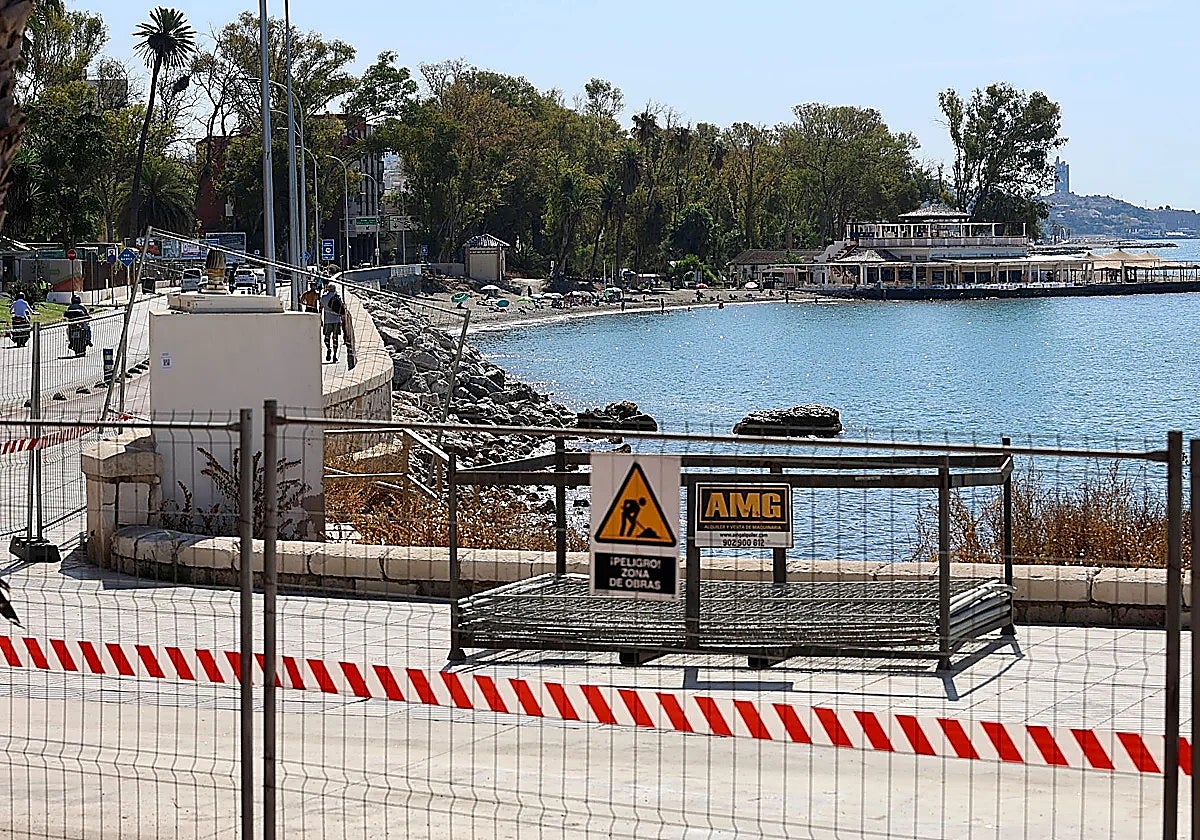
The long-awaited project to protect the coastline at Malaga's Baños del Carmen has finally begun after many years.
Currently, passersby can only see fencing and signage in the area, as the initial work to build a breakwater that will increase the size of the beach five times consists in coordinating traffic and storage.
The most visible and striking part of the work will begin after the summer to minimise disruption to summer activities.
The project has passed countless environmental filters. The last of these concerned the relocation of 40 endangered limpets of the Patella ferruginea species.
Technicians from Tecnoambiente moved the limpets located outside the construction area to avoid any negative impact. Almost half of them were adult specimens. All were marked with a green paste to facilitate their identification and distinguish them from the native population in the destination area, where other limpets are found.
Furthermore, during the execution of the work, fencing will mark the places where there is natural vegetation of interest, mainly the Limonium malacitanum species. Workers may place signs to prevent the transit of machinery or any activity that could cause impact.
The turbidity barriers must be in operation throughout the entire project execution process, under the supervision of specialist personnel, to ensure that no adverse effects arise from the screen coming into contact with the rock.
Furthermore, the relevant authorities will be notified if any specimens of threatened or protected fauna, such as the date mussel (Lithophaga litophaga), or any remains or evidence (nests, young, or eggs) could sustain damage. Special archaeological protection will also be in place.
The Adiante Infraestructuras and Construcciones Maygar alliance is responsible for carrying out the work for almost five million euros (including IVA), with an execution period of nine months. The beach should be rebuilt by next spring.
The tender specifications for this highly anticipated project indicated that the beach area would be increased fivefold, from the current 2,700 square metres to 12,700. The project involves depositing 73,837 cubic metres of material, which will give the beach an average width of up to 37 metres (27 metres wider than it is now).
Sand selection
The project will create a large beach on the small cove currently located next to the resort. The work area will extend from El Morlaco to the esplanade of the restaurant, which should not see a significant negative impact on operations during construction.
First, workers will build a 193-metre breakwater from El Morlaco. It will have an initial above-ground section and a subsequent submerged section running obliquely from north to south, forming an open V shape. The platform will be prepared for colonisation by marine species.
The beach will be replenished with approximately 73,837 cubic metres of sand. During this phase, strict environmental regulations will ensure that this material does not affect or touch the rocky outcrop surrounding the beach area. The sand will be sourced from the Jévar stream (30,000 cubic metres) and the Totalán stream (45,000 cubic metres).
Another key aspect of the initiative is the construction of a new access ramp to the beach from the platform at Punta del Morlaco, using a rustic staircase made of rockery and riprap for better integration with the landscape. The existing main access, which leads to the restaurant, will be adapted for people with reduced mobility.
The workers will replace old pavement and kerbs and reshape existing gaps and fallen blocks in the riprap in front of the current riverbank wall of the pedestrian section.
It's a major step forward for the area and a project residents have long requested. However, the maritime-terrestrial park and the restoration of the historic building are still pending. The good news is that there appears to be an agreement with the city council regarding the large green space.
Only a few details remain to be finalised. The proposal, put forward by Mayor Francisco de la Torre, is that the city council will cover the cost of the park in exchange for the government taking responsibility for the Arraijanal dune park, south of the Málaga CF academy.
Access the broad Malaga and Costa del Sol news index
![[]](http://static.vocstatic.com/voc26/latest/assets/images/favicon/surinenglish/apple-touch-icon-57x57.png)