
Society
Malaga housing rights platform calls for massive strike
Málaga Para Vivir is urging unions and all types of organisations to cooperate in mobilising the population
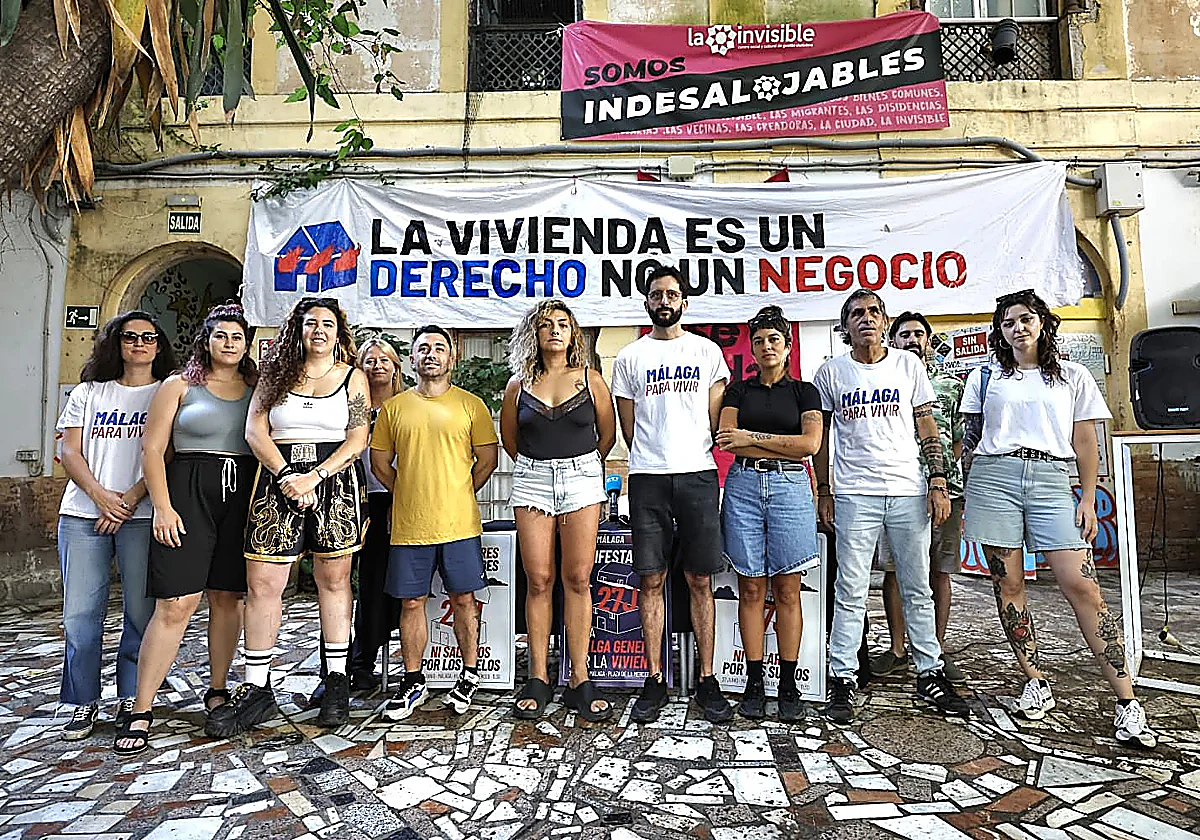
Cristina Vallejo
"We believe the unions have to understand that they will have no other option but to call a general strike for housing and against precarious employment," spokesperson and coordinator for the Málaga Para Vivir platform Dani Machuca said during the announcement of the general demonstration on 27 June.
The march is going to start from Plaza de la Merced at 11.30am, under the slogan: "Neither sky-high rents nor rock-bottom wages: towards a general strike for housing."
"We are initiating a process so that we can build it together, from the ground up," Machuca said. He is calling for a general strike in the autumn or early next year.
Related story
"This is a wave of demonstrations that began in Madrid, where it culminated in the proclamation of a general strike for housing," he said. The March he was referring to happened in Madrid on 24 May.
Málaga Para Vivir spokesperson Alberto Martín recalled the demonstration that marched through the streets of Malaga on 5 April 2025. That was the last major mobilisation "against a model that aims to turn the city into a theme park for exploitation".
Since then, Martín said, "the housing problem and precarious living conditions have been growing". "We believe it is necessary to escalate the level of conflict," Martín said.
He highlighted the approval of "megaprojects" in the city that "deepen the dynamics of gentrification and price speculation". Among those projects are the Huelin marina, the privatisation of the Cruz del Humilladero prison to build a private educational centre and the El Palo seafront promenade.
Málaga Para Vivir has been holding various workshops and residential meetings in these three districts as part of organising protests. In the manifesto on Thursday, the platform members read: "We will not give up and we will continue organising and mobilising until we manage to end this model of city and society that extracts profits for a few at the expense of precariousness and misery for many."
Málaga Para Vivir draws attention to the fact that, despite the demonstrations of the last two years (not only the one on 5 April 2025, but also those of 29 June and 9 November), the authorities "have not taken responsibility for a situation that keeps worsening". Instead, they have "abandoned measures" such as the social safety net against evictions or the decree extending rent payments.
"That is why we are not waiting and are taking a further step, calling for the creation of a collective process that puts an end to this debacle, an open process leading to a strike that brings everything to a standstill," they said. "We know that the strike is a tool that belongs to us," the manifesto states.
The experiences of the 2018 feminist strike and the solidarity strike with Palestine last autumn show that calls for a general strike require union cooperation.
The manifesto appeals to them directly: "We invite unions not to turn a deaf ear to this murmur that is sweeping the country and growing into a roar. We are calling for the start of a process leading to a general strike for housing because homes are unaffordable and because rents keep rising, because evictions are multiplying and because gentrification is increasingly encroaching on neighbourhoods."
Málaga Para Vivir has called for a series of events this Friday and Saturday. The first starts at 7pm on Friday: a dialogue on conflicts that have been ongoing in the city, such as the strike by sanitation workers from FCC-Aqualia, which lasted 50 days; the resistance of the residents of Avenida Europa 15, who have been fighting for a year to remain in their homes after an investor bought the majority of the flats in the building; as well as the organisation Un Techo Por Derecho, which mobilises in response to each eviction.
On Saturday, Málaga Para Vivir will explore in further talks the capacity of a strike to make changes.
"The cost of living keeps rising and we are exploited with endless workdays, excessive workloads, job insecurity and no work-life balance," Málaga Para Vivir said. They also denounce the "degradation of public services" and the "destruction" of public assets.
This is a multifaceted protest that encompasses the fields of healthcare, labour, education, housing and public services.
![[]](http://static.vocstatic.com/voc26/latest/assets/images/favicon/surinenglish/apple-touch-icon-57x57.png)