
Technology
Malaga to have Europe's most powerful quantum computer, due to arrive on 14 December
The computer will be available for use by UMA research groups and selected companies and start-ups
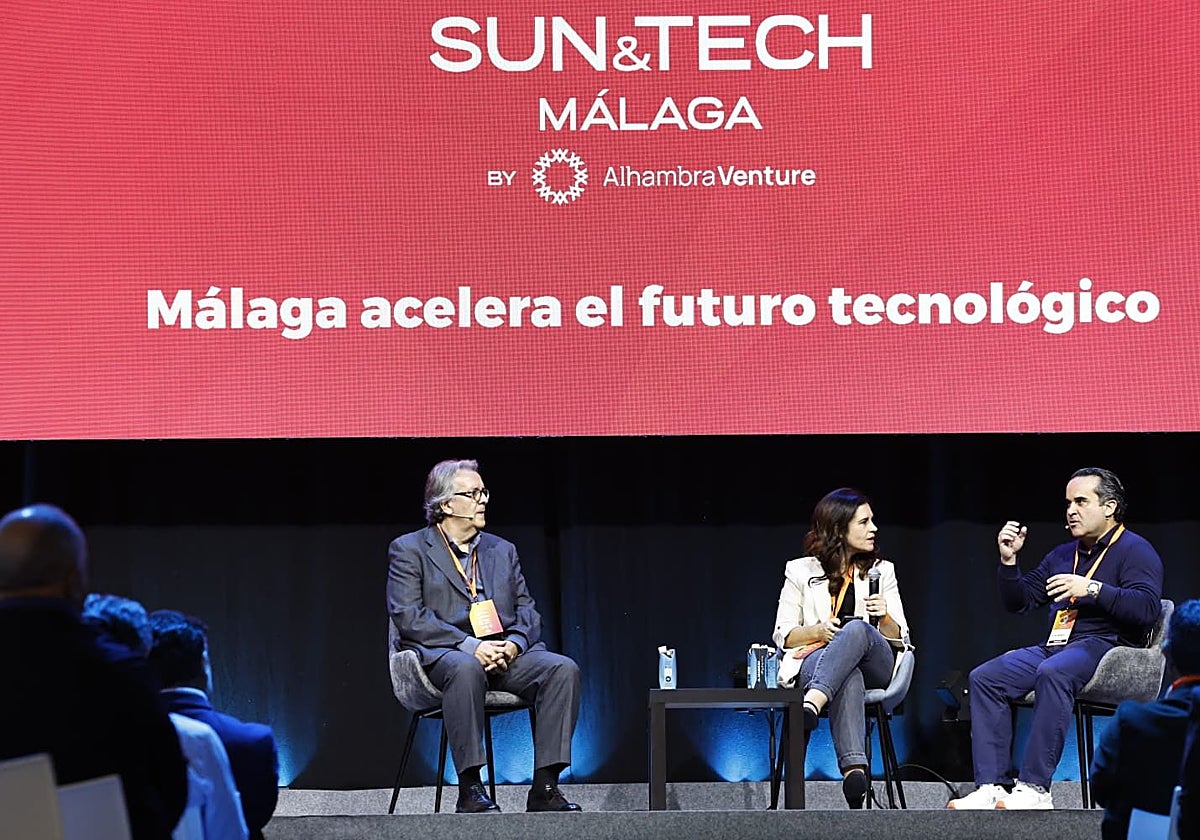

"We're the 'Javis' of quantum computing," Malaga-based entrepreneur and owner of Quantum Labs Javier Romero and UMA deputy rector for tech innovation ... Javier López said during their panel at the Sun&Tech Málaga by Alhambra Venture on Wednesday.
The discussion helped the audience, much as the famous Spanish film directors' duo 'Los Javis' did with La bola negra and Federico García Lorca, gain a deeper understanding of quantum computing and the importance it will have for Malaga. As Romero revealed, the most powerful quantum computer in Spain and on the European continent will arrive in the Costa del Sol capital on 14 December.
The device in Barcelona has 35 qubits; the one in Galicia, 32; and the one in the Basque Country, 150. The one in Malaga will have 431. "This will obviously give our research groups a greater capacity for action than other research groups at other Spanish universities may have with their respective quantum computers. It places the UMA in a prime position to carry out quantum research," López stated.

This Thursday, Romero and his team are travelling to China to receive training on how to install the computer, before returning to Malaga, where they will await the arrival of the computer. The UMA is going to house the computer in facilities with very specific conditions to ensure the 'cubics' (the basic units of information in quantum computing) do not go haywire.
Quantum technology is important because it will enable researchers to tackle problems that cannot currently be solved, such as drug design, transport logistics and finance, etc.
"These are problems that not even today's supercomputers can tackle, but which quantum computing will be able to solve because of the way it works: what a quantum computer does is explore all possible solutions in parallel, selecting those that will yield a result and discarding the others," López explained.
These new quantum computers are not going to replace existing ones, but will coexist with them. They also won't be found in people's homes. Not even all businesses will have access to them. However, as Romero explained, the quantum computer to be installed in Malaga will be made available to businesses, start-ups and research groups.
"The Malaga quantum computer will have three main uses," Romero said. These include Quantum Labs' internal projects, those of UMA researchers and those of quantum companies across Europe.
Hours in exchange for equity
The entrepreneur explained that, while these companies do not have the financial capacity to hire these quantum computers (it costs around 5,000 or 5,500 euros per hour and testing a model requires 100 hours), there will be a scientific committee. Those companies deemed to have potential will be loaned the computer in exchange for a stake in the company. "We will be able to invest in quantum start-ups across Europe," Romero said.
Malaga therefore offers an opportunity to capitalise on quantum technology. Not only for businesses, but also for research groups at the UMA, working in artificial intelligence, photonics, cyber security, computer architecture, computational chemistry and for graduates of the specialisation course the university offers in this field, which is the only one of its kind in Andalucía.
Manufacture of quantum computers in Malaga
Quantum computing in Malaga, then, is bound to grow. The 15 people currently on the team setting up the computer are expected to number around 100 by the end of next year. Furthermore, there are plans to manufacture quantum computers in Malaga: from the chip to the materials, including the control system and the cryogenic system.
This will help safeguard digital sovereignty, an issue of concern to European governments, given the dominance of the US and China in contemporary technology.
Another of the governments' concerns regarding quantum computing centres on data control and what their adversaries might do with it: "What the bad guys are doing now is stealing data that currently cannot be decrypted. Data that can be decrypted (with the help of quantum computing) in five or ten years' time will be incredibly valuable, because it could range from missile design to finance," Romero said.
"Many companies and governments are now storing encrypted data that they will be able to decrypt in ten years' time. That is the fear of governments, which are now encouraging companies and various public institutions to start protecting that data right away with robust measures so that even when quantum computers become a more tangible reality, it will remain protected," López said.
