
Politics
Malaga city opposition attacks Mayor De la Torre, who uses construction of 1,200 affordable homes in his defence
The housing crisis in the city has dominated the state of the city debate, with criticism from both the left and the right against the mayor's model
Pilar R. Quirós
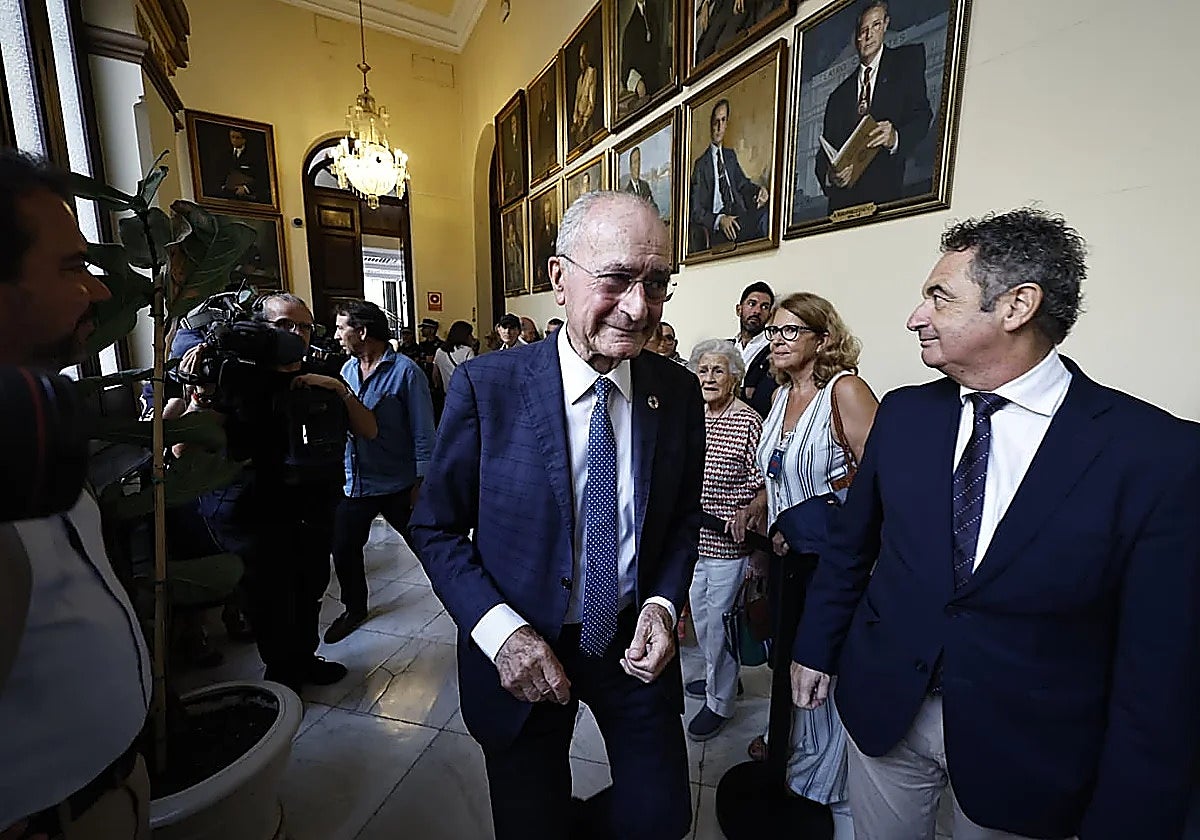
The second and final state of the city debate of Malaga Mayor Francisco de la Torre's current term (2023-2027) will not go down in history as a particularly impactful session.
In contrast to the seats left-wing groups have occupied in recent plenary sessions, in this one De la Torre supporters predominated. There were neither shouts nor much applause and the few cheers were surprisingly directed at PP (the mayor's party) spokesperson Carmen Casero.
De la Torre's participation in the state of the city debate, however, lacked sparkle and any flagship projects were noticeably absent. Instead, he returned to an old habit: listing projects, streetlights, new police officers, firefighters, markets, the door-to-door waste collection service, beaches with an environmental stamp, which ultimately made the 120 minutes of his first turn tedious.
Related story
It seemed his objective was to lull everyone to sleep so that everything would be more subdued. Mission accomplished: the audience ended up with quite a few empty seats.
There was one issue that De la Torre couldn't avoid: the housing crisis, which is impacting the entire country but hitting Malaga particularly hard. The opposition (the PSOE and Con Málaga, as well as Vox) seized the opportunity to attack him on this front and De la Torre used his opening speech to highlight everything the PP local team had done before the spotlight faded.
Seeing how Monday's protest unfolded, with tents pitched in Plaza de la Constitución at the end, the mayor began with some powerful ideas: "Malaga is a much better city today than before. When has Malaga ever been like this?"
He went on to say that, while the city had grown, the income of Spaniards (Malaga residents) had stagnated, and while Europeans had seen their incomes improve by 14.2 per cent from 2018 to 2024, Spaniards' incomes had only grown by four per cent. "We're stagnating," he said, which led him to explain, in considerable detail, why access to housing in Malaga is so difficult.
According to the mayor, his team have done their job, having built and delivered 5,339 affordable homes since 2000: 2,511 for sale and 2,628 for rent. He added that the city council is currently building 1,186 homes and another 3,997 planned units are in the pre-tender phase and other stages prior to construction.
Casero responded to the left-wing opposition: "No to forced entry, no to rampant interventionism, no to expropriation and yes to building more housing: the more, the better."
PSOE, Vox and Con Málaga agreed that the main issue was housing, but they did not only focus on this issue. They also said De la Torre's city model was obsolete.
PSOE spokesperson Mariano Ruiz Araujo described Malaga as "a city admired from the outside, but one where it is increasingly difficult to live". He then addressed the fact that hundreds of people have been demanding housing solutions.
Ruiz Araujo pointed out that the current Malaga "is one of families struggling to pay rent, of those who waste hours commuting to work and of parents who fear their children will not be able to live where they were born".
Vox spokesperson Antonio Alcázar, like the rest of the opposition, also pointed to the housing crisis in Malaga, but focused more on the fact that the city once had "a project, ambition". He granted Mayor Paco de la Torre an undeniable role in that transformation.
"This isn't about ideology. Denying that it was thanks to you would be absurd," he said, but quickly shifted to another perspective. "The project, the city model that you embody, has been obsolete since 2015," he stated.
Con Málaga spokesperson Nico Sguiglia was clear on the matter. "Malaga can be a paradise for everyone, but to achieve that, we need to tackle the housing market," he said.
Sguiglia stated that the real debate about the state of the city is taking place in the Plaza de la Constitución, among those camping following Maricarmen's eviction in Madrid.
Sguiglia pointed out that Malaga has 12,600 tourist flats, 16,000 empty homes and 360 apartment buildings, totalling 40,000 homes, while there are 35,000 people on the municipal waiting list for social housing. "This is where the problem lies," he stated.
He didn't deny Malaga's success, but questioned who it was for and criticiced Mayor De la Torre for "benefiting rentiers and speculators", noting that only two social housing units were delivered in 2025.
Read dedicated local reporting for Malaga city
![[]](http://static.vocstatic.com/voc26/latest/assets/images/favicon/surinenglish/apple-touch-icon-57x57.png)