
Politics
Mayor of Malaga faces strong criticism from the opposition in debate on the state of the city
While the housing crisis in Malaga was already a major cause for concern, it is set to take centre stage in the debate, spurred on by the case of Maricarmen

Málaga
Malaga city council is holding its last state of the city debate before the elections in May 2027 this autumn. This is a key date ... for the opposition and another test to pass for the ruling party (PP).
To sum up the general feelings among all local opposition parties, everyone is against Mayor Francisco de la Torre.
While housing was already among the top ten issues for the people of Malaga, Maricarmen's eviction in Madrid and the wave of protests that has swept the country have also taken their toll on the city.
Related story
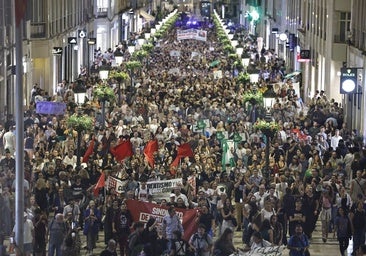
The demonstration on Monday afternoon, which over 1,000 people attended, drew a lot of attention to the mayor. "And where is Paquito? Paquito where are you? Paquito is selling what's left of the city," the crowd chanted as they left the city hall to head to Plaza de la Constitución, where 20 tents remain as a symbol of the fight for fair housing.
The Malaga tenants' union has called another large demonstration at 7pm on Saturday. These rallies are both against the central government, urged to approve the Maricarmen decree, and the local ruling team.
Opposition party PSOE spokesperson Mariano Ruiz Araujo has given a bit of context on the previous two state of the city debates the city council has held over De la Torre's current term of office. According to Ruiz Araujo, his party had called both of them.
The local PSOE leader believes that the debate should not merely be a string of criticisms levelled at the PP, but also an opportunity to present a different "model of the city: one that is possible and full of hope".
Housing will be one of the cornerstones of the upcoming debate. Ruiz Araujo plans to present a model of the city that differs from De la Torre's. He will delve into everyday, "interdependent" city life, housing and residential districts and will also address "a city that is preparing for the future".
Vox spokesperson Antonio Alcázar will also expand on the housing crisis, as well as the lack of infrastructure and transport problems, the lack of security and recent shootings.
For Alcázar, the city model "is outdated, antiquated and obsolete". He believes that the PP is copying its ideas, voting against them in motions and then implementing them. Alcázar said that his party will also raise the issue of the Low Emission Zone, demanding that the city council stop issuing fines while the matter is before the courts.
Spokesperson for Con Málaga Nico Sguiglia will demand that Malaga be a city in which people can live, not merely to survive. Sguiglia will point out that, after 26 years and having managed 20 billion euros, Malaga has changed, but for whom?
He will ask what Malaga could have been and what it can become "if we prioritise the well-being of its residents, rather than business interests and the enrichment of a select few". This argument is very much in line with the one he has been championing throughout his term of office.
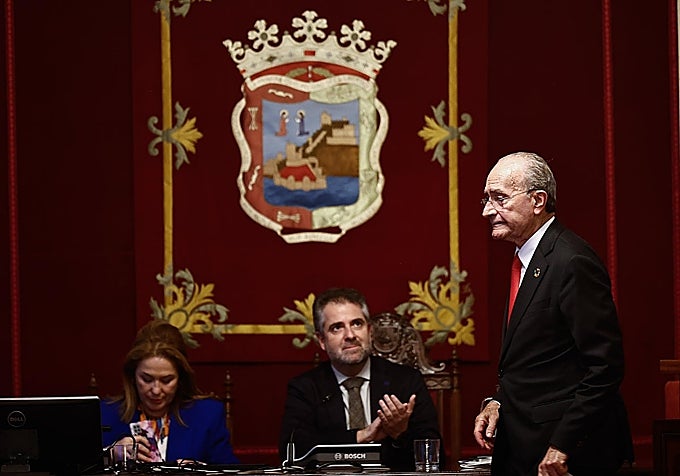
What can we expect of the Mayor of Malaga? Grand announcements is what he has done so far
During the state of the city debate in 2025, De la Torre did not give his usual review of improvements, which he had already covered in previous sessions.
He made two major announcements: an emergency housing plan, the outcome of which he will now have to explain, a state-of-the-art vocational training centre in the former prison and a nanoelectronics hub.
The debate timetable
During the debate, De la Torre, who will be on the receiving end of all the complaints, as is customary, will have unlimited time.
The spokespersons for the PP, PSOE, Vox and Con Málaga parties will be allocated a set amount of time: 35 minutes in the first round and 15 in the second, making a total of 50 minutes, which many may well extend to nearly an hour given the usually allowed flexibility.
The last debate, on 15 January 2025, lasted an hour and 45 minutes. Let's hope that this time, too, they stick to this schedule, because the debate will already amount to nearly four hours of back-and-forth, which is more than enough.
![[]](http://static.vocstatic.com/voc26/latest/assets/images/favicon/surinenglish/apple-touch-icon-57x57.png)