
Feria de Málaga 2026
Historic Malaga fair cements Cortijo de Torres fairgrounds' popularity and sparks city centre debate
Visitor numbers have exceeded last year's records, filling hotels, bars and restaurants

Málaga
Malaga has brought to a close a historic August fair, which has once again demonstrated that the event is a key factor in boosting ... the city's appeal to tourists during the summer months.
Hotel occupancy remained at the same level as last year (93%). There was an increase in waste collection (8% on average); a rise in the number of passengers on city buses (5%); and the high footfall at bars and restaurants, a little bit over 2025.
These seven days have provided a significant economic boost for the Costa del Sol capital, which hosts what can be considered the main mass event in southern Europe during the summer months.
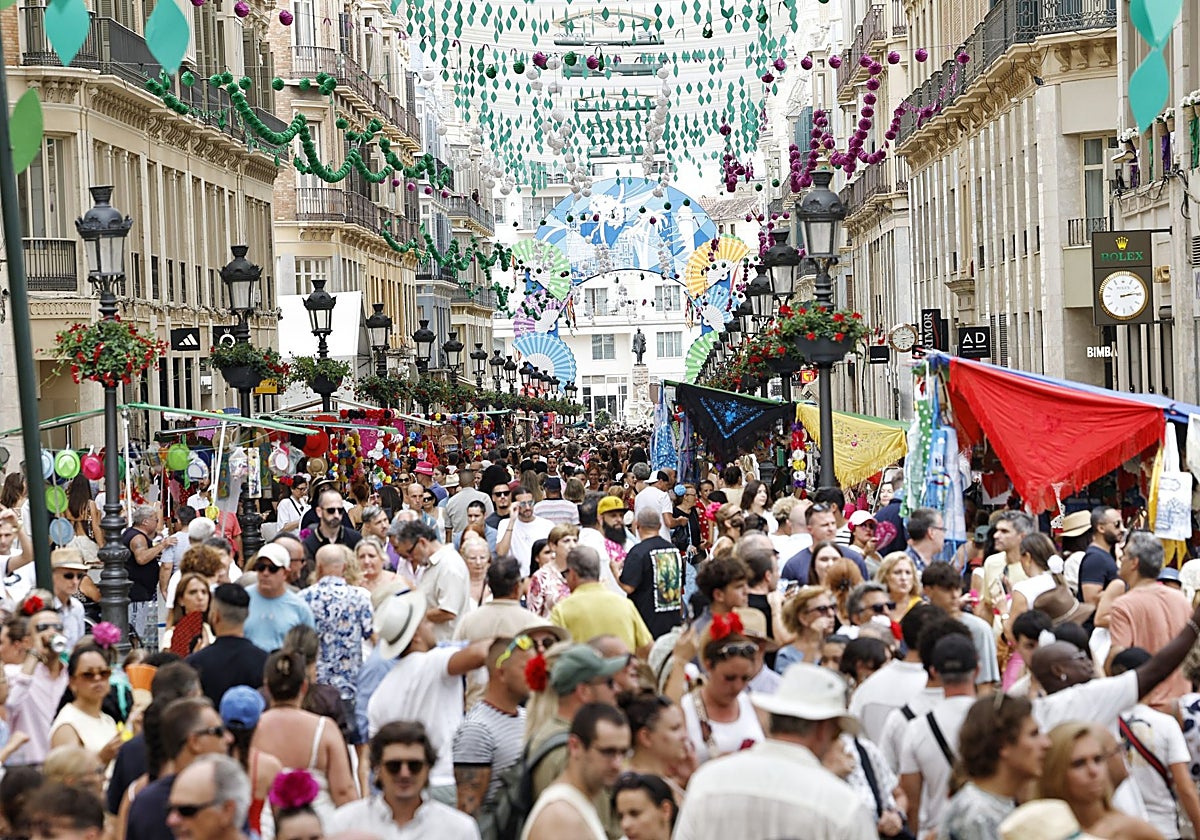
One statistic in particular helps to highlight what has been happening in the city over the past week. On Tuesday, the EMT public bus service recorded 209,059 passengers, a figure never before seen in its more than 100-year history, with a total of 1,784,827 journeys recorded.
In addition, the number of people attending the more than 200 organised events, including the fireworks display, was close to one million (951,030).
Once again this year, however, the report highlights the debate over the decline of the fair in the historic centre (where waste collection has risen by 4%) in favour of Cortijo de Torres fairgrounds (where waste has increased by 14%).
In addition, many have complained that the 'casetas' at the fairgrounds have turned into nightclubs and bars, losing their traditional atmosphere.
Restaurant and bar owners have generally assessed the fair positively, although with a few points of criticism.
The president of the Malaga hospitality association (Mahos), Javier Frutos, estimates that turnover in businesses in the city centre and at the fairground stalls may have risen by 2-3% compared with last year's figures. According to him, this may help offset the drop in revenue in the city's establishments in July.
However, Frutos draws attention to the fair in the city centre and calls for more activities. "You can really tell the difference between the squares and streets where there are fair activities and those where there aren't. People still want to come to the city centre, but there are places where it doesn't feel like a fair is on," he stated.
This, Frutos sees, has a negative impact on bars and restaurants. He has urged "the local council to provide more content for the city centre fair, in collaboration with hospitality providers and shopkeepers". "I believe we're all on the same page and this is what the people of Malaga are calling for," he concluded.
Festivities and fairs councillor Teresa Porras stated that the city council remains committed to a 'Centro' fair "that represents the best of our culture and traditions".
"The 'Centro' fair must not lose its essence. We want it to remain a place for people to come together, a place of tradition and enjoyment for everyone. We will work to consolidate and strengthen this identity in the coming years," she said.
"Now is the time to sit down with business owners, listen, share and exchange views so that we can continue enriching the fair," she told SUR.
Javier Frutos also criticised the fact that shopkeepers and hospitality industry owners had suffered frequent power cuts during the fair. "In recent months, areas such as Alcazabilla, La Merced, Calle Granada and Císter have been suffering from a great many continuous power cuts, which is also affecting turnover," he said.
As for the Cortijo de Torres fairgrounds, Frutos believes it is maintaining its momentum and the stalls are "better equipped and offer better food". He also praised the growing importance of the bullfighting festival.
"We have three distinct areas catering to all types of visitors, both locals and tourists and that speaks volumes about the appeal of the Malaga fair," he said.
In the same vein, Juan Rambla, president of the Andalusian nightlife employers' association, described the 2026 fair as "good" despite the fact that the public holiday on 15 August fell on a Saturday. "As it fell on the first Saturday of the fair, it didn't bring any extra benefit, because that day is already a busy one in its own right," he explained.
Nevertheless, Rambla sees the "very good turnout" as a positive. According to him, the event passed "without any major problems or incidents". Financially, however, it saw a decline in spending as the days went by, although this is a phenomenon that occurs every year.
The 'La Alcazaba' association also gave a positive assessment, particularly regarding visitor numbers at Cortijo de Torres, which are clearly on the rise compared with the fair in the city centre. Its president Manuel Curtido, however, continues to call for the fairground to be used all year round with permanent stalls.
Curtido criticised the transformation of the traditional fair into a "mass drinking party". He is offering his cooperation to the city council and calls for the regulations to be enforced "for everyone".
"This year there have been many breaches. We are turning Cortijo de Torres into something we do not want and this must be nipped in the bud through the institutions," he said.
The city's hotels have also enjoyed a favourable fair week, having recorded an occupancy rate of 93.5%. This represents an increase on the initial forecasts by the Costa del Sol hoteliers' association (Aehcos), which had estimated 88.4%. The highest occupancy rates were during the first few days of the fair, with the majority of overnight visitors being international (60.35%) rather than domestic (39.65%), which once again highlights the city's appeal during particularly significant events.
However, Aehcos is taking a cautious view of these figures, "because the trend in demand this summer is showing that last-minute bookings are becoming increasingly significant".
During the fair, the Local Police carried out 62 interventions in response to brawls and reported 39 people for relieving themselves in public and a further nine for consuming alcoholic drinks in public.
According to the city council, the security forces succeeded in preventing the sale of alcoholic drinks without the required licence and of any other products without authorisation.
As for public premises and festival marquees, authorities carried out 727 inspections and interventions throughout the week of the Feria, resulting in 37 fines. Four marquees at the fairground were also temporarily closed after operators failed to rectify shortcomings identified during an initial warning within the maximum 24-hour period.
One of the closures followed a repeat offence involving inadequate demarcation of the premises and the premature removal of tables and chairs. Another followed repeated breaches including preventing free entry and charging or requiring an invitation or pass to enter, failing to comply with opening hours, inadequate demarcation and the premature removal of tables and chairs.
A third closure resulted from repeated breaches of safety requirements concerning emergency exits, while the fourth followed repeated failure to provide sufficient lighting to prevent dark areas from forming, as required until 2am.
As part of efforts to improve road safety, the police carried out 2,736 alcohol and drug tests. These resulted in 147 positive alcohol tests leading to fines, 23 positive tests that constituted criminal offences and five positive drug tests. The police also issued 14 speeding fines.
In total, they made 53 arrests. These included four arrests for alleged sexual assault, seven for gender-based violence, two for domestic violence, eight for violent robbery, four for assaulting a police officer or other authority figure, three for causing injury and seven for alleged drug dealing.
Most incidents involve alcohol abuse
Civil protection teams responded to more than 350 calls and provided around 250 different types of assistance, most of them for minor incidents, mainly suspected alcohol poisoning, cleaning and treating cuts or people suffering from dizziness.
The municipal medical emergency service recorded 1,232 attendances. Almost two-thirds involved excessive alcohol consumption, followed by minor injuries. Three people were also treated after separate attacks involving bladed weapons.
The municipal health and consumer affairs service, working with the Local Police and the Guardia Civil, issued 12 reports to festival marquees over food safety incidents and a further 17 for failing to meet food-safety requirements during transport.
Police also seized a total of 215.7kg of animal and non-animal products for various reasons, including inadequate refrigeration, irregularities in food labelling and information, failure to prove their origin and transportation in unauthorised vehicles.
![[]](http://static.vocstatic.com/voc26/latest/assets/images/favicon/surinenglish/apple-touch-icon-57x57.png)