
Environment
Artificial intelligence to put an end to stench from sewage treatment plants in Malaga
The water supply company has come up with an innovative solution that will monitor and predict levels of hydrogen sulphide, methane and ammonia and allow it to make decisions on plant management

Malaga
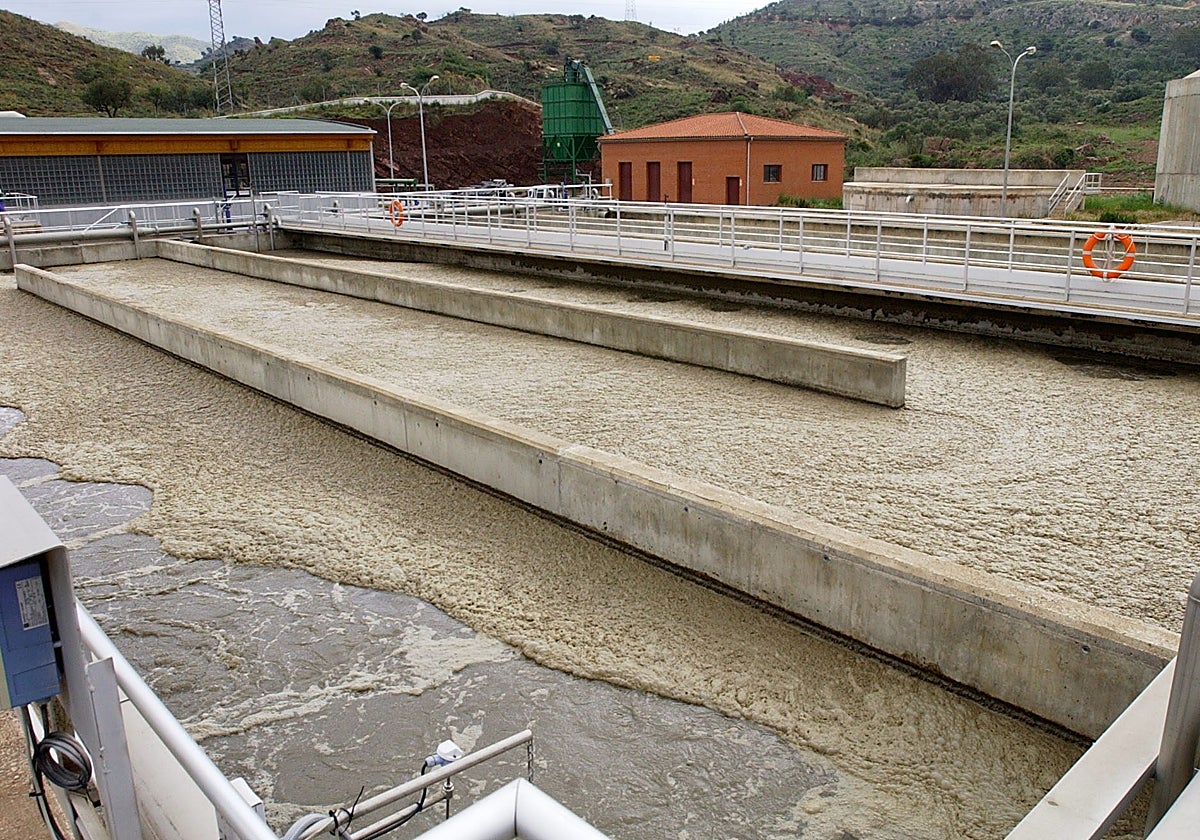
Anyone passing by the old sugar factory or near the Guadalhorce wastewater treatment plant in Malaga will often notice the unpleasant odours coming from the area. The activity of the treatment plant is evident, although the episodes vary and depend on multiple factors, including the weather. And this is despite the fact that Emasa, the municipal water company, made significant investments in the thermal and mechanical sludge-drying areas, as well as in some coverings.
It is worth noting that treatment plants such as the one at the Guadalhorce handle enormous volumes of wastewater - around 165,000 cubic metres per day. In this process, it is necessary to consider the nature of the incoming water and the bacterial, physical and chemical processes involved, as well as peak flow rates and atmospheric conditions. All of this is done to return the wastewater to the environment ultra-filtered, following tertiary treatment.
Innovation
It is not an easy task facing the municipal technicians and they have now taken advantage of the framework provided by the European Union's recovery and resilience plan - Next Generation EU funds. The estimated amount is around 200,000 euros in round terms and the possibility of funding covers 88 per cent. It is four months for the supply and development of the software and five years for its maintenance.
It involves monitoring, installing sensors, working with artificial intelligence, algorithms, modelling, and, of course, what is known as the digital twin, which is an accurate virtual replica in this case, of the wastewater treatment plants and pumping stations.
Emasa’s aim is to anticipate periods of higher odour load so that management decisions can be made within the infrastructure, helping to minimise both nuisance and emissions. Action will be taken at the aforementioned Guadalhorce plant, at Peñón del Cuervo, and at three of the most problematic plants.
Sensors
In the Guadalhorce, hydrogen sulfide, ammonia, and methane sensors are planned for the different areas. Meteorological stations are included, measuring at least wind direction and speed. There are four sensors in total. In the case of Peñón del Cuervo, there are three.
"Given the innovative nature of the tender and preferentially, other more innovative and sophisticated solutions and tools based on computational fluid mechanics (Computational Fluid Dynamics, CFD) [...] may also be considered as alternatives to the Gaussian-Langragan dispersion models," the technical specifications, consulted by SUR, state.
"The technology behind the platform is to be based on an artificial intelligence (AI) model trained with results from CFD simulations, which allows real-time prediction of pollutant concentrations," it said.
![[]](http://static.vocstatic.com/voc26/latest/assets/images/favicon/surinenglish/apple-touch-icon-57x57.png)