
Infrastructure
Andalucía proposes free motorway access for residents and bus lane on the A-7 on the Costa del Sol
The newly approved land use plan includes six new junctions on the AP-7, an extension to the commuter rail line and further water desalination

Málaga
The Western Costa del Sol once again has an urban development roadmap, 20 years after the previous document, which dated from 2006 but was annulled ... by the courts. On Wednesday, the regional government of Andalucía approved the new POT territorial plan for this area. It sets out the framework for nine municipalities (Fuengirola, Mijas, Marbella, Estepona, Casares, Manilva, Benahavís, Istán and Ojén), home to almost half a million people.
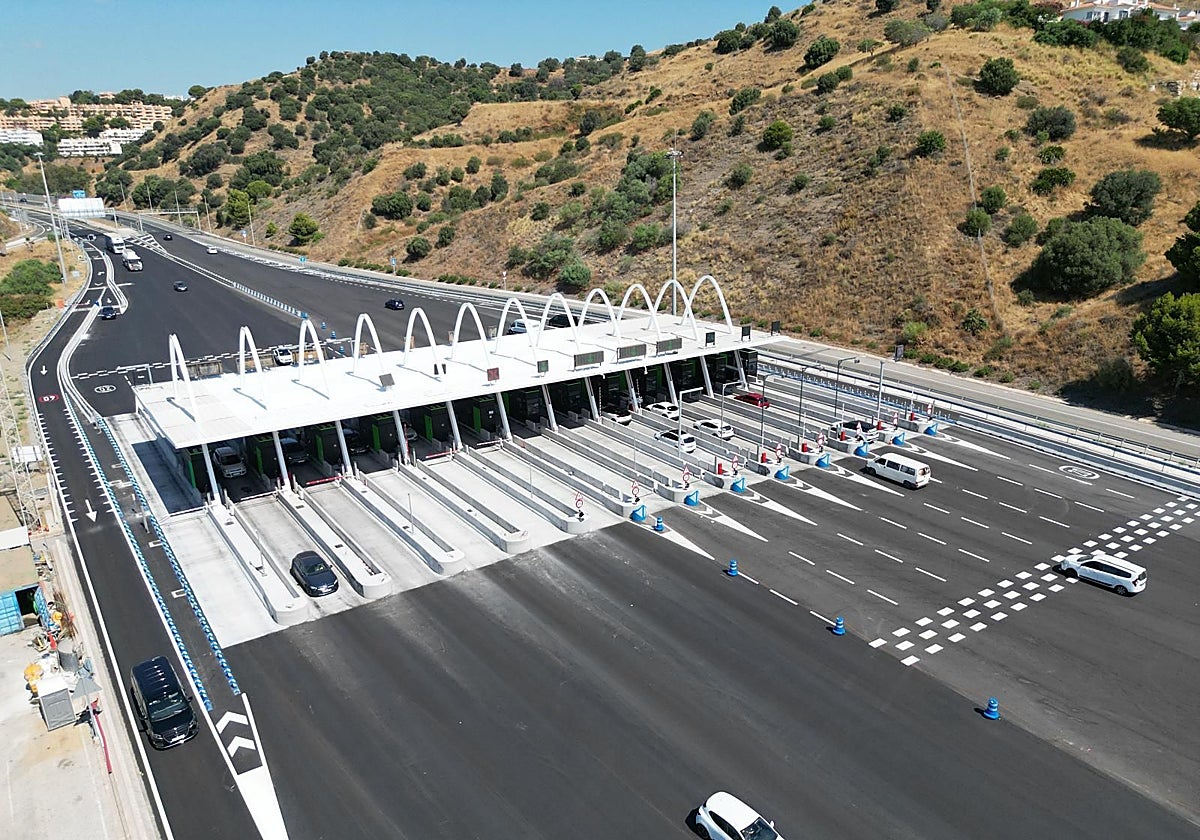
Daily travel between municipalities dominates the life of the people in the area. As regional minister of housing Rocío Díaz said on Wednesday, the document focuses on the AP-7 toll motorway, where the regional government has taken on board a long-standing demand from the local authorities: the removal of tolls for residents of these nine municipalities.
In addition to this, there is a proposal to improve the accessibility of this motorway by constructing six new junctions: in Casares, Benahavís, Istán, the area around Hospital Costa del Sol, La Cala de Mijas and Las Lagunas. It includes adapting the A-7 motorway so that it can incorporate a lane reserved exclusively for inter-city public transport (a bus lane).
Related story

Díaz said that these infrastructure projects require the agreement and direct involvement of the Spanish government, as both fall within its remit. The same applies to rail transport, where the POT states that the C1 commuter line must extend beyond Fuengirola to provide coverage for the entire western coastline. It also supports the coastal train project.
"The proposal from the ministry of transport as the body responsible for deciding the route of the coastal railway is now 15 years old and runs to the north of the A-7, right alongside it. We have incorporated it and we are also working on the Andalusian regional plan, which takes precedence over sub-regional plans, with the ministry to ensure it goes ahead," Díaz explained.
It will not only reach Manilva (the point where the coastal plan ends) but go all the way to Algeciras, "which has been our objective from the very beginning", Díaz said.
Furthermore, plans are made to link this extensive area with the Mediterranean corridor and the high-speed rail network. The document commits to improvements to roads the regional government and the provincial authority manage and is committed to completing the cycle and pedestrian network, based on routes such as the Senda Litoral and the Gran Senda de Málaga.
Priority to social housing
Beyond transport infrastructure, the document aims to regulate urban growth, linking it to the actual availability of services and water resources. The POT identifies 13 priority areas for action, most of which are around the A-7 motorway, as they are more accessible.
In areas such as La Torrecilla (Marbella) and Las Lagunas (Mijas), land will be set aside for supra-municipal facilities, while in areas such as San Luis de Sabinillas or Bahía de Casares new "urban centres" will bring services closer to established residential areas.
In the residential sector, the plan sets out clear guidelines for local authorities. When drawing up their general plans, they must tailor them to the actual demand of their residents and give priority to both owner-occupied homes and social housing. All of this is underpinned by flood risk mapping, which prevents any new urban development in areas at risk of flooding.
Desalination plant and interconnection
Water supply is another strategic area. The plan identifies the expansion of the desalination plant in Marbella as a priority, as well as the two-way connection between the water supply systems of Malaga city and the Western Costa del Sol, so that they can support one another during periods of drought. Plans also include the renewal of networks to tackle leaks and the increased use of reclaimed water.
From an environmental perspective, a green infrastructure will connect the protected natural areas in the interior with the coastal strip via river corridors. A network of five parks of supra-municipal importance will incorporate two new green spaces within the municipality of Marbella: one in Guadaiza and the other in Elviria. It also sets out criteria for sanitation, energy supply and waste management, both in existing settlements and in areas designated for future development.
The regional ministry of housing has brought the document into line with the law on promoting territorial sustainability in Andalucía and submitted it for public consultation and strategic environmental assessment. To ensure the document does not remain a dead letter, the regional government has approved the creation of an executive and monitoring committee comprising representatives from the regional government, the central government, the provincial authority and the mayors of the nine municipalities concerned.
Every three years, the regional ministry will draw up a management report to assess the degree of compliance with a set of measures which, in the words of Rocío Díaz, aim to "improve the lives of local residents and guarantee all services" in this area.
The decree will come into force on the day following its publication in the BOJA (the official gazette of the regional government of Andalucía). From that date the plan's regulations will apply directly, taking precedence over town planning regulations and also over plans and initiatives with territorial implications, which will have four years to adapt.
