
Demographics
Malaga province doubles number of foreign workers to 146,000 in a decade
The municipalities of Benahavís, Manilva, Ojén, Mijas, Estepona and Istán stand out for their proportions of workers from outside Spain
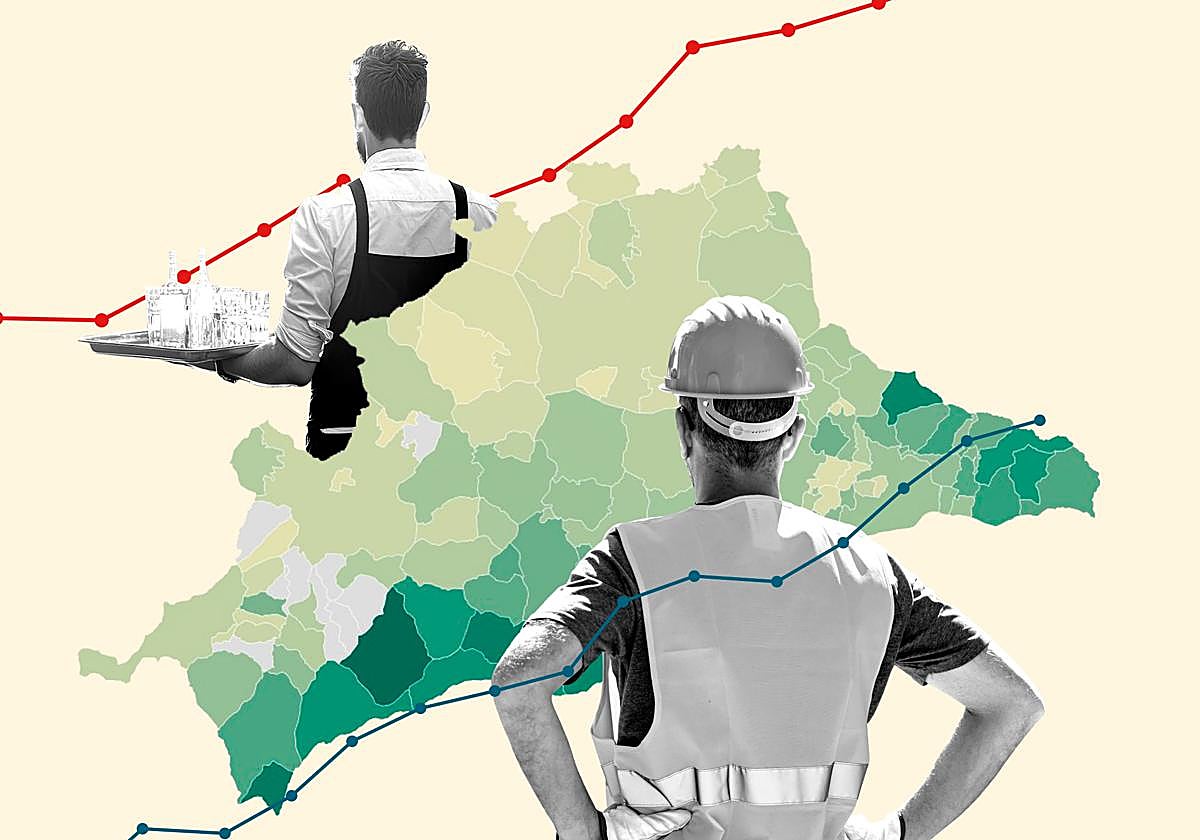

Benahavís is the town in Malaga province where foreign workers account for the largest proportion of the total workforce: they make up nearly 40%. In ... other words, of the average 3,097 people that registered with Social Security in 2025, 1,230 were foreign nationals.
In second place is Manilva, where 1,719 of the approximately 5,000 contributors in the municipality, 34% of the total, are from other countries. There are five other towns where almost one in three registered workers is a foreign national: this is the case in Ojén (with 290 out of a total of 875) and Alcaucín (163 out of 525), but also in larger municipalities such as Mijas (with 8,344 out of a total of over 26,850), Fuengirola (nearly 8,000 out of a total of around 25,800) and Benalmádena (almost 7,100 out of just over 24,000).
In other municipalities, foreign workers account for at least one in four jobs (or 25%): these are Estepona, Frigiliana, Cómpeta and Istán. However, in the latter, given its small size, that 25% means that there are 65 foreign employees out of a total of 260 workers registered with Social Security.
Other municipalities in Andalucía have much higher proportions of migrant workers. In Lucena del Puerto, in Huelva, foreign workers account for 66% (more than 3,400 out of a total of 5,145) and in Moguer, also Huelva, they make up more than half. Next come some municipalities in Almeria, such as Níjar (8,600 out of 17,000).
Market size and sector
These figures are based on the municipality of employment, not necessarily the municipality of residence, as per IECA (Andalusian institute of statistics and cartography) accounts.
Related story
Malaga University geographer Juan José Natera notes that the data reveals, on the one hand, the size of the labour market in each municipality and, on the other, the types of work in demand. "We can surmise that in some municipalities, such as those in Huelva or Almeria, the main source of employment is agriculture. As for the Costa del Sol, in Malaga city or Marbella, however, we find workers in the hospitality sector and in tourism-related services, but also in other highly skilled roles. They may well be residents of the most expensive areas along the coast," Natera says.
He is the author of a study on where foreigners live according to their income, in which he concludes that high-income foreigners do not overlap with those on low incomes. The former usually live in the western Costa del Sol and in detached houses within closed residential developments, while the latter primarily live in the north of Malaga city, in Divina Pastora (Marbella) or in Boquetillo (Fuengirola).
Natera also suggests that the presence of migrant workers in certain municipalities may also be linked to the ageing of the native population and the fact that migrants tend to arrive in Spain at working age.
Among the provincial capitals of Andalucía, Almeria has the highest proportion of foreign workers, accounting for 11.8% (or 12,254) of the total number of Social Security contributors (103,626). In second place and very close behind is the city of Malaga (11% or 38,500 foreign workers out of a total of over 348,000 registered workers).
Further behind are Granada (7%), Seville (6.6%), Huelva (5.4%), Cordoba (4%), Jaén (3.5%) and Cadiz (2.3%).
Malaga city centre
Malaga city is the municipality with the highest number of foreign nationals registered with Social Security, at 38,500, followed by Seville, where the figure stands at around 28,000. In third place is Marbella, with nearly 22,500 foreign contributors, accounting for around 28% of the municipality's total workforce.
Next comes the town of El Ejido in Almeria (almost 20,000), followed by the provincial capitals of Almeria and Granada, which round off the list of municipalities where the number of foreign-born employees exceeds 10,000.
Furthermore, of the 25 Andalusian municipalities with the highest number of working immigrants, eight are in the province of Malaga: Malaga city, Marbella, Mijas, Fuengirola, Benalmádena, Estepona, Torremolinos and Vélez-Málaga.
However, the presence of migrant workers is virtually negligible in around ten municipalities: Alpandeire, Atajate, Benarrabá, Cartajima, Igualeja, Júzcar, Montejaque, Pujerra and Serrato. These are among the smallest municipalities in the province and with the smallest labour markets. Only two of these villages have more than 100 people paying Social Security contributions.
Among the slightly larger municipalities, with several hundred registered workers, the one with the lowest proportion of foreign workers is Cuevas del Becerro (2%, accounting for just ten of the total of 507 registered workers on average last year). Teba, Valle de Abdalajís, Benaoján and Arriate also have similar proportions.
The number of foreign workers has doubled in ten years
Malaga ranks sixth in terms of the number of Social Security contributors of foreign origin: 146,396, according to the Ministry of Inclusion's August figures. Ahead of it is Madrid, where the figure is close to 690,000, while in Barcelona the number stands at over 573,000.
Next come Valencia, with around 211,500, the Balearic Islands (over 185,000) and Alicante (over 169,000). Malaga is therefore well ahead of the second Andalusian province in terms of the number of foreign workers, which is Almeria, where the figure is just under 81,500. It also has more than double the number in Seville (around 60,500).
According to figures from the Ministry of Inclusion, the number of foreign contributors in the province of Malaga has more than doubled over the last ten years, having risen by 123%, starting from 64,500 in August 2016.
However, this is not the largest increase in Andalucía, a spot reserved for Cordoba and Seville, where the increase stands at over 180%, followed by Jaén, where the increase is 160%, although the number there is just over 11,600. In Cadiz, the increase is also 143%, reaching 26,260.
This means that in Malaga, Cordoba, Seville, Jaén and Cadiz, the rise in the number of foreign nationals working and registered with Social Security has been higher than in Spain as a whole: nationwide, the increase has been 105%, exceeding 3.5 million by August 2026.
Statistics from the Ministry of Inclusion also reveal the sectors in which foreign workers are employed. In the province of Malaga, the hospitality sector dominates, followed by retail and construction, although there are also significant numbers working in other service sectors such as real estate, banking and telecommunications.
![[]](http://static.vocstatic.com/voc26/latest/assets/images/favicon/surinenglish/apple-touch-icon-57x57.png)