
Costa del Sol
Pepa, the loggerhead turtle rescued for the second time is returned to the sea in Benalmádena
The animal was found in March on the verge of death; she was treated until August and, the day after returning to the Mediterranean, was found by some bathers
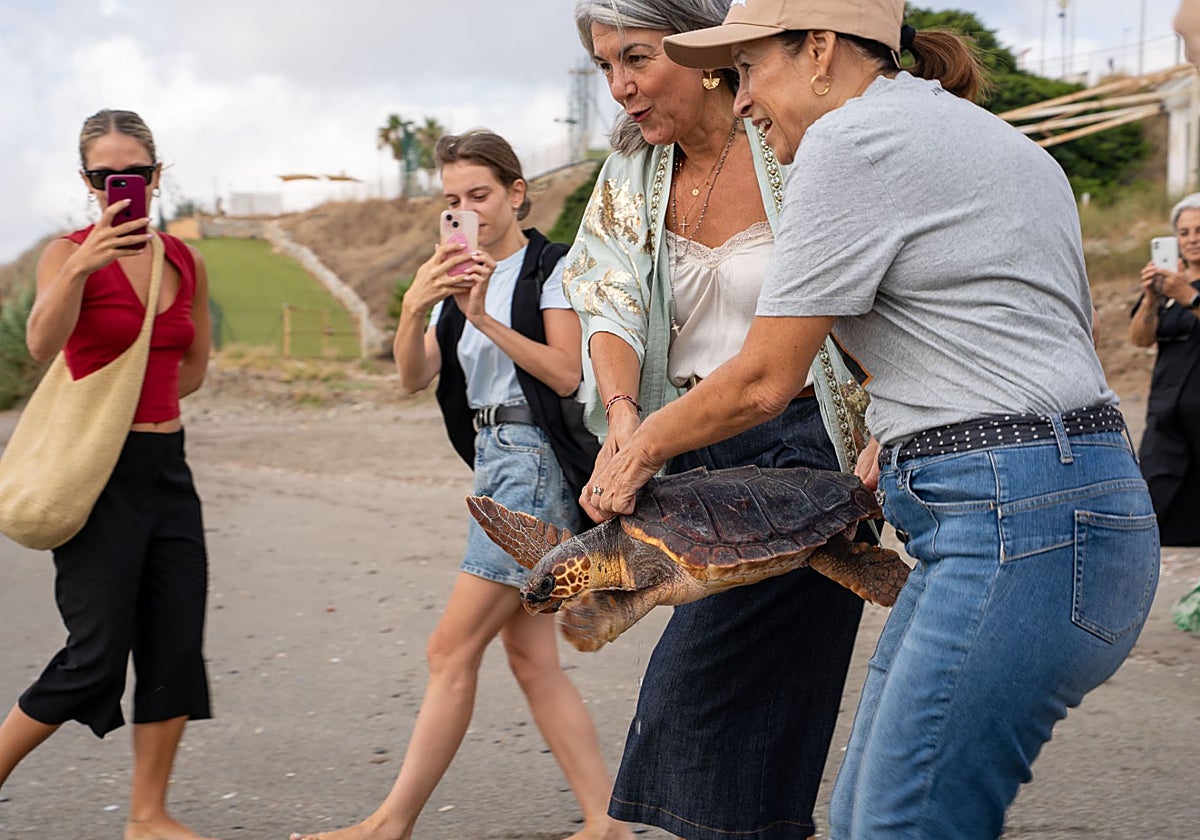

Benalmádena
Pepa was found on 4 March 2026, stranded on a beach in Rincón de la Victoria, suffering from severe dehydration, impaired buoyancy and lung problems.
This loggerhead turtle (Caretta caretta) was found by Seprona officers, who provided initial care before transferring her to the Andalusian Marine Environment Management Centre (CEGMA) in Algeciras. There, she was treated and released back into the sea several miles off the coast of Marbella on 13 August.
However, the following day, Pepa was rescued for a second time in just over five months. This Thursday, the turtle has returned home once again, this time to La Morera beach in Benalmádena, although now, following an examination, it is thought that this second rescue may have been nothing more than a false alarm.
“Pepa is a very special turtle, because she is not afraid of people,” said the regional delegate for sustainability and the environment, Gemma del Corral, who attended the release of this turtle accompanied by Benalmádena town councillors for the environment, Juan Olea, and health, Áurea Peralta.
Although “the release [in Marbella] was successful and she swam off energetically”, according to the regional government, the following day, 14 August, several bathers spotted a turtle swimming near the shore, floating on the surface. It was Pepa, who was taken back to the centre in Algeciras, where she remained until this Tuesday, when she returned to the Mediterranean.
When Pepa was admitted to the Algeciras centre in March, she weighed 4.3 kilos, had an ‘acceptable’ body condition and a ‘moderate’ amount of algae on her carapace (with a straight length of 43 centimetres), and exhibited ‘marked’ inactivity, impaired buoyancy and signs of ‘severe’ dehydration. During the first few weeks of her hospitalisation, she received intensive treatment and was fed via a nasoesophageal tube with recovery-phase purees until she once again began to eat voluntarily.
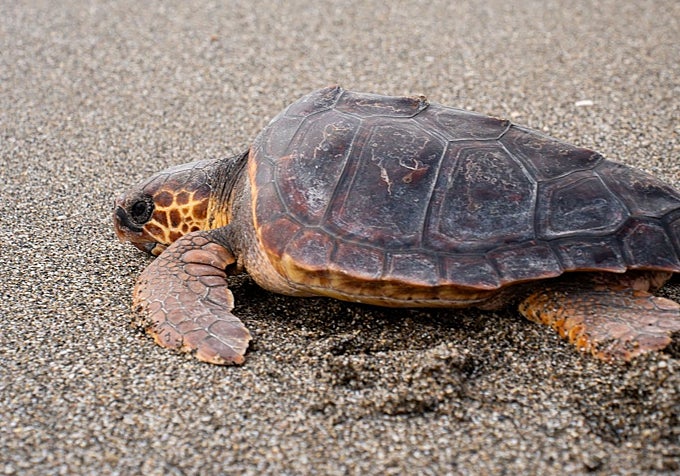
A superficial injury to her shell was also treated with topical dressings, and by the end of March she began to show gradual improvement, starting to feed voluntarily and steadily regaining weight until she reached 5.9 kilograms.
Tests carried out at CEGMA indicated that she was physically capable of diving, and she was transferred to the Seville aquarium, where she remained for approximately one month, and on 13 August she was released back into the sea at Marbella, only to be readmitted to CEGMA in Algeciras the following day.
Pepa was sunbathing
After being rescued for the second time, experts from the Andalusian regional government have found no reason to believe that she was ill or injured. “Following a thorough examination, including X-rays and blood tests, as well as observation of her swimming, buoyancy and behaviour, no apparent medical conditions were found”, so, “it is likely,” they note, “that the animal was basking on the surface when the bathers raised the alarm.”
The loggerhead turtle (Caretta caretta) is a species listed in the Andalusian catalogue of threatened species (Decree 23/2012) with a conservation status of ‘Vulnerable’ (VU), although its global status, according to the criteria of the International Union for Conservation of Nature (IUCN), is ‘Endangered’ (EN).
![[]](http://static.vocstatic.com/voc26/latest/assets/images/favicon/surinenglish/apple-touch-icon-57x57.png)