
Environment
Benalmádena rules out faecal bacteria at the two closed beaches
The cause of the skin reactions remains unknown, but experts consider it unlikely that they could be of biological origin

Benalmádena
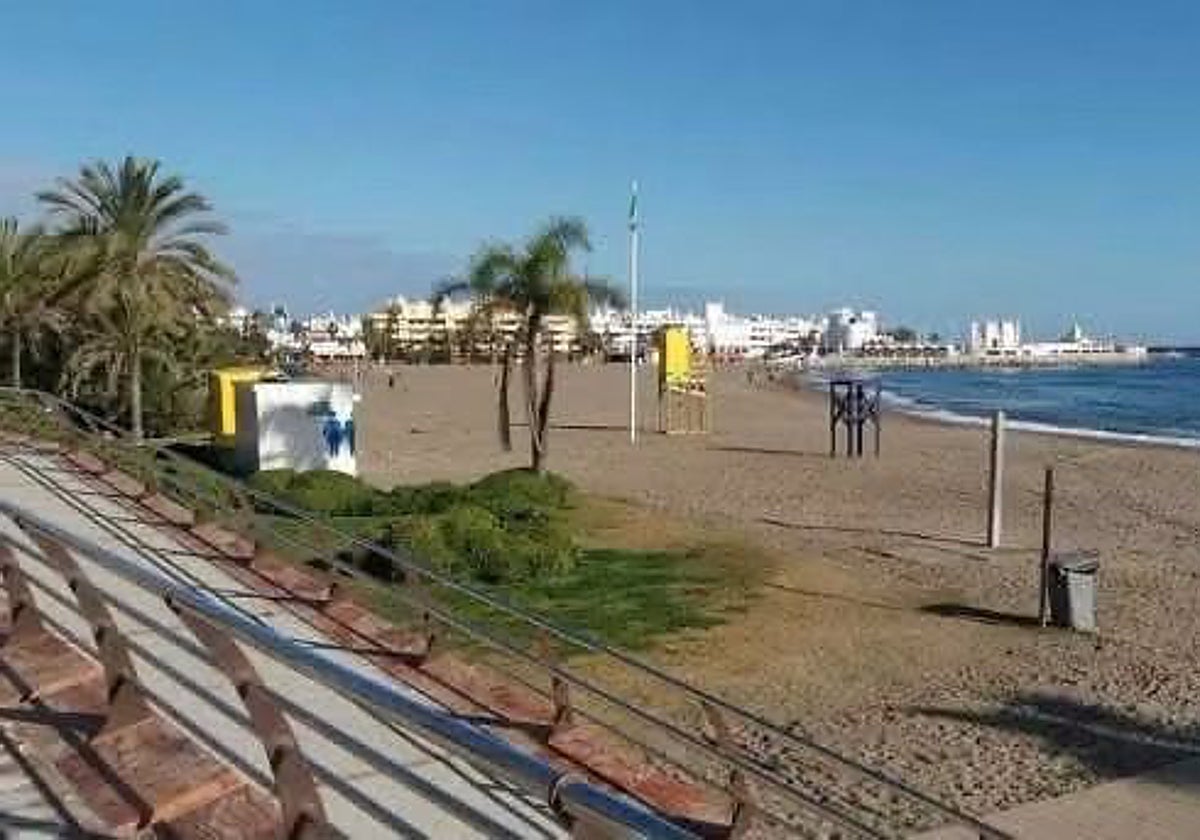
The beaches of Santa Ana and La Gaviota in Benalmádena remain closed to swimmers for the third day, but the reason is a mystery.
What ... the authorities are certain of is that some 20 bathers complained of skin reactions on Sunday.
The case is not related to the closure of six beaches in Malaga city, where experts detected a concentration of faecal bacteria above the levels regulated by law.
Therefore, the cause of the closure of Benalmádena's beaches is not Escherichia coli (E. coli), as sources from the Andalusian regional government have confirmed.
Related story
-
Beaches
Tony Bryant
Quite simply, the cause of the skin reaction is currently completely unknown. Experts are currently collecting samples for a full analysis but the results will take "several days" to come back.
The incident on 16 August led to the closure of the beaches of Santa Ana, La Gaviota, Bil Bil, Arroyo de la Miel and Los Melilleros.
On Monday, the town hall lifted restrictions on the latter three beaches, but Santa Ana and La Gaviota remained closed. The regional ministry of health described the ban as a "precautionary measure".
Of the "possible causes", only two have been mentioned: "biological factors, such as the presence of certain algae" and those of a "chemical nature".
Malaga University marine biologist Elena Bañares leans more towards the second possibility. "If we are dealing with a generalised allergic reaction, a biological cause is, at the very least, less likely than a chemical one," she said.
Bañares pointed out that "this sort of reaction is not usually caused by algae". For it to occur, there would have to be "a very high concentration" of algae, which goes unnoticed very rarely.
In other words, "there would be a coloured patch" visible from above the water and bathers would have noticed that high concentration of algae.
Chemical origin
In theory, another possibility would be the presence of jellyfish, which can indeed sting and injure the skin.
Bañares, however, said that "we would not be seeing widespread reactions or reactions affecting entire body parts". According to her, if jellyfish were to be blamed, then the skin reaction would occur at the point of contact and in the surrounding area, but no further.
While in some cases an allergic reaction extending beyond this may occur, it seems unlikely that there would be around 20 cases in the same area within such a short period of time.
Regarding the possibility of a chemical cause, the Andalusian regional government has stated that it has no record of any spill in the area.
![[]](http://static.vocstatic.com/voc26/latest/assets/images/favicon/surinenglish/apple-touch-icon-57x57.png)