
Health
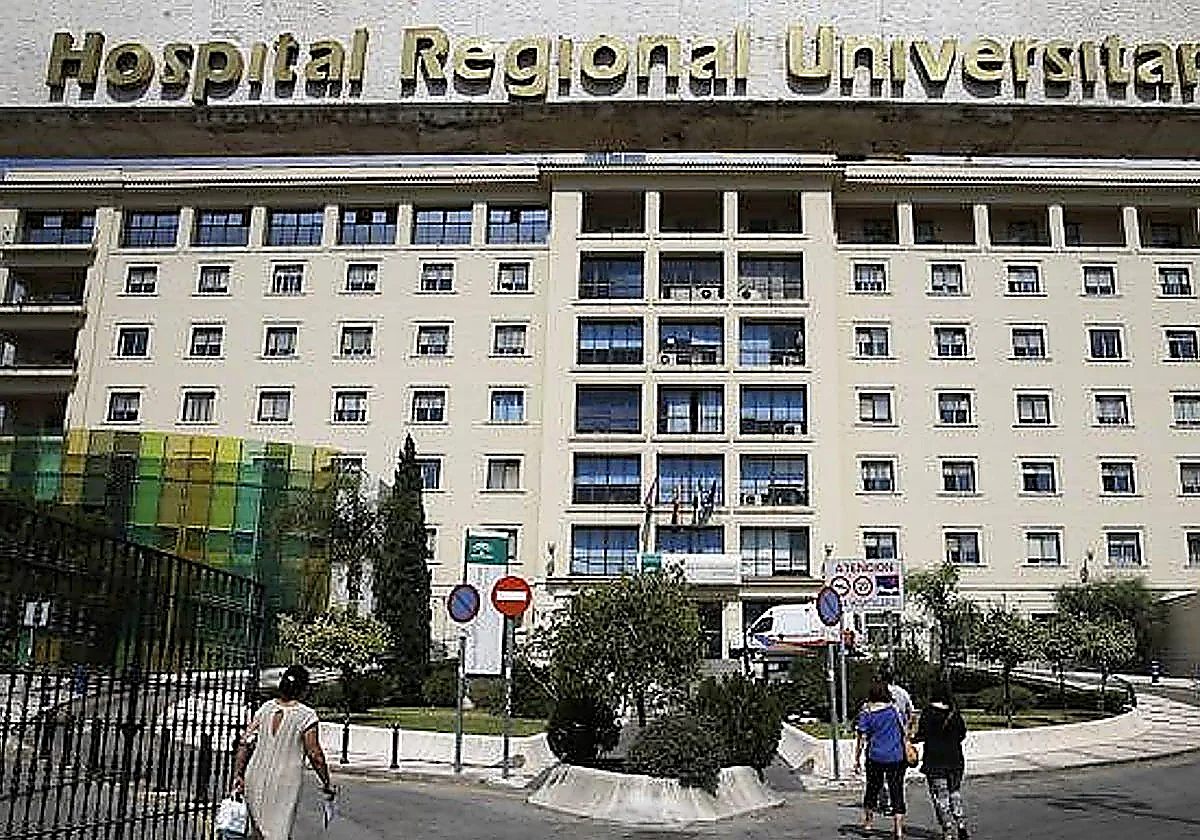
Malaga's Hospital Regional prepares internal hantavirus protocol
The hospital is reviewing care pathways and equipment as a preventive measure, but the authorities have assured that there is no risk to the general population
José Antonio Sau
The hantavirus outbreak on the MV Hondius cruise ship has not triggered a health alert, but Malaga's Hospital Regional is taking preventive measures.
More than a week ago, the hospital staff reviewed their technical capabilities and available resources to deal with a possible wider outbreak. After the Ministry of Health sent the relevant protocol to all hospitals in Spain, the hospital in Malaga held a meeting to develop its own internal protocol with a focus on prevention.
Health sources have confirmed that the action has been fundamentally a "fine-tuning" of existing circuits to ensure that the system is prepared for any situation, without this implying the existence of an immediate risk to the population.
Biologist Ana María Ortega Prieto, co-investigator in charge of the immune response to viral infections group, told SUR that "people usually become infected by inhaling particles contaminated with urine, faeces or saliva from infected rodents, for example, when cleaning enclosed spaces".
However, in this particular outbreak, the virus in question is the Andes variant, "which can be transmitted between people, although this is rare and usually requires close and prolonged contact".
The risk is low
The Andes hantavirus can "cause serious illness and death in humans" through the hantavirus cardiopulmonary syndrome. "At first, it may resemble a flu infection, leading to fever, muscle pain, fatigue and abdominal discomfort. However, within a few days, it can rapidly worsen and lead to severe, even fatal, conditions," Ortega Prieto said.
For the general Spanish population, "the risk is low, since it is a very localised episode and probably due to exposure that occurred in an area where the virus circulates naturally".
"However, the fact that the risk is low does not mean we should minimise it," the biologist said.
Contingency plan
Hospital Regional sources said that they always work with contingency plans for unforeseen situations. After learning of the transfer by plane of potentially infected individuals, the hospital convened internal meetings with the relevant departments to review their technical and organisational capabilities.
"This isn't about causing alarm, but about being prepared," they stated. The protocol the hospital is finalising aligns with the guidelines of the Ministry of Health.
Hantavirus is classified as a level 3 biological agent, although in the absence of specific treatment it may require protective measures equivalent to level 4.
The hospital has checked the availability and conditions of personal protective equipment, including full-body suits, airtight goggles and isolation systems similar to those health professionals used during the Covid-19 pandemic.
The centre also has areas prepared for the admission of patients with infectious diseases, equipped with Hepa filters and negative pressure systems to prevent the spread of the virus. These areas allow for the care of both hospitalised patients and those requiring intensive care.
Should a person arrive at the emergency department with compatible symptoms, they would be taken directly to a specific biohazard area, designed with controlled air renewal and enhanced isolation measures.
There, the hospital staff would carry out an epidemiological investigation and initiate contact tracing in coordination with public health and primary care.
![[]](http://static.vocstatic.com/voc26/latest/assets/images/favicon/surinenglish/apple-touch-icon-57x57.png)