
Hantavirus 2026
Spanish hantavirus patient in Madrid tests positive in second PCR and remains 'stable' with mild symptoms
Head of the WHO has stated that "more cases are likely to emerge, but there is nothing to suggest a larger outbreak"
Rocío Mendoza
Madrid
The hantavirus outbreak on the MV Hondius cruise ship has now registered eleven cases, including three deaths. Only the test results for two passengers under observation are still pending, but health authorities believe it is highly likely they will test positive in the coming hours.
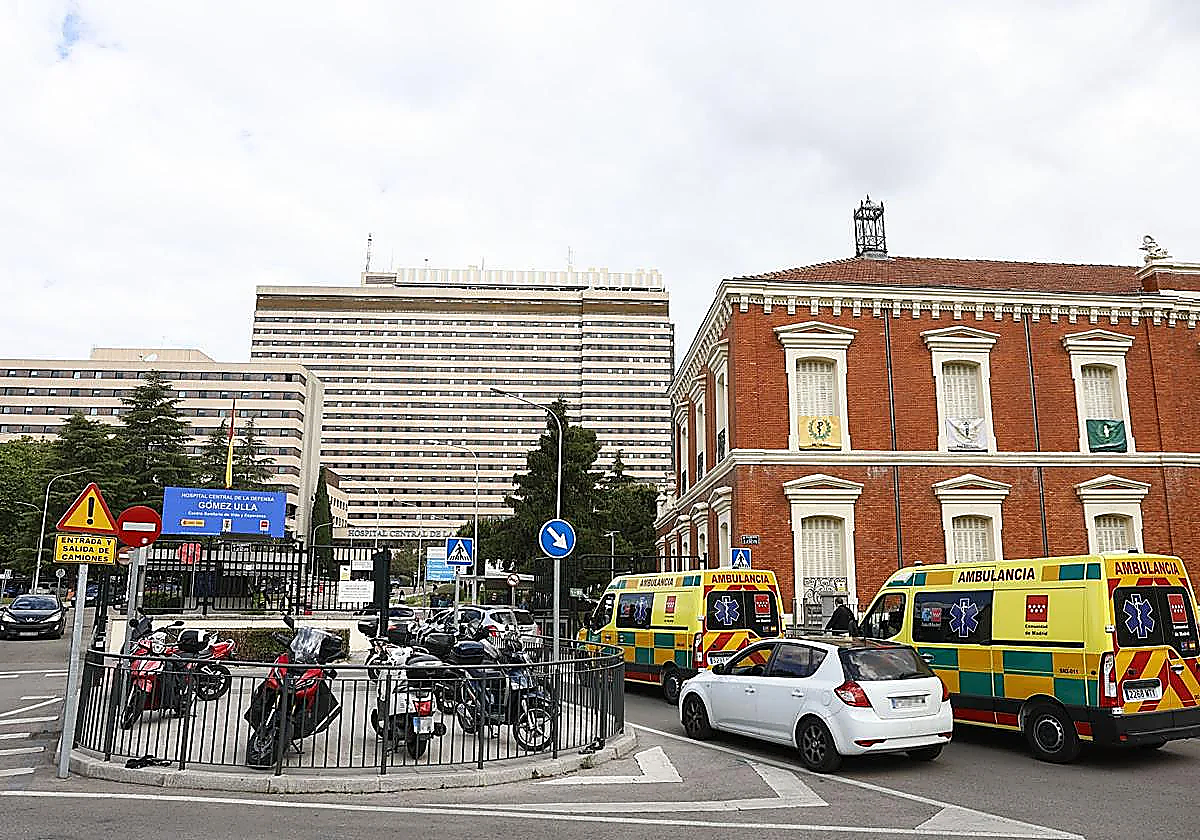
This has been the case with the Spaniard currently under quarantine at the high-isolation unit of the Gómez Ulla hospital in Madrid. After an initial PCR test on Monday night provisionally indicated the presence of the virus, the Ministry of Health confirmed the following morning that a second PCR test was also positive.
"Yesterday, he presented with a slight fever and mild respiratory symptoms, although he is currently stable and without any evident clinical deterioration," Minister Mónica García stated.
This latest update came minutes after head of the WHO (World Health Organization) Tedros Adhanom Ghebreyesus appeared before the media with Spain's Prime Minister, Pedro Sánchez. Adhanom commended the work of the Spanish government during the evacuation operation in Tenerife over the weekend.
During his speech, Adhanom stated that solidarity and kindness are the best approach to global health in today's world. He reassured the residents of Tenerife and the rest of the countries with residents who have registered hantavirus cases since the disembarkation of the cruise ship passengers: "The risk level remains low for the general population."
This does not mean that the outbreak has ended now that the evacuation is complete. Adhanom did not rule out the possibility of more cases emerging in the coming days among the groups of people monitored in up to 23 different countries.
"The passengers lived together for weeks in a confined space, with passengers who were already infected with a virus they were not officially diagnosed with until 2 May, when isolation measures were implemented," the WHO said.
The first passenger died on board on 11 April, with symptoms consistent with hantavirus, but these were initially attributed to another respiratory illness. It wasn't until May, after the death of his wife on 27 April in Johannesburg and the analysis of samples in South Africa, that the cause of both deaths was confirmed: the Andes virus. This is the variant of the hantavirus transmittable from person to person.
"The situation may change"
The WHO said that the death rate hasn't changed much over the past week. "There have been no deaths since 2 May," Adhanom said.
For the moment, "all suspected and confirmed cases are under isolation and strict medical supervision, which minimises the risk of any further transmission. Right now, there is nothing to suggest that there will be a larger outbreak," he said. However, he did not rule out that "the situation could change".
The incubation period for this virus is between six and eight weeks. This means that cases can appear quite some time after the actual outbreak. To curb its spread, the 42-day isolation period should begin on 10 May and last until 21 June.
However, as Health Minister Mónica García warned, each case may be subject to specific monitoring. The government may choose to take specific measures based on the health status and medical history of each patient.
The 14 Spaniards are at the Gómez Ulla hospital in Madrid, under medical supervision. Apart from the patient with a positive test, the rest are in good health and asymptomatic.
Related story
-

Hantavirus 2026
Domenico Chiappe and Salvador Vallejo
Regarding the sudden deteriorations in some patients, the WHO director (an immunologist by profession) noted that this is precisely the behaviour of this virus: rapid development of symptoms after a long incubation period.
Is it possible that not one passenger on the cruise ship had a fever, then a French passenger developed one in the afternoon and by nightfall was in critical condition in the ICU?
Indeed, this is how this disease progresses, so it's perfectly possible that on Monday morning the Health Ministry reported that all the Spanish passengers were well and asymptomatic, one of them tested positive and by nightfall began to have a slight fever.
Adhanom raised the public question regarding what would have happened if the passengers had been left on the ship. "I said it yesterday. The suggestion that they remain quarantined on the ship was simply cruel," he stated. "These people have suffered a very difficult situation. Some experienced anxiety attacks. Isolated... Put yourselves in their shoes," he said.
The Canary Islands was the closest port in a country with the capacity to handle this health crisis after Cape Verde received confirmation from Johannesburg that the Dutch citizen had died from hantavirus and a second cruise passenger was in intensive care for the same reason.
Cape Verde lacked the capacity to manage an operation of that scale, which is why the WHO asked Spain for help. Adhanom thanked the government not only for complying with the law but also for acting "with compassion". He said he had experienced nothing but "kindness" from the people of the Canary Islands during the two-hour stroll he managed to squeeze during the operation.
"It comforts me to know that there are still people in the world who don't do things just for political reasons, but because it's the right thing to do for the people of Spain and for the world," he concluded.
![[]](http://static.vocstatic.com/voc26/latest/assets/images/favicon/surinenglish/apple-touch-icon-57x57.png)