
Health
Malaga neurologist says that lifestyle is 40 per cent of the battle against Alzheimer's
Neurologist José Antonio Reyes lists the main differences between simple forgetfulness and the cognitive symptoms of degenerative dementia
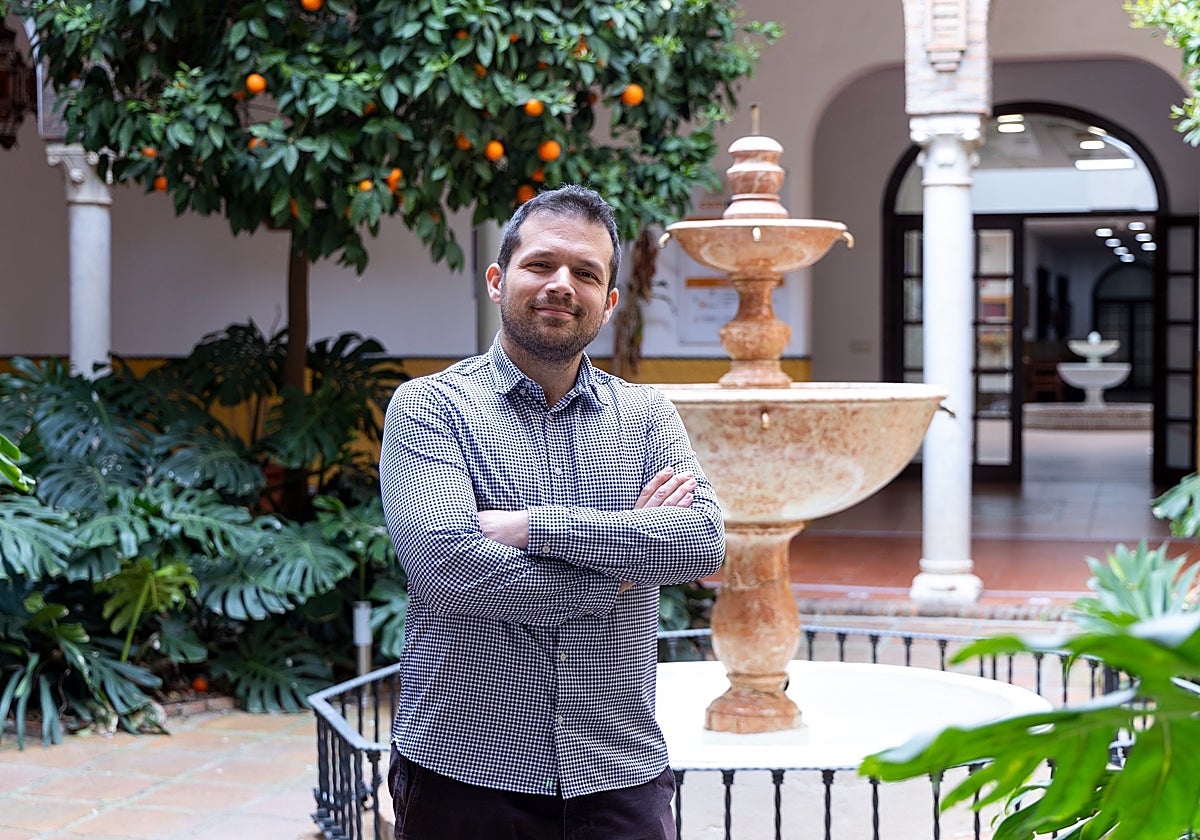

Alzheimer's disease blurs the identity of those who suffer from it as easily as the sea erases a hiker's footprints on the sand. According to Malaga-based neurologist José Antonio Reyes, lifestyle is key to preventing the development of "the major degenerative disease of our time".
Alzheimer's disease accounts for 80 per cent of dementia cases.
Genetics
Dr Reyes says that genetics play a role of 60 per cent in the case of Alzheimer's.
"There are many genetic risk factors. The most important is APOE: the allele, variant four, which increases the risk of developing Alzheimer's. We have two alleles in our genes, maternal and paternal. If the APOE 4 gene is present, the risk of developing the disease is multiplied by a factor of five, but if both the maternal and paternal alleles are present, the risk is multiplied by a factor of 15," he says, adding that there are many more risk genes.
There are, however, lifestyle factors that individuals can influence. "Cognitive stimulation (using your mind, studying, reading, listening to music) is a protective factor. Not smoking, not drinking alcohol, maintaining a healthy lifestyle, keeping cholesterol, uric acid and blood sugar levels in check; preventing or controlling diabetes; avoiding being overweight; and engaging in appropriate physical activity are also important," Dr Reyes says. Stress is also a major factor.
According to the neurologist, preventing hearing and vision loss is also key, as well as diet. "It's not enough to follow a healthy diet once symptoms appear. We need to start taking care of ourselves from a young age. Let's not forget that, in the case of Alzheimer's, the pathological changes that lead to the disease begin up to 20 years before the first symptom develops," Dr Reyes states.
Warning symptoms
What are the first symptoms of dementia in general? "They are lapses that start small and mild. They progress over time. Gradually, as the months go by, other symptoms appear: problems with language, expression, reasoning, planning, visuospatial skills and orientation. People often lose their bearings," Dr Reyes says, adding to this list "behavioural problems".
"That's why people become more abnormally apathetic and withdrawn, as if their personality changes." It is the family who notice and seek assistance.
"We can all have minor, occasional forgetfulness of little importance (...) The cognitive symptoms of degenerative dementia always progress and worsen over time"
How do you differentiate between normal forgetfulness and forgetfulness that may indicate an illness? "We can all have minor, occasional forgetfulness of little importance. For example, I might ask myself: Where did I leave my keys? Where did I put this and that? Why did I come here?" These lapses are not worrying, Dr Reyes says, as long as "they are small, one-off instances, associated with stress, fatigue or certain medicines".
"The cognitive symptoms of degenerative dementia always progress and worsen over time," he says to differentiate between normal forgetfulness and a cause for concern.
Early detection
In the field of early detection, there has recently been "a true revolution". "Previously, diagnosis was clinical, based on a biopsy, but now "we have the use of biomarkers, substances that we can measure directly in cerebrospinal fluid and, more recently, also in blood," Dr Reyes says.
The accuracy is 100 per cent. Biomarkers are present in very early stages and "in asymptomatic patients, in whom the disease hasn't yet manifested, but is there nonetheless". Even at this early stage, mild cognitive impairment can be detected.
There are no drugs capable of curing Alzheimer's or halting the progression of the disease, but the so-called anti-amyloids (lecanemab and donanemab) will soon be approved. "It's a matter of months: they can delay or slow the progression in a relatively modest way, we can't expect big changes," Dr Reyes warns.
"I always tell patients that the treatment is a pill for the symptoms and what you can really do to slow it down or at least increase your survival, is have healthy lifestyle habits," he states.
In any case, there are many types of dementia. "Dementia itself is a syndrome, a set of symptoms and signs characterised by cognitive decline, ranging from very mild, which does not incapacitate the person, to more severe." There are several causes: chronic head trauma, stroke, degenerative disease and inflammations such as meningitis or encephalitis.
"I always tell patients that the treatment is a pill for the symptoms and what you can really do to slow it down is have healthy lifestyle habits"
After Alzheimer's, "the second most common type of dementia is caused by vascular lesions in the brain, such as strokes and hemorrhages. Then there's Lewy body dementia, in which the normal protein - not amyloid, but one called alpha-synuclein - causes cognitive decline, hallucinations, physical symptoms similar to Parkinson's disease, sleep disorders. It is quite common".
Related story

Another common type is frontotemporal dementia, which begins with behavioural changes in the patient. "People change their personality, becoming disinhibited. It's like a kind of sociopathy: these are very striking behavioural changes," Dr Reyes says. There is another type that manifests as language disorders.
The first thing Dr Reyes tells families after diagnosis is to "seek help" from health centres, associations and federations, public and private resources, to learn about the disease and receive advice on how to manage it. There are "advances practically every year" and the therapeutic arsenal in ten to 15 years will be much greater. It is a disease that receives a lot of investment, as scientists and doctors try to understand it.
![[]](http://static.vocstatic.com/voc26/latest/assets/images/favicon/surinenglish/apple-touch-icon-57x57.png)