
Health
Malaga's Clínico hospital takes part in first national study to develop breast cancer 'risk calculator'
The hospital will select 450 women to collect data and mammogram images which, together with genetic information and AI, will allow it to estimate their likelihood of developing the disease

Spain is advancing the study to refine the breast cancer calculator it has been developing to predict the likelihood of disease development.
The MamoRisk tool ... is almost identical to a calculator. It assesses each woman's risk factors and yields a rating (low, intermediate or high) over a two- and five-year period.
Malaga's Clínico hospital is among the participants in the early detection programme.
Related story
Related story
-
 Laura Velasco
One in eight women in Malaga will develop breast cancer during their lifetime. Early diagnosis leads to a five-year survival rate of almost 90 per cent.
Instituto de Investigación Sanitaria de Santiago de Compostela (IDIS) is leading the study, in collaboration with Centro Nacional de Investigaciones Oncológicas (CNIO) an Instituto de Investigación Sanitaria Galicia Sur (IISGS).
In total, MamoRisk is currently collecting data from 10,000 Spanish women in 14 regions, starting with Galicia.
Precision medicine
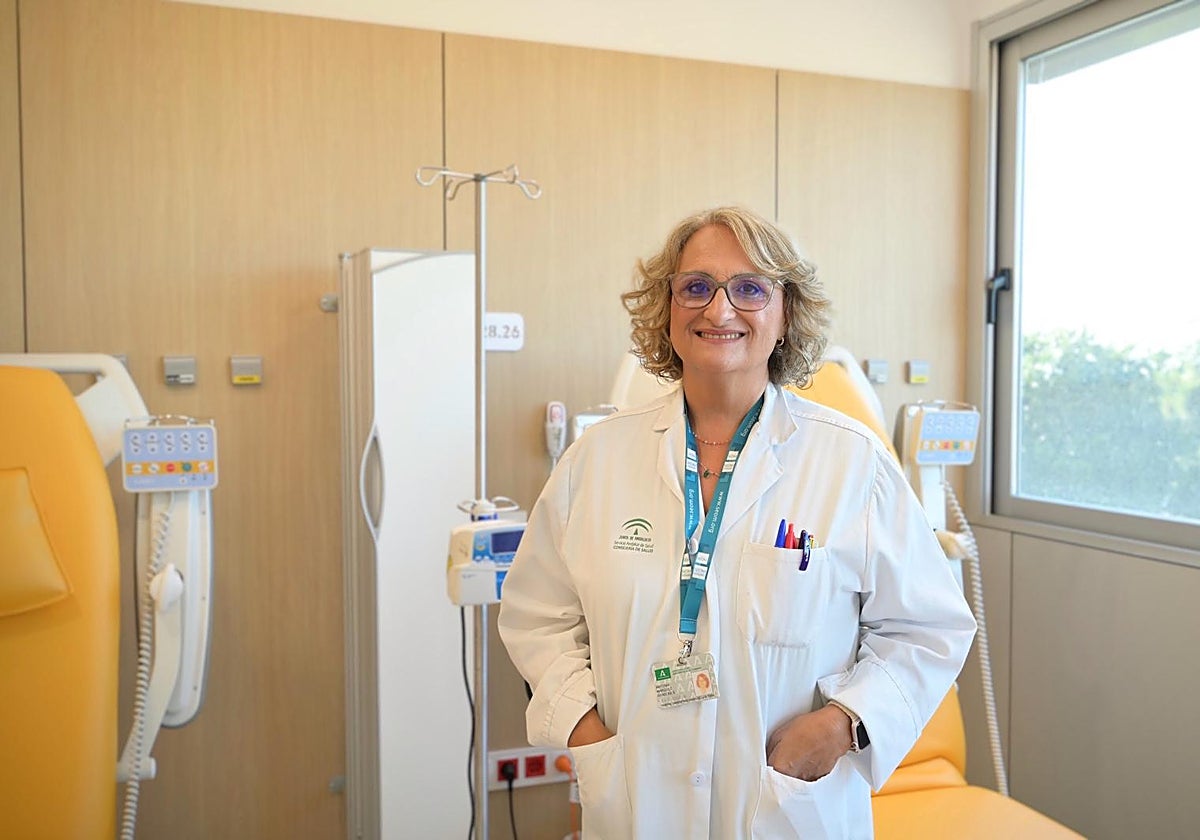
Antonia Márquez Aragonés is the head of the hereditary cancer unit at the Clínico. As she explains, oncology today is very much focused on precision or personalised medicine.
"In other words, it seeks to make diagnosing as accurate as possible and provide treatments that address each patient in the most individualised and effective way," she explains.
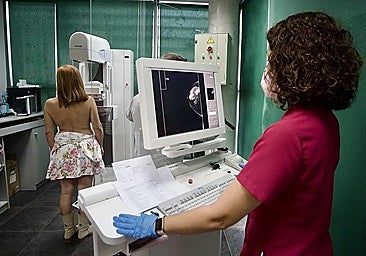
Mammography is the standard tool for early diagnosis and prevention. "It is very useful, but the early detection programme does not differentiate between women. It is based on age. It is insufficient because not all women are at the same risk."
So, "in the case of hereditary breast cancer", oncologists "identify genetic factors that put these women at greater risk". "Today we know of a great many genes that confer a very high risk and others where the risk is more moderate compared to the general population," Dr Márquez says.
"Sometimes, we need more than just a mammogram: a breast MRI every six months. The early detection programme is every two years," she explains.
Other countries have already developed bioinformatics tools, similar to the Spanish one: the so-called BOADICEA algorithm, which combines genetic, family history and clinical-epidemiological information to estimate an individual's probability of developing breast and ovarian cancer.
Decades of research have identified genetic variants, including those in the BRCA1 and BRCA2 genes, which confer a high risk. There are also genes that confer a moderate risk and some that have a lesser impact, although they are present in a large proportion of the population.
There are also non-genetic factors: a lifestyle characterised by low alcohol consumption, physical activity and the avoidance of post-menopausal obesity is associated with a 20 per cent reduction in the risk of breast cancer.
Algorithm
"It's an algorithm into which you feed information from genetic tests, family history and data on a woman's personal risk factors, such as contraceptive use and pregnancies. All the well-established data that constitutes epidemiological risk factors for developing cancer. It produces a calculation of the probability of developing cancer in your lifetime," Dr Márquez explains.
If a woman's risk is higher, doctors may consider more rigorous monitoring. In addition, researchers stress the importance of carrying out the study across "a huge number of women".
There is another important detail: "mutations may differ between Galician families and those in Andalucía or Catalonia".
Of the 10,000 women in the programme, 4,000 have already received a diagnosis. The remaining 6,000 will all undergo genetic testing to determine whether they are at high risk of cancer.
The hospital in Malaga is set to recruit between 100 and 150 women with breast cancer and around 300 healthy women.
"Our task will be to identify and inform them. They will have to give their consent and then we will need to collect their mammogram results, all the relevant epidemiological data and a saliva sample for the genetic study," Dr Márquez states.
![[]](http://static.vocstatic.com/voc26/latest/assets/images/favicon/surinenglish/apple-touch-icon-57x57.png)