
Education
Malaga University retired students become archaeology interns at Cerro del Villar
Students on the UMA's course for older adults on Phoenician Malaga have "extended their contract" and joined the site's laboratory to sort finds almost 3,000 years old

Málaga
A group of retirees who signed up for a University of Malaga course on the Phoenicians has taken its interest in Malaga's ancient history ... a step further by joining the archaeological team at Cerro del Villar.
The volunteers, none of whom has a background in archaeology, now spend several hours a week sorting and identifying thousands of fragments recovered from excavations at the ancient Phoenician settlement.
The curious thing is that none of the experts in this group before us are archaeologists. There are economists, librarians, several teachers and even aeronautical engineers who all share one thing in common: they are retired.
Related story
They did not know one another, although they all shared a certain interest in history, particularly local history. So they went back to school and found themselves on the same course at the Malaga University's course for over-55s.
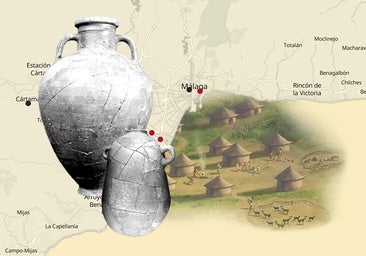
There they discovered at first hand the secrets that had lain buried for almost three millennia at Cerro del Villar and that archaeologists have been uncovering since excavations resumed in 2022 at the former island settlement at the mouth of the Guadalhorce. They enjoyed it so much that they wanted more.
"We had a WhatsApp group of almost 40 students and then Pepe Suárez, director of the Cerro del Villar project, asked whether we wanted to volunteer in the laboratory. Two groups of six people came forward and for about three months we've been coming four days a week for a couple of hours," economist and biologist Nicolás Pérez says.
Alongside him are teachers José Eugenio Abad and Felisa Solano, librarian Mariluz Torrontegui, insurance technician Miguel Peral, aviation technician Javier Vivar, civil servants Juani Gallego and Juan Ramírez, and psychologist and social educator Kika Rueda.
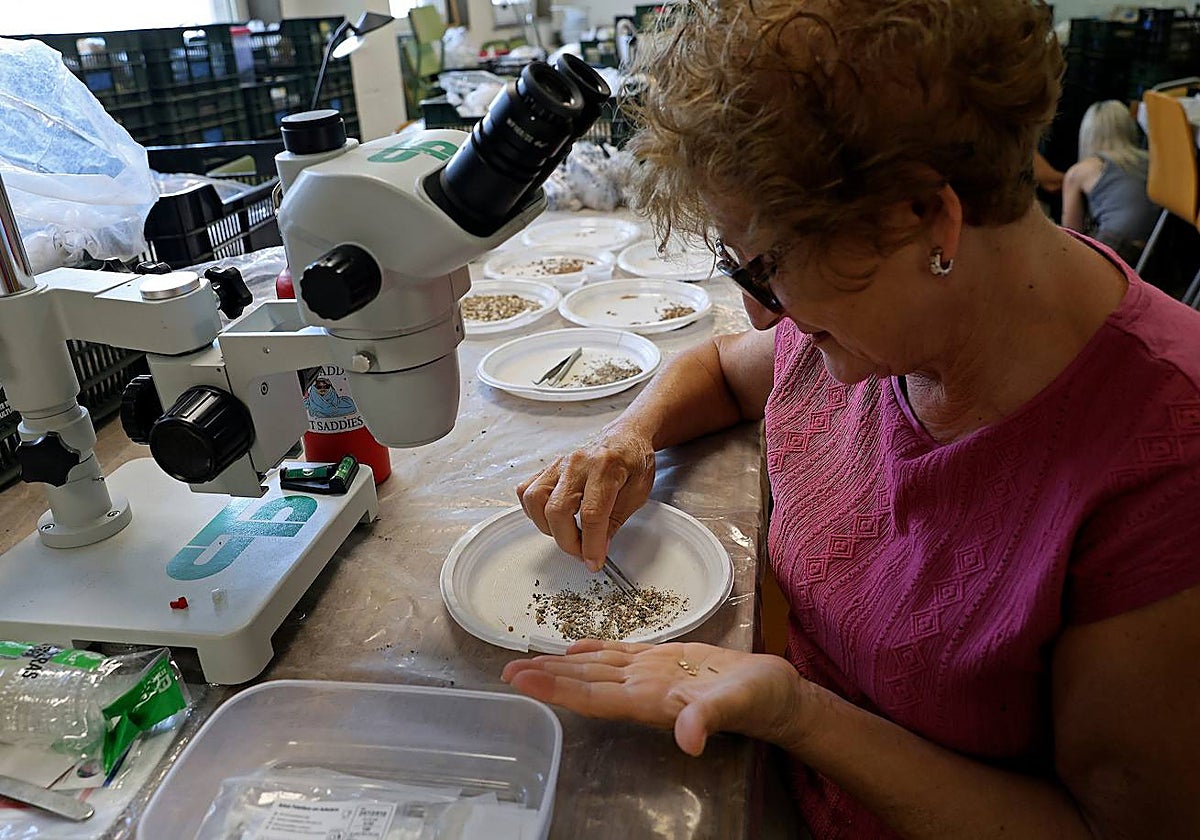
Today, they are sharpening their eyesight (thank goodness someone invented magnifying glasses) as they work out whether the tiny objects in front of them are pottery, bone or iron.
"Look, we have this magnet to tell metal from charcoal, because it’s often not easy to distinguish between them," Kika says, demonstrating with a tiny piece just over a centimetre long. She holds it with tweezers and it sticks to the magnetite.
There is no doubt about what it is. She picks it up and places it in a small white disposable plastic dish labelled 'iron'. "As you can see, we're using some wonderful Phoenician plates to classify everything," Felisa jokes, referring to the birthday-party look of their table, which resembles a celebration more than an archaeological laboratory.
The banter never stops among this close-knit sorting team, and archaeologist José Suárez comes over to join them. "We're Pepe's biggest fans and we'd follow him to the ends of the Earth," they say.
With the director of Cerro del Villar on hand, these interns between the ages of 59 and 70 take the opportunity to ask questions and show him their finds. "Look at this tiny piece," Javier Vivar says, holding up a fragment he identifies as bone.
"You can really see how good their eyes have become," the lead archaeologist says, prompting Kika to add: "We see better because we're motivated." They also have the help of Leticia Gómez, the archaeologist who supervises the entire sorting process. "We work with stones, but the real asset here is the human team, and Leticia deserves a bonus for putting up with all our stories," Juani Gallego says.
Meanwhile, José Suárez examines a dish of tiny fragments of marine fauna, including shells, snails and numerous sea-urchin remains, and reveals a discovery.
"A lot of sea-urchin remains are turning up. They're something typical of Cadiz, but it turns out they were also very common in Malaga 2,500 years ago," the archaeologist says.
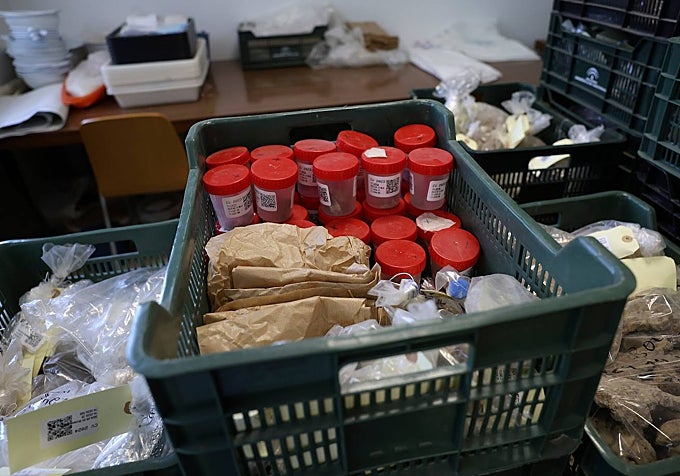
Once the team have processed the organic, ceramic and metal remains, specialists will analyse them. "Everything they're sorting is very interesting because the types of catch tell us about the fishing methods used. Catching a tuna or a shortfin mako offshore is not the same as catching a smaller species close to the coast," the director of the Cerro del Villar site says.
"Among the curiosities, we've found a fibula, which is a small piece of a brooch used to fasten a cloak," Suárez says. Even the smallest fragment can provide another piece for the huge puzzle of the still little-known history of the Phoenicians in this far corner of the Mediterranean.
The team have also found ostrich eggshells, which clearly did not come from the local area. Specialists will establish their origin, potentially expanding the map of the settlement’s trading links with other territories, as happened with Greece, Corinth, Etruria and Tyre. "We're handling material that's 2,600 years old and I wonder what people excavating Malaga in two centuries' time will find when they want to learn about us," Nicolás says aloud. The replies come quickly: "Plastic", "Coca-Cola", "mobile phones"...
Speaking of smartphones, they take out a phone and find a photograph from the day they went for lunch with José Suárez after finishing the course last May.
"This is where we signed our contract extension," they joke, referring to the sorting work they now carry out with such enthusiasm and dedication.
None of them has found gold, but nobody questions the excellent productivity of these new recruits, and the archaeologist is already happy to offer them another renewal for the next Cerro del Villar excavations, with the new open-air campaign due to begin at the end of August.
"You can get involved in the work as much as you like, whether in the field or in the laboratory," Suárez tells them. Judging by the expressions he gets in response, these volunteers will be back. "We'll come, even if we have to keep the first-aid kit beside us, because our knees and hips aren’t exactly in great shape," Juani and Kika joke.
The job offer deserves a celebration, so, as it is now approaching two in the afternoon, they suggest going for a beer to discuss the terms of the contract. "Right, but first I'm going to wash my hands and get 2,500 years off them," Nico says, ending on the same note of humour.
Like the rest of the group, he can already picture himself in a few weeks with a mattock or brush in hand, digging up Malaga's history.
![[]](http://static.vocstatic.com/voc26/latest/assets/images/favicon/surinenglish/apple-touch-icon-57x57.png)