
Travel
Formentera: the Spanish Caribbean
White sand, turquoise water and pines leaning off the dunes. The best part? It's only a 40-minute flight and short boat hop from Malaga
DANIELA CRAFT MÁRQUEZ
Fly into Ibiza in the summer months and the plane cabin already feels like a warm-up for the club: groups three drinks in, a speaker blasting for the whole cabin, people dressed for a night that doesn't start for another twelve hours.
Most visitors are there to party, with a side of hungover beach days. But follow the crowd that peels off toward the port instead of the city and the noise drops away fast. Small groups, families, couples with a single bag each, all boarding a ferry for the 30-minute crossing to Formentera.
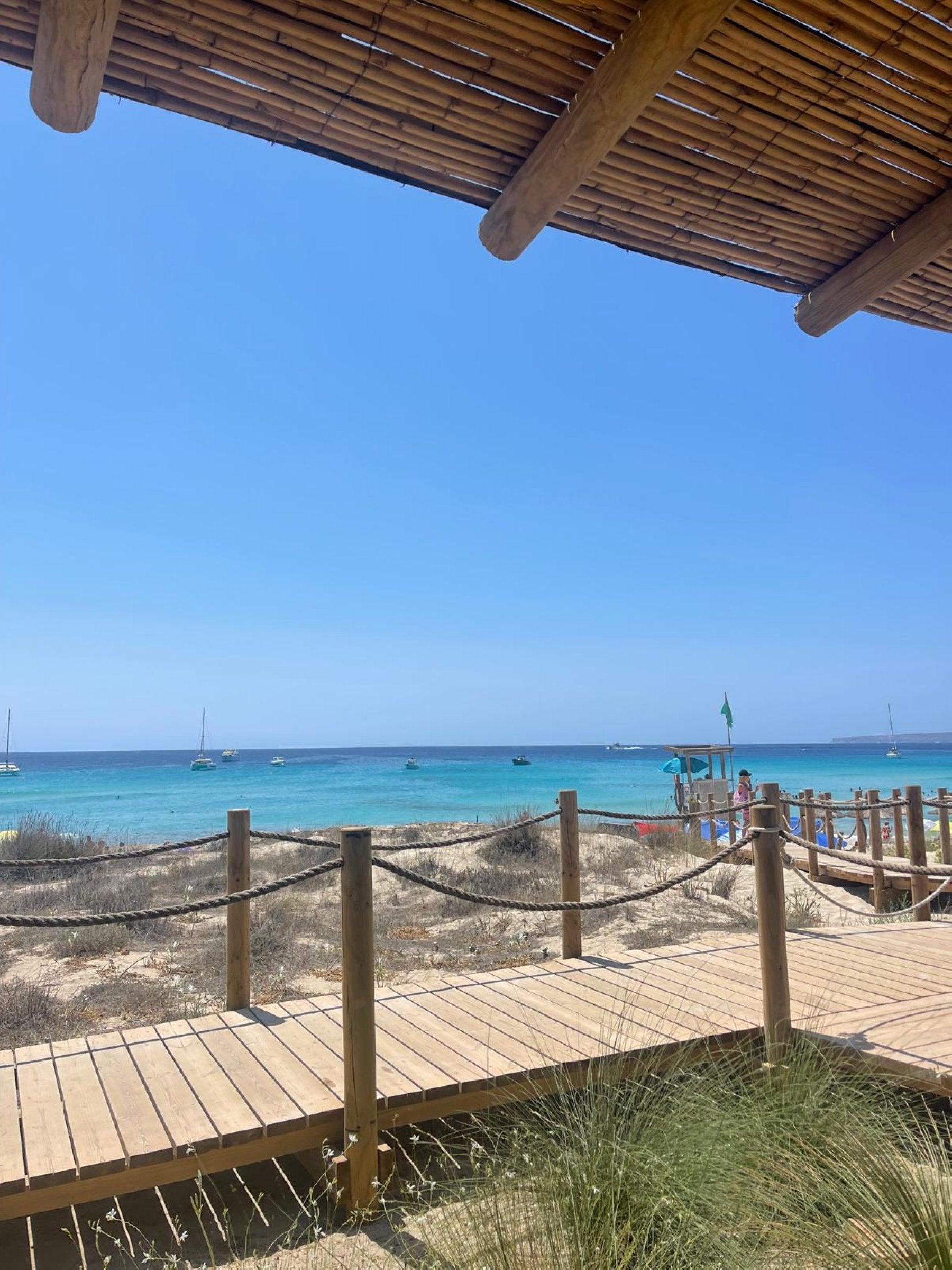
That short journey changes the pace of the holiday entirely. Formentera is a refuge from Ibiza's noise, and just as much a departure from anything along the Costa del Sol. The water runs turquoise over white sand, and if it weren't for the pines crowding the shoreline, you could easily mistake it for the Caribbean. Forget speakers and parties, the only sounds here are from the cicadas and crickets.
Related story
Off the ferry, you disembark in a small, picturesque town. There isn't much to it, in the best way: people get around by Vespa, salt lakes glint on either side of the road out of the port, and the route between town and coast feels like one long stretch of tarmac with crystal-clear water pressing in from both sides.
The island is refreshingly underdeveloped with few places to stay, keeping it feeling pleasantly empty even in high season
The island is still refreshingly underdeveloped too. There are few places to stay, which keeps it feeling pleasantly empty even in high season. Those who visit for the day by boat are only a temporary presence, making sure to leave the island in time for their nights out in Ibiza.
But the sea is Formentera's real treasure. It's about as clear as Mediterranean water gets, thanks largely to posidonia oceanica - a vital marine plant whose vast underwater meadows between Ibiza and Formentera form a Unesco World Heritage Site, and the reason the water glows the way it does. Worth noting if you're booking a stay near the beach: local rules may include a small charge toward conserving this plant, but if it's what it takes to keep the water as turquoise as it is, it's money well spent. The island is also superb for snorkelling, with colourful fish everywhere you look.
The villages
Formentera is small enough that each of its handful of villages has a distinct identity, but its size does not make it uninteresting.
Sant Francesc Xavier is the island's historic capital and administrative heart: a tangle of whitewashed alleys framed by bright pink bougainvillea, local boutiques and an 18th-century fortress church at its centre.
Es Pujols is the closest thing Formentera has to a nightlife hub: a wide sandy bay lined with restaurants, beachfront promenades and the island's main cluster of bars and clubs. Set in the island's north, the village stretches between Estany Pudent - a salt lagoon and protected nature reserve once known as the “flamingo lagoon” for the birds that gathered there - and the dramatic cliffs leading to the Torre de Punta Prima. A visit isn't complete without the nightly market along the seafront promenade: from May to October, local artisans set up each evening from 7pm to midnight.
La Savina is the gateway between the two: the port where ferries from Ibiza arrive, busy with waterfront cafés, car and scooter rental shops, and views straight out over the marina.
When to visit
September is Formentera at its best. The weather holds, the sea is at its warmest, the summer crowds have thinned and prices drop. Daily highs reach around 28C, with lows around 20C.
Food
Formentera has long been a favourite summer haunt of Italians, many of whom run restaurants and small businesses across the island. The result is some of the best, most authentic pasta you'll find outside Italy - simple, unfussy and clearly made by people who take it seriously. The settings have their own charm too: tables lit by fairy lights on the beach, others tucked beside the salt lakes, still more hidden among the pines inland. It's hard to go wrong with any of them, as each has its own particular magic.
Beyond the beach
For more than sand and sea, green routes thread through the island's interior and along its dunes, which makes for easy cycling and walking terrain. Most of the island is an untouched and protected nature reserve: pine forest and dune stretching for miles along the coast, so there are plenty of routes to choose from.
It's simply one of the best places in the Mediterranean to disappear for a few days. You won't find clearer water, and there is no place better suited to doing absolutely nothing.
Find more travel in our dedicated section
![[]](http://static.vocstatic.com/voc26/latest/assets/images/favicon/surinenglish/apple-touch-icon-57x57.png)