
Education
Malaga University calls for more funding in order to grow in line with the province's expansion
At the opening of the 2026-27 academic year, the rector warned that a lack of resources is holding the institution back and highlighted that the housing problem is undermining equal opportunities for students
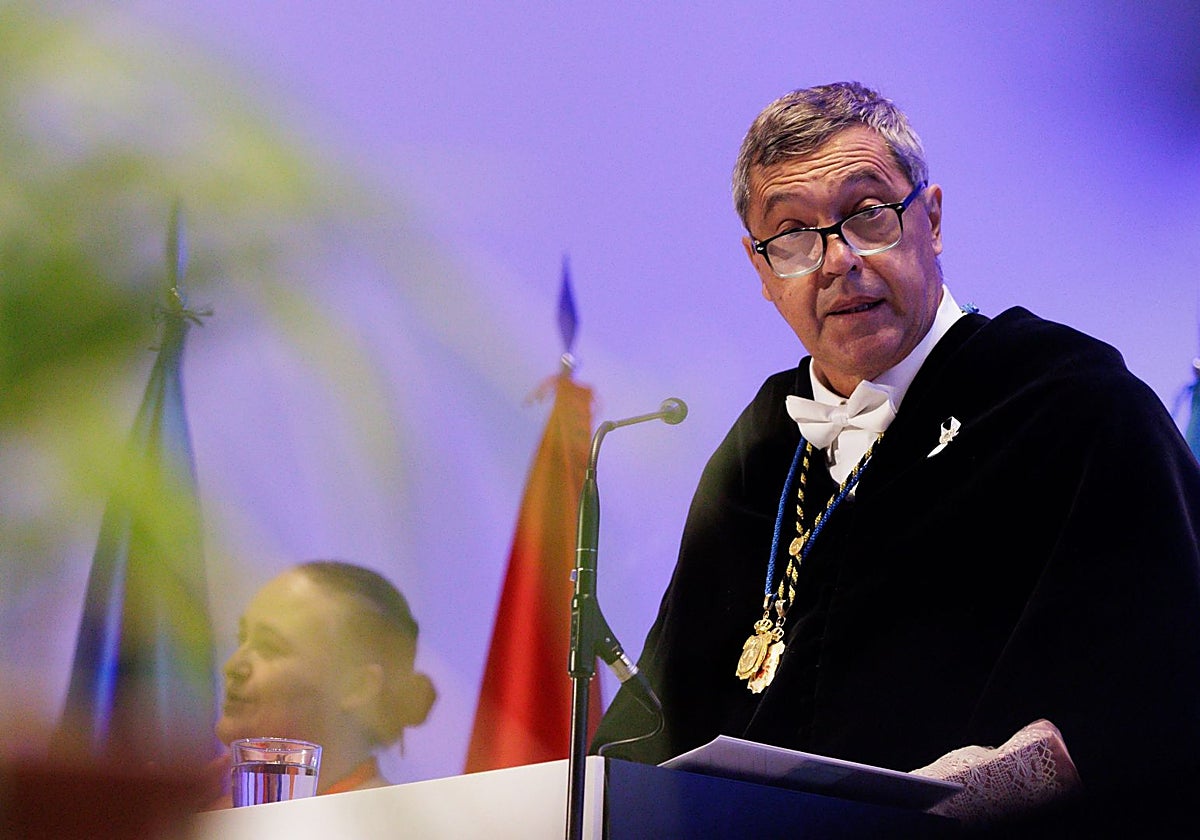

Almost half an hour of remarks from UMA (University of Malaga) rector Teodomiro López on Thursday offered an insight into his vision for the province' ... s leading academic institution and where he wants it to go. He spoke at the formal opening of the 2026-27 academic year.
Against a backdrop of persistent economic difficulties, López presented the UMA as a meeting point and source of guidance for everyone: a modern space for social exchange, bringing people, knowledge and ideas together. He wants the university to connect theory with practice, academia with civil society, and people of all ages and backgrounds.
López also called for the university to break down the barriers separating it from the business world and ensure that a student's financial circumstances do not determine whether they can study there.
Related story

The rector also expressed solidarity with Ceuta and issued direct demands to the Andalusian regional government. He made clear that the UMA needs to grow if it wants to secure its long-term future, and that it urgently needs more funding to overcome its current financial shortfall.
López made the case forcefully, though in measured terms, that the university needs to expand and urgently requires additional resources. He stated that the development of the campus must keep pace with the rapid growth Malaga province has experienced in recent years.
"The UMA has to grow. It has to grow because Malaga has grown, because our province has changed profoundly and because Malaga society needs more knowledge, more talent and more highly qualified professionals," López said.
The absence of Andalusian regional universities minister Jorge Paradela attracted attention. The regional minister has traditionally attended the UMA's academic year opening as the region's leading political representative for higher education.
López contrasted his ambitions for growth with the budgetary constraints that, he said, have affected the UMA for the past decade.
According to figures he presented, years of inadequate funding have reduced the UMA's share of funding within Andalusia's public university system from 15.1 per cent in 2012 to 13.8 per cent in 2024. The university estimates that this represents a cumulative loss of more than 216 million euros.
The rector acknowledged recent efforts by the regional government to narrow the funding gap per student. The difference has fallen from 800 euros to 495 euros compared with the regional average. However, he stressed that a significant financial gap remains.
"We cannot ask universities to grow, increase the number of degree courses or conduct more research if they do not have sufficient funding. More students require more resources, more teaching staff, more infrastructure and more services," López said.
He called for the outstanding funding agreements to be honoured and for the government to introduce a dedicated infrastructure plan for the university.
The lack of space and funding contrasts with the strong demand for places at the UMA. The university has reached a record 10,353 new student places for the current academic year, taking it above 10,000 for the first time.
Even so, López warned that the figure falls well short of actual demand, with more than 14,000 applicants listing the UMA as their first choice.
"Every student who cannot study at our university represents an opportunity our society loses and talent that will ultimately develop elsewhere," he said.
He used this argument to support a further, orderly and sustainable expansion of student places, particularly in fields linked to technological transformation such as artificial intelligence, biotechnology and quantum computing.
General secretary for universities Antonio Posadas said the regional government had stood by the university as it sought solutions to its difficult financial situation. He said the Junta had acted with "responsibility and a clear roadmap" to help the UMA grow as it deserves.
He added that joint efforts had allowed the authorities to "resume pending projects to continue improving infrastructure and, with it, the quality of teaching and the university experience".
Housing crisis
Alongside the issue of university funding, Teodomiro López placed the housing crisis at the centre of the debate over educational equality. He warned that soaring housing costs have become a major obstacle for the university community.
He stated that a family's financial means should not determine a young person's academic prospects.
"Housing is becoming one of the main barriers for many young people. We cannot accept that a student has to give up studying for a particular degree. Access to university must depend on talent and effort, not on a family's financial means," the rector said.
Making the case for public universities as engines of social movement, López called for stronger scholarships, student grants and university accommodation. He described these measures as essential to preventing students from less affluent backgrounds from being excluded for financial reasons.
"As a society, we cannot allow a family to go into debt so that their children can study. When access to higher education depends on financial means, we are taking a step backwards that harms society as a whole," he said.
He called for a fully accessible and inclusive university that does not exclude students because of their financial circumstances.
The UMA's academic year opening also provided an opportunity to defend the humanistic value of education.
At a time when artificial intelligence and technology increasingly focus on economic performance, the university highlighted values that have endured for centuries. López presented the university as a space for progress that brings together society's demands, with expectations of greater democratisation, practical relevance and competitiveness.
Such expectations have a legitimate place, but they should not come at the expense of the essence of scientific work: confronting the paradox that questions already contain their answers, while answers remain reflections of the questions that produced them.
Although universities can become more democratic, López said, science cannot operate in quite the same way. It must retain the authority to challenge accepted knowledge, particularly when collective opinion appears to give that knowledge excessive democratic legitimacy.
The UMA, he suggested, must also leave room for unconventional thinking, dissent and intellectual divergence.
![[]](http://static.vocstatic.com/voc26/latest/assets/images/favicon/surinenglish/apple-touch-icon-57x57.png)