
Property
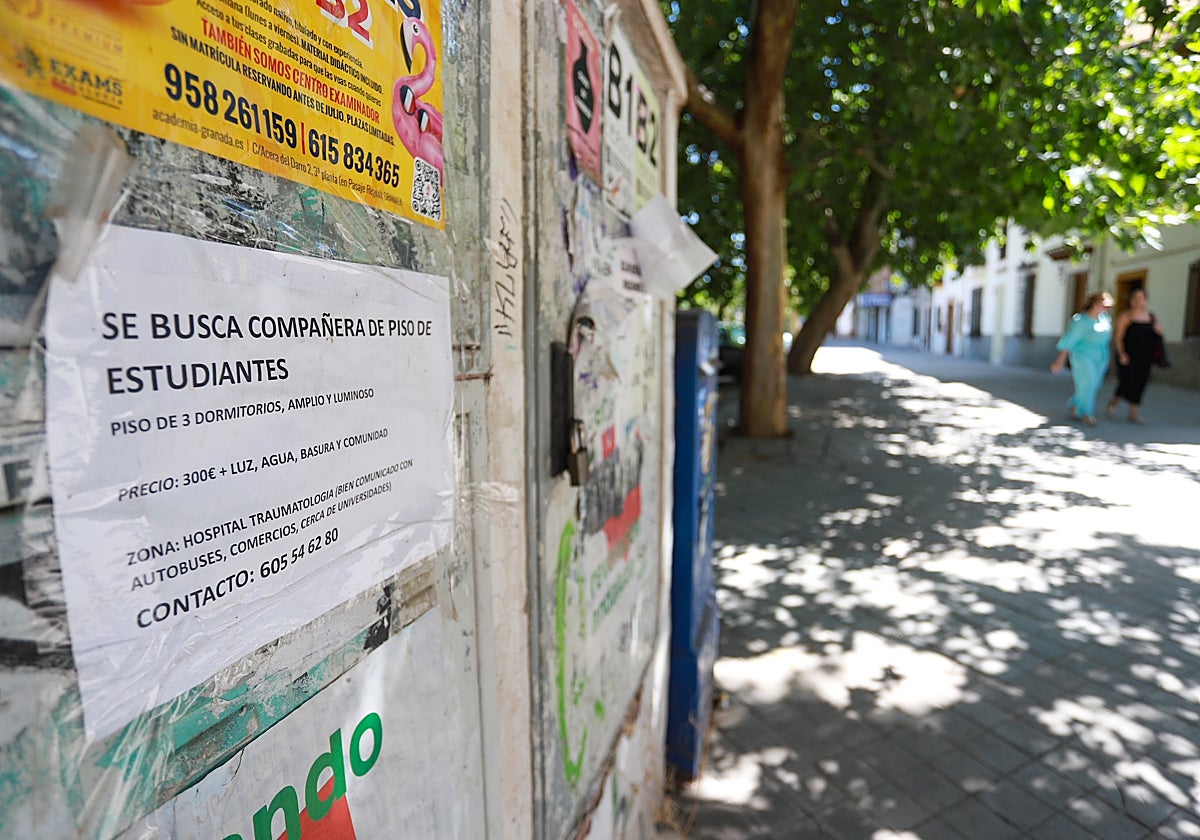
Tourists and students snap up rental properties, reducing the supply of long-term accommodation in Granada city centre
Temporary flats now account for 40 per cent of the housing stock in the city, making it difficult to live under the same roof for more than 11 months in a row

Sara Bárcena Hernández
Granada
Renting a property in Granada city is becoming increasingly difficult, particularly if you are looking for a long-term home. While tourist and seasonal lettings ... are gaining ground, with the latter now accounting for 40 per cent of the current stock, landlords are showing an increasing reluctance towards long-term lets, according to an in-depth analysis of the sector, citing "uncertainty" as the reason.
A quick look at the property platform Idealista will reveal that short-term lets account for almost half of the market in Granada city. Around 1,909 properties are currently advertised for rent on this property portal in the city of the Alhambra Palace. Although the majority are long-term lets (1,149), seasonal lets (760) are starting to take a larger share of the market. Four out of every ten are seasonal lets.
José María Martínez, manager of Grupo Torres and Chair of the Granada estate agents’ association, Asociación de Inmobiliarias de Granada, says that the number of landlords opting for holiday lets “is constantly growing”. According to him, letting a property as a main residence causes concern. “Every time the government introduces a rule that makes it easier for long-term tenants to default on rent, if they want to stay in the flat, they can practically stay there for life,” he argues.
Legal time limits and automatic extensions create a situation of great uncertainty for landlords. As Martínez explains, after one year, the tenancy agreement is automatically renewed for a further five years. If, during the fifth year, the tenant is not given notice to leave, then by law the tenancy is renewed for a further three years. “It can take eight years before the property can be vacated. What’s more, the tenant might lose their job or get divorced and many people think that perhaps their daughter might need the flat,” he explains.
Employment history
Those who do dare to let out their property on a long-term basis apply screening criteria that include thorough credit checks. They usually ask to see the last three payslips and sometimes even a third-party guarantee, as well as the tenant’s employment history to check whether they are stable or not. “I don’t like it when people have had twenty-five different jobs in three years, unless they’re a student who’s been moving around, because it suggests they’re not stable,” argues Javier Cirre, commercial director at the estate agent Inmobiliaria Kabuki.
In this context, he states that seasonal lettings “have grown by a solid 25 per cent in recent years”. In his experience, landlords do this “for security”, above all because if they want to sell, they can evict the tenant “quickly”, giving them between one and three years to find somewhere else to live. Furthermore, the temporary nature of the tenancy does not have to be limited to the academic year. Cirre points out that, in justified cases, such as for a degree course, a master’s degree or an employment contract, a temporary tenancy agreement of two years, for example, can be signed.
Inmobiliaria Hábitat, located in Plaza de Toros, specialises in short-term tenancies. Ninety per cent of its clients are students and some temporary workers looking to rent from September to June or July. The requirements are strict. “For every child, a parent must also live in the property. As well as not having an income of their own, the tenant cannot be a single adult,” explains the manager, Javier Sánchez.
Recent earthquakes
Although many agencies tend to offer seasonal rentals by the room, at Hábitat they have always advocated renting out the whole flat. “I don’t choose who you have to live with, that’s up to you,” emphasises Sánchez. He says the experience is usually a good and better than when flatmates are chosen at random. Furthermore, the landlord “tends to have peace of mind if they know each other beforehand and if things go well, it’s very unlikely they’ll consider moving out in the long term”.
Generally speaking, it can take a week from the time a tenancy application is submitted until the tenancy agreement is finalised. At the moment, business in this sector is booming, capitalising on the start of the academic year. It's clear that September is just around the corner and the earthquakes that have been shaking Granada in recent weeks have not affected the market.
The Asociación de Inmobiliarias de Granada points out that the recent series of earthquakes has had a limited impact on the housing sector in this regard. Martínez says that there hasn't been any significant reaction, not even in the worst-affected areas. “We’re not seeing much reaction as a result of the earthquakes, not even in Zaidín. People are now worried about repairing their homes; they can’t sell a house with cracks in it,” he concludes.
![[]](http://static.vocstatic.com/voc26/latest/assets/images/favicon/surinenglish/apple-touch-icon-57x57.png)