
Tourism
Tourism in Andalucía shows no sign of peaking and is once again reaching record highs
July ended with positive growth of 3.2 per cent, with more than 2.2 million hotel guests and a significant boost to employment

José María Aguilera
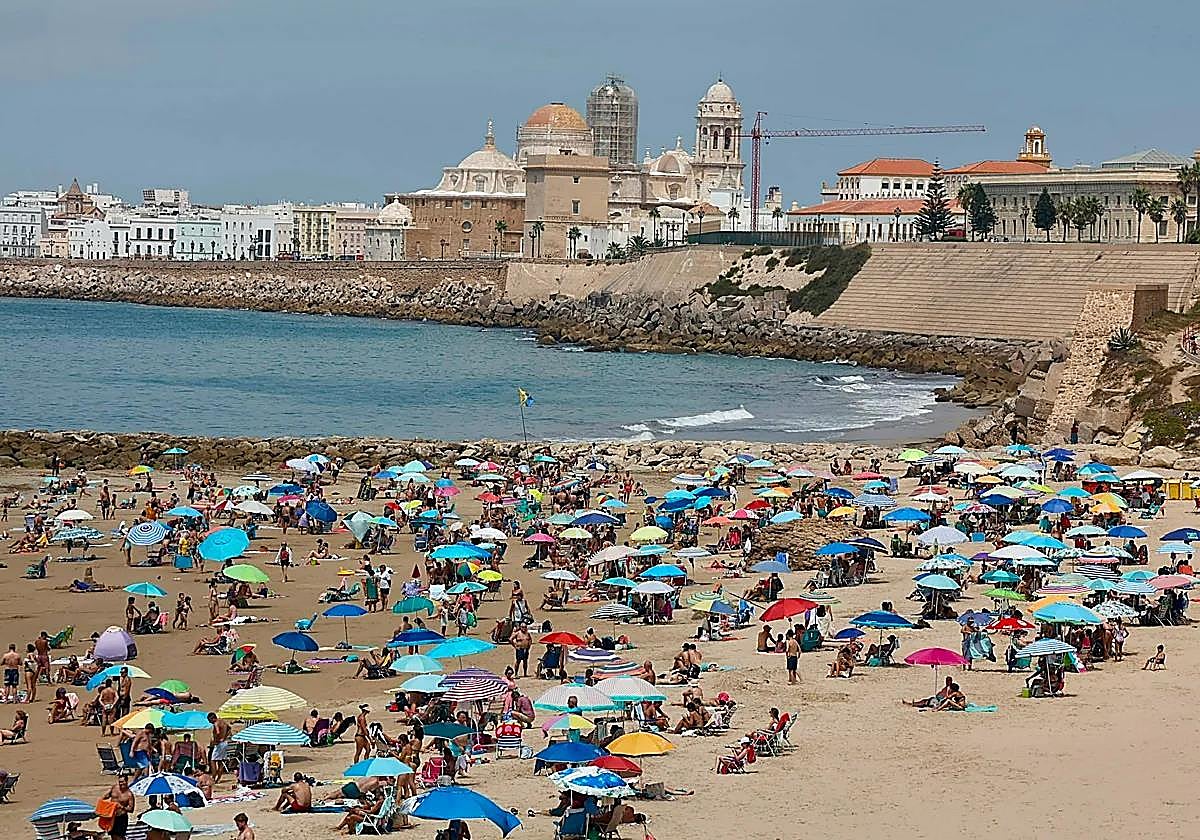
Andalusian tourism isn't just holding up; it's still climbing. As gloomy as they are in some ways logical, given how hard it is ... to keep breaking records, forecasts of an inevitable slowdown keep coming. Yet for another year, another summer, despite train disruption, wildfires and now earthquakes too, Andalucía is on course to post another record set of figures. The ceiling still hasn't been reached.
According to figures ABC obtained from the region's restructured Tourism department, now led by Manolo Gavira of Vox, hotels across the region accommodated 2.2 million travellers in July, accounting for seven million overnight stays. The figures represented increases of 3.2 per cent and 2.3 per cent respectively compared with the same month last year.
The bubble, if that's even what it is, shows no sign of bursting, though the trend is becoming harder to sustain, largely because the margin for further statistical growth is already so narrow.
External pressures are mounting too: inflation, driven this season by high fuel prices, is squeezing visitor spending, a problem shared with the rest of Spain and most competing destinations.
More specific to the region, the serious deterioration of rail connections and congestion on key routes such as the AP-4 and A-7 remain a drag on the sector's development.
Hotels are nearing full capacity
Both domestic and foreign markets recorded growth in July, although they performed differently. The domestic market led the increase in the number of travellers, while foreign visitors drove the stronger rise in overnight stays, up four per cent compared with 0.7 per cent for domestic visitors.
Andalucía accounted for 15.6 per cent of Spain's hotel activity in July, placing it third nationally, but it remained the country's leading destination for Spanish residents travelling within Spain.
According to Spain's National Statistics Institute (INE), Andalucía, Catalonia and the Comunidad Valenciana were the three main destinations for Spanish residents. Foreign visitors, meanwhile, favoured the Balearic Islands, Catalonia and the Canary Islands, which accounted for 33.4 per cent, 20.2 per cent and 18.6 per cent of the total, respectively.
The tourism industry remains a major driver of the regional economy and employment. Hotel sector employment rose by 9.3 per cent in July compared with July 2025, while the occupancy rate increased by 1.8 percentage points.
Figures from the Regional Ministry of Tourism show that the positive trend has continued through the first seven months of the year. Between January and July, Andalusian hotels received 11.9 million travellers, up 2.8 per cent from the same period in 2025, while overnight stays reached 33.4 million, up 3.3 per cent.
The number of beds available fell by 0.5 per cent in July, but occupancy increased by 1.8 percentage points, suggesting hotels are filling their existing capacity more effectively without significantly expanding the number of places available.
For the year to date, employment in the hotel sector has increased by 11.2 per cent, while occupancy has risen by one percentage point and the number of available places has grown by 1.7 per cent.
Statistics for June show that 75.7 per cent of travellers using regulated accommodation in the region stayed in traditional hotels, while tourist apartments accounted for 14.5 per cent.
The outlook also remains positive. Between January and October 2026, hotel overnight stays are forecast to increase by 2.9 per cent to almost 52.9 million, with occupancy expected to reach 60 per cent of available capacity, up 1.1 percentage points from the same period last year.
Strong recovery after difficult start to year
The strong performance comes after a difficult start to the year, which prompted close scrutiny from both the regional government and the tourism industry.
A series of storms caused serious problems in numerous municipalities, particularly in the provinces of Cadiz, Malaga and Cordoba. Torrential rain and damage to roads caused visitor numbers to fall sharply.
The Adamuz rail accident then severed the railway connection with Madrid and the rest of Spain for a month. A landslide in Álora also left the rail route to Malaga suspended until after Holy Week.
Most of the disruption occurred during the low season, however, while favourable weather during Holy Week helped the sector recover. The first quarter subsequently outperformed the same period in 2025, including its first holiday weekend, with growth of 4.5 per cent.
The recovery continued into the second quarter. More than 10.8 million tourists visited Andalucía between April and June, an increase of 6.7 per cent compared with the same quarter of the previous year.
Employment also increased, reaching 561,646 people before the summer season, 12 per cent more than at the same point in 2025.
Hotel statistics compiled by the INE recorded 9.7 million travellers and 26.4 million overnight stays, with the latter representing a historic high despite the number of hotel visitors remaining below the 2024 level.
Across all types of tourism, 17.64 million tourists visited Andalucía during the period, up 5.8 per cent. That was around two million more than in 2019, before the Covid-19 pandemic, suggesting that the region has emerged from the pandemic with a stronger tourism sector.
![[]](http://static.vocstatic.com/voc26/latest/assets/images/favicon/surinenglish/apple-touch-icon-57x57.png)