
What to do
Andalucía eclipse 2026: What time can you see the total solar eclipse from each province?
The eclipse will cross Spain from west to east on Wednesday, 12 August, with several Andalusian provincial capitals among the places where people can watch it
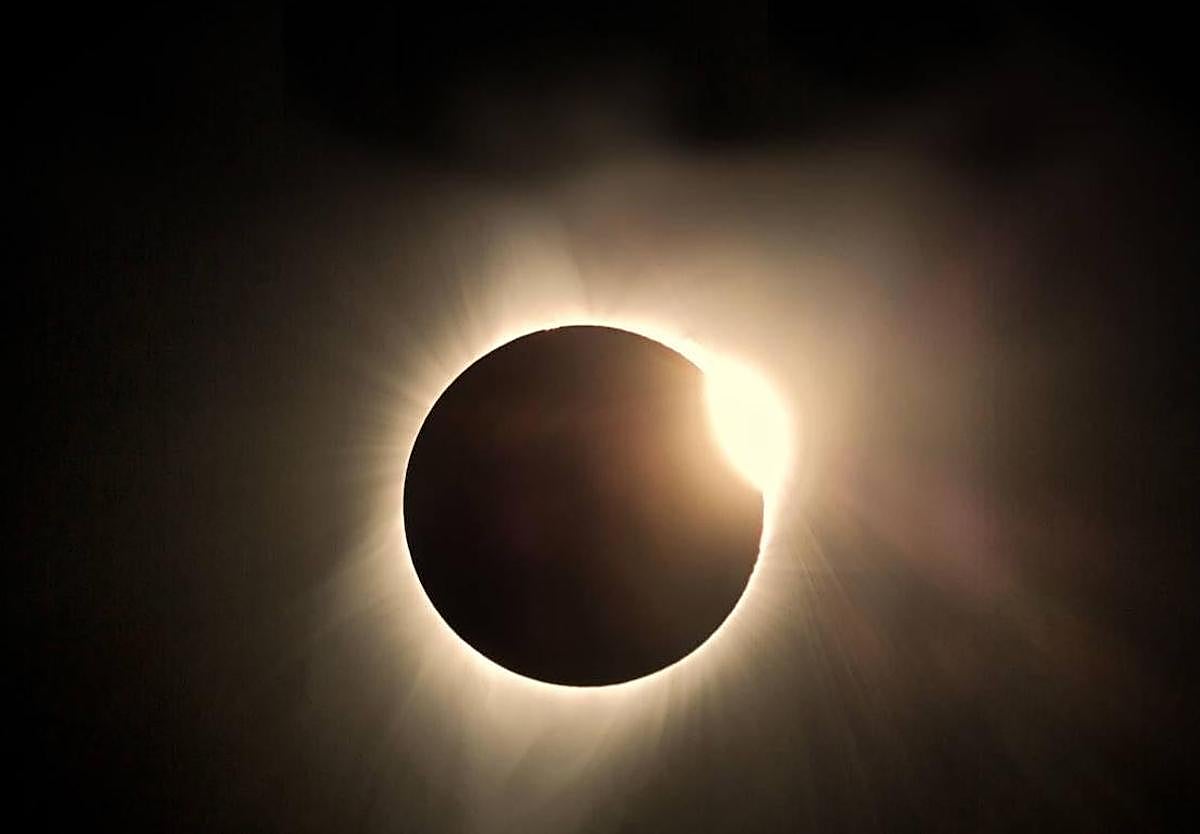
Andalucía will be one of the places where people can watch the first total solar eclipse visible from mainland Spain in more than a century ... as the moon passes in front of the sun at sunset this Wednesday, 12 August.
The path of totality will cross Spain from west to east, passing through several provincial capitals, including a number in Andalucía. The eclipse will begin in the region at around 7.40pm, although the exact time will vary slightly depending on where you watch it.
According to the national astronomical observatory (IGN), Spain lies at the eastern edge of the path of totality, meaning the total phase will coincide with sunset, when the sun sits very close to the horizon. Anyone hoping to see the eclipse should therefore choose a location with a clear view towards the west.
Related story

Related story

As the eclipse takes place in summer, much of Spain should also have a good chance of clear skies.
The European Space Agency (ESA) says Spain will have Europe's largest area of totality during the eclipse, providing particularly favourable conditions for viewing the phenomenon before it continues towards the Balearic Islands.
This will mark the first total solar eclipse visible from mainland Spain since 1905 and the first of three solar eclipses that people in Spain will be able to see between 2026 and 2028.
Eclipse times by province
The total solar eclipse will appear as a partial eclipse across Andalucía. The eclipse will take place on Wednesday afternoon, with the total phase occurring between 7.00pm and 9.30pm, depending slightly on the viewing location.
According to data from the IGN, in Almeria the eclipse will begin at 7.43pm and reach its peak at 8.38pm, before the sun sets at 9.29 pm. In Cadiz, it will begin at 7.43pm, reach its maximum at 8.39pm and end with sunset at 9.31pm. In Cordoba, the eclipse will begin at 7.41pm, reach its maximum at 8.37pm and end with sunset at 9.28pm.
In Granada, the eclipse will begin at 7.42pm, reach its maximum at 8.37pm and the Sun will set at 9.29pm. In Huelva province, it will begin at 7.42pm, reach its maximum at 8.38pm and end with sunset at 9.30pm. In Jaén, the eclipse will begin at 7.41pm, reach its maximum at 8.36pm and the Sun will set at 9.28pm.
In Malaga, the eclipse will begin at 7.43pm, reach its maximum at 8.38pm and end with sunset at 9.30pm. In Seville province, it will begin at 7.42pm, reach its maximum at 8.38pm and the Sun will set at 9.30pm.
The eclipse will also appear as a partial eclipse across northern North America, much of Europe and western Africa. It will begin at 5.34pm over the Bering Sea and end at 9.58pm over the Atlantic Ocean, giving the phenomenon a total duration of 264 minutes, or just under four and a half hours.
The path of totality will cross the Arctic Ocean, north-eastern Greenland and the western tip of Iceland before travelling across the Atlantic and reaching mainland Spain. It will then cross the country from west to east, passing through numerous provincial capitals.
How to watch the eclipse safely
The IGN advises people never to look directly at the sun, either with the naked eye or through ordinary sunglasses.
During a partial eclipse, the moon never completely covers the sun, so looking at it without suitable protection can damage your eyesight just as it can on any normal day. The safest way to watch the eclipse is to use certified eclipse glasses designed for solar observation.
The IGN also warns against looking at thesun through cameras, video cameras, telescopes, binoculars or other optical equipment unless the equipment has the appropriate solar filters. Do not use uncertified filters, as they may not provide adequate protection.
Another safe method involves projecting an image of the sun on to a surface in the shade. For example, you can cover a flat mirror completely with paper containing a small hole of less than one centimetre in diameter, then project the image on to a wall or ceiling. Never look directly at the sun's reflection in the mirror. Only look at the projected image.
Eclipse glasses provide safe protection as long as they carry the appropriate European certification for solar observation, have an optical density of five or higher and comply with the manufacturer's instructions. They must also remain in perfect condition.
The IGN recommends sitting down while wearing them and avoiding walking around. Do not remove the glasses until you have looked away from the sun. You can wear eclipse glasses over ordinary prescription glasses, but never use them with optical instruments.
Finally, the IGN advises against using optical equipment to observe the sun unless you have professional expertise or proven experience in solar observation. Never use screw-in solar filters that attach to the eyepiece, as they can become extremely hot and break, potentially causing serious eye damage. Any solar filter used with optical equipment must always sit in front of the instrument's objective lens.
![[]](http://static.vocstatic.com/voc26/latest/assets/images/favicon/surinenglish/apple-touch-icon-57x57.png)