
Solar eclipse 2026
Pulling over to watch the solar eclipse in Spain could get you a hefty fine
The traffic authorities are expecting up to 1.5 million extra road trips around 12 August specifically because of the historic phenomenon

Málaga
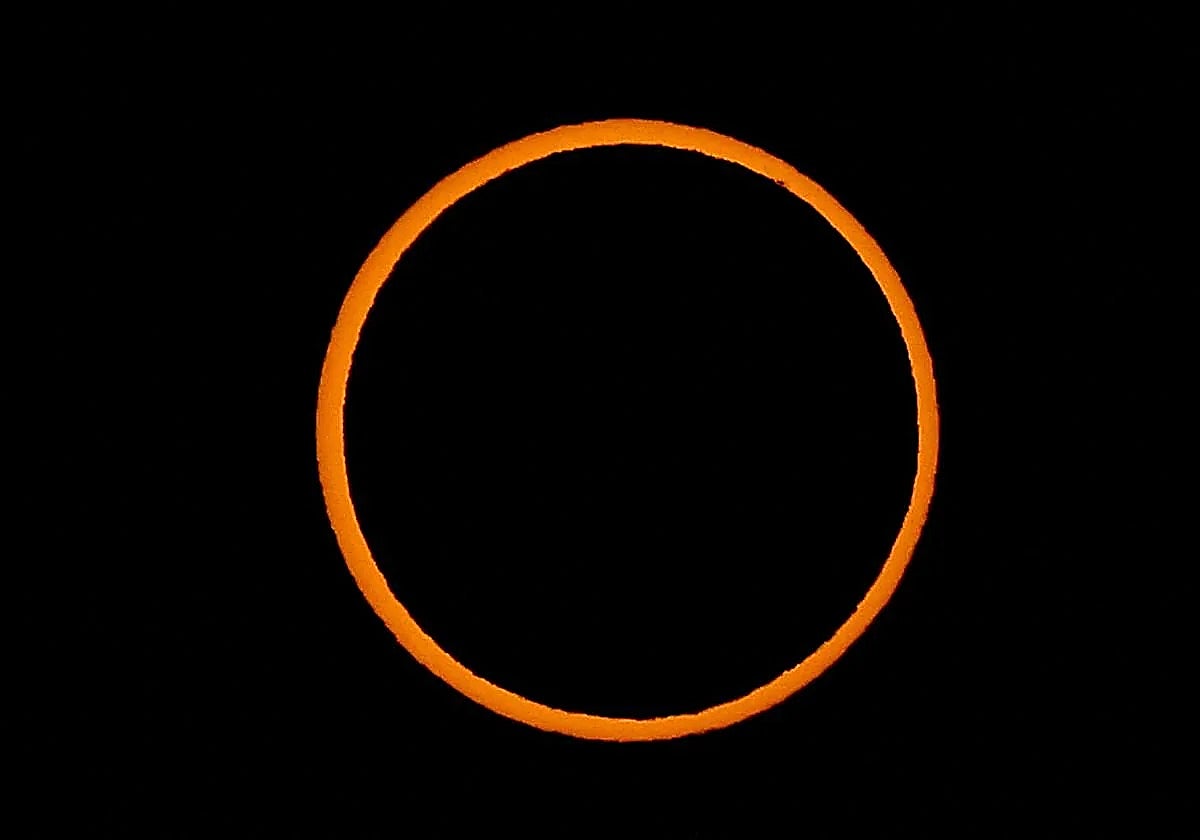
The Spanish traffic authorities have warned that stopping the car to watch the solar eclipse on 12 August could prove very costly: 200 euros, to ... be precise. Regulations ban stopping or parking on the hard shoulder of dual carriageways and motorways unless there is a valid reason.
Furthermore, filming or taking photos of the eclipse while driving is considered a serious offence and may result in a fine of 200 euros and the loss of six points of the driving licence.
Spain is expecting a significant increase in traffic due to the phenomenon that has not been witnessed for 121 years.
Related story

The eclipse will be visible across much of the country, as well as in other parts of the world.
The government estimates that it will generate additional tourism spending of 342.19 million euros across the 36 provinces where the eclipse will be visible: 247.29 million from foreign tourists and 94.90 million from Spanish residents.
Furthermore, travel could increase by between 30 and 100 per cent from the partial eclipse zone towards the total eclipse zone, which means there will be between 400,000 and 1.5 million additional journeys, according to sources at the Ministry of Science.
The government expects a wave of people returning home once the total solar eclipse has ended, at around 8.30pm, although some will be staying overnight.
The ministry recommends travelling "with careful planning" and not doing so if you can already view the total eclipse from where you are.
Hundreds of thousands of journeys
The traffic authorities have launched specific measures to the summer plan to manage traffic flow.
According to Europa Press, 8.4 per cent of those planning to watch the eclipse intend to travel to a province other than their place of residence. Airlines have prepared a 7.9 per cent increase in scheduled seats for the week of the eclipse compared with the same period in 2025.
Hotel bookings are likely to increase by 17.8 per cent in August, compared to the same month last year.
The government is expecting 446,700 additional tourists between 10 and 16 August (164,000 foreign visitors and 282,000 Spanish nationals), as this may coincide with the third wave of the summer holiday exodus, around 15 August.
On 12 August, the eclipse will reach its peak at 7.46pm (official time on the Spanish mainland and the Balearic Islands) near Iceland, with the total phase lasting a maximum of two minutes and 18 seconds.
The last place in Spain where it will be visible will be the Balearic Islands. In Palma de Mallorca, the eclipse will begin at 7.38pm and reach its peak at 8.32pm, a few minutes before sunset, with the sun already very low in the sky, at an altitude of just two degrees.
![[]](http://static.vocstatic.com/voc26/latest/assets/images/favicon/surinenglish/apple-touch-icon-57x57.png)