
Tourism
Exceltur forecasts 2.1% growth in tourism on coastline of the Andalucía region this summer
According to the national organisation, hotel revenue along the coast has grown more because of the increase in prices rather than because of high occupancy rates

Malaga
Tourism is not immune to the uncertainty of the international geo-economic situation. Indicators in Spain show that the local sector is affected as well, with indicators from the first half of the year slightly below expectations and a second half of the year marked by a more adverse and uncertain macroeconomic context. For this reason, the Exceltur alliance of tourism-related sectors has revised its forecasts, decreasing tourism growth expectations from 4% to 3.3% for 2025.
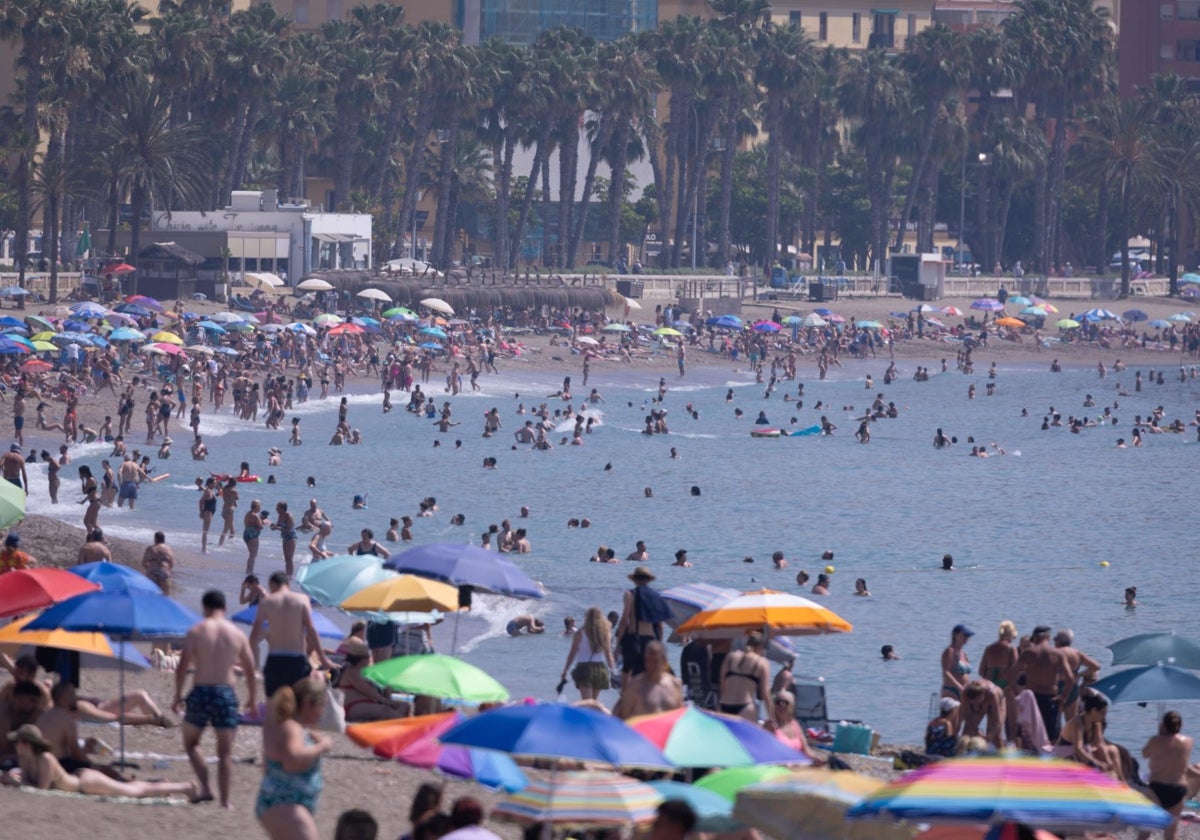
According to this study, the coastline of the Andalucía region is among the areas that will experience "contained" growth this summer, mostly due to national demand still being in recession. It is expected that tourism along the regional coast will increase by 2.1%.
Tourism entrepreneurs predict moderation in sales growth, compared to the good summer of 2024. That is not to say that there won't be a positive trend, but it will be a more "moderate and heterogeneous growth rate depending on the type of destination and the type of business". The Balearic Islands anticipate a positive summer, with a rise of 3.7%, while the Canary Islands forecast growth of 2.8%. In contrast, the mainland holiday destinations that are more dependent on domestic tourism share more contained expectations. Catalonia forecasts a 2.6% increase, Valencia a 2%, Murcia a 1.9%.
Madrid leads in urban tourism, with an increase of 3.8%. It is followed by the main tourist cities of Andalucía, with an increase of 2.0%; Valencia, with an increase of 1.4%; and Barcelona, with an increase of 1.7%.
3.3%
is the expected rise in tourism in Spain this year despite previous forecasts of 4%
Exceltur's expectations are based on international demand, mostly from Europe, although main markets such as Germany and France, alongside the US, have slowed down due to "geopolitical uncertainty and lower economic vigour, derived from international trade tensions".
Exceltur states that "tourism forecasts for this summer continue to be positive in all subsectors, although with a general tone of moderation. Car rental and passenger transport stand out, with increases of 6.9% and 4.9%, respectively, driven by the increase in mobility. Accommodation, especially in holiday destinations, shows greater caution, with a 2.1% increase, compared with a 3.2% rise in hotels in urban destinations, favoured by the expected dynamism of the long-haul sector. Leisure service providers and large travel agency groups forecast contained growth of 2.4% in view of the uncertainty of last-minute consumer behaviour".
Hotel revenue in Malaga city dropped by 2.2% at the end of the second quarter of the year. Despite this, Malaga continues to rank as the fourth city in Spain in terms of hotel profitability, only preceded by Madrid, Barcelona and Seville. The dynamism of inland cities such as Cordoba, with a 4.8% increase, and Granada, with a 6.0% increase, is improving, while the Andalusian capital (Seville) maintains its hotel revenues up by 1.6%.
According to Exceltur, hotel revenue along the coast has grown more because of the increase in prices rather than because of a high occupancy rate. In this section of the holiday sector, the Costa del Sol ranks seventh for hotel profitability.
![[]](http://static.vocstatic.com/voc26/latest/assets/images/favicon/surinenglish/apple-touch-icon-57x57.png)