
Granada earthquakes 2026
Drone and rooftop inspections to identify all the damage caused by the earthquakes in Granada
Granada fire brigade and the provincial council reinforce roofs and remove unstable objects from them
Sandra Martínez
Six days after the earthquakes began in Granada, firefighters, technicians and other specialists are still responding to incidents. They are responding to every report from ... residents, whilst continuing to inspect elements that are not visible at first glance.
On Thursday, unstable roofs, cornices on the verge of collapsing and chimneys at risk of falling at the slightest tremor were their top priority. In the capital, the Granada fire brigade went from street to street in each location at risk of roof collapse to avert danger in the event of a possible new tremor in the city.
In Churriana de la Vega, the provincial council carried out 20 emergency operations to remove loose items from balconies, chimneys and roofs. In Cúllar Vega, they used drones to uncover any damage hidden from the human eye.
New incidents
In the capital, the buried persons rescue group (GREPS), which specialises in earthquakes, worked non-stop. The city council stated in a press release that 557 private buildings had already been inspected, but the checks continue to reveal further damage. One of the operations involved securing two structures at risk of collapse on Calle Domingo Puente Marin, next to the science park.
Related story
-
 R. ALCÁNTARA/C. ÁLVAREZ/ P. MORENO/M. NAVARRETE
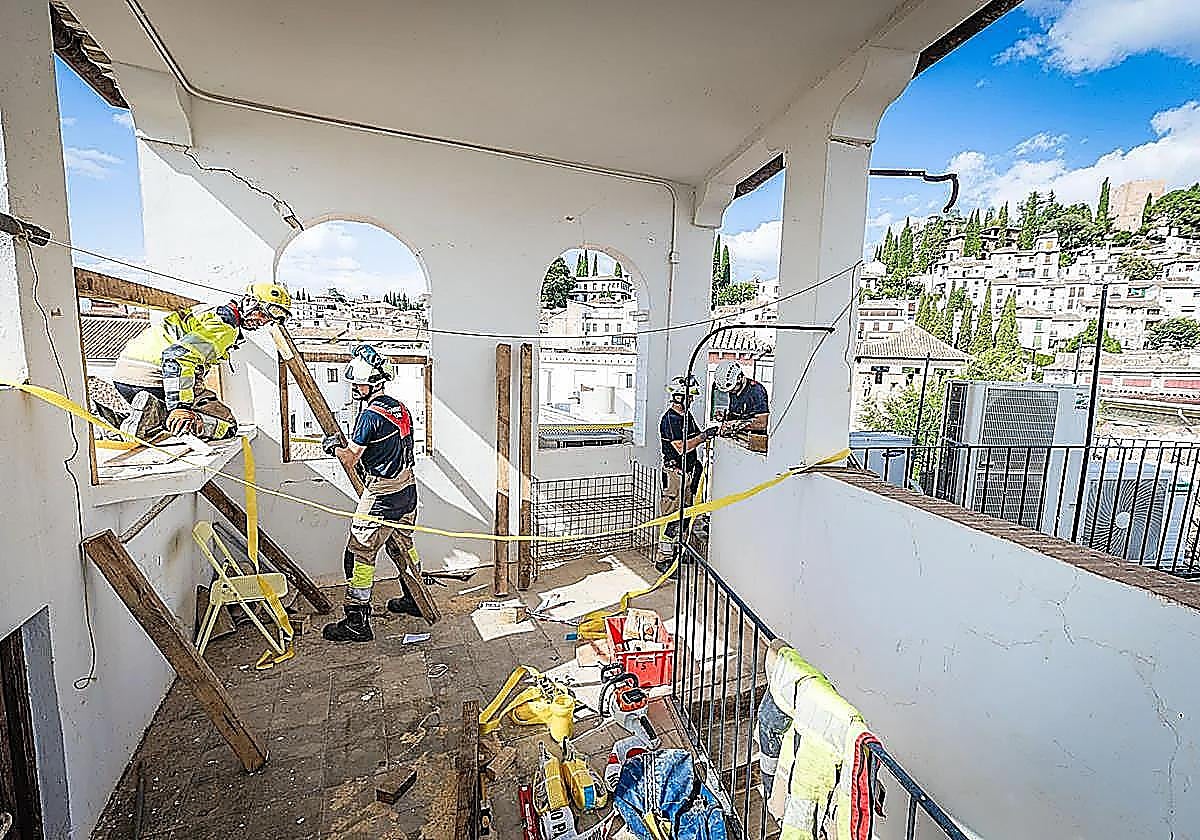
Equipped with harnesses, the fire brigade made their way on foot across the rooftops to the point where they needed to intervene to prevent further damage, as access with aerial platforms was impossible. “There are two chimneys that could collapse in the event of further aftershocks,” the fire service explained.
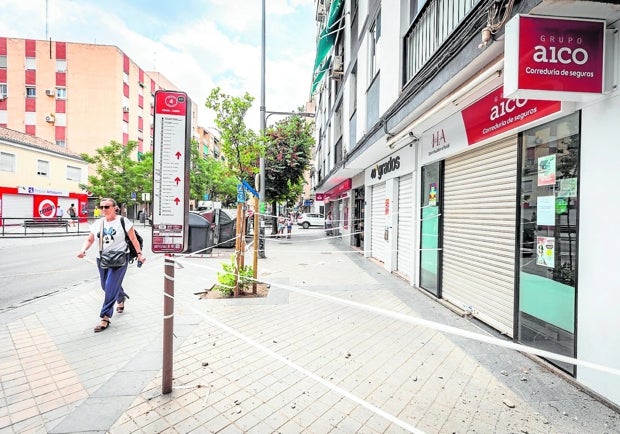
The ongoing seismic activity also forced the Granada fire brigade to secure access to two shops and carry out work on the roof on Calle Óscar Romero, in the Zaidín neighbourhood. They had previously shored up the balconies. Bricks from the roof fell onto the street, and they reinforced the walls to prevent further collapses.
Their main concern was that, following the seismic activity, damaged materials might collapse. They reinforced the on-duty staff with three teams to prevent this and carried out technical inspections, including the removal of unstable elements and shoring.
Municipal technicians also continued to assess council-owned buildings that had been affected or were likely to have sustained damage. They paid particular attention to municipal primary and nursery schools ahead of the start of the new school year, as well as to sports facilities, community centres and heritage buildings. Of the 95 municipal buildings, 59 have been inspected so far. As for private buildings, 557 have now been inspected since the start of this seismic episode.
The aim of these inspections was to check the condition of the buildings, identify any potential issues and determine the necessary measures before allowing the reopening or gradual restoration of those spaces that remain closed or cordoned off. “We want the resumption of activity to take place with every safeguard in place. That is why we are checking building by building, with particular attention to our primary and nursery schools, because the priority is for our children to be able to return to the classroom in safe environments,” said the Mayor of Granada, Marifrán Carazo.
Emergency command post
On Wednesday afternoon, the Granada provincial council set up an emergency command post at the Churriana de la Vega municipal sports centre to coordinate the operations of the provincial council’s fire service.
They carried out around 20 urgent interventions, in addition to the work carried out during the day, in which more than 200 homes in the municipality were attended to.
The work was carried out in coordination with municipal technicians, with priorities for intervention established based on the risk identified and with the aim of removing any elements that could compromise the safety of residents and passers-by.
The operation involved resources from the provincial council’s fire service, including aerial ladders to access façades, roofs and elements at height, as well as resources and personnel provided by Churriana de la Vega town council.
The president of the provincial council, Francis Rodríguez, travelled to the scene alongside the councillor for emergencies, Eduardo Martos, and the chief fire officer to assess the situation on the ground and the response measures in place. “We are taking action wherever our local authorities need us, coordinating all available resources and prioritising those operations that may pose a risk to people,” said Rodríguez.
Cúllar Vega also added new locations to those already cordoned off following inspections carried out throughout the day. On Calle Miguel Hernández, work was carried out on several old houses due to the risk of falling debris, and the alleyway leading to the Plaza de la Constitución was closed off.
On Calle Ruiz Alaberces, the section of pavement next to the church has been cordoned off after a drone inspection detected loose roof tiles. The council has asked residents to respect the cordoned-off areas and to report any incidents that may pose a risk or affect the public highway.
Meanwhile, the municipality of Armilla is awaiting a report on the condition of the Fermasa chimney in order to decide whether to demolish the structure. The chimney, which is of particular historical and heritage value, has suffered brick fall from the top and cracks have been detected.
According to the council, all the evidence suggests that it will not collapse. The council said that, should it do so, the collapse would occur inwards due to the nature of the structure itself. Should it be necessary to demolish it, the council will do so as soon as possible. The fire brigade have not yet inspected it, but the area has been cordoned off to ensure there is no risk.
![[]](http://static.vocstatic.com/voc26/latest/assets/images/favicon/surinenglish/apple-touch-icon-57x57.png)