
Tradition
‘Espetero wanted’: a traditional trade in danger of dying out along the Costas
Grilling sardines on dugout boats is a job that involves working long hours in extreme heat and finding someone to take over has become increasingly difficult

MJ Arrebola
Granada
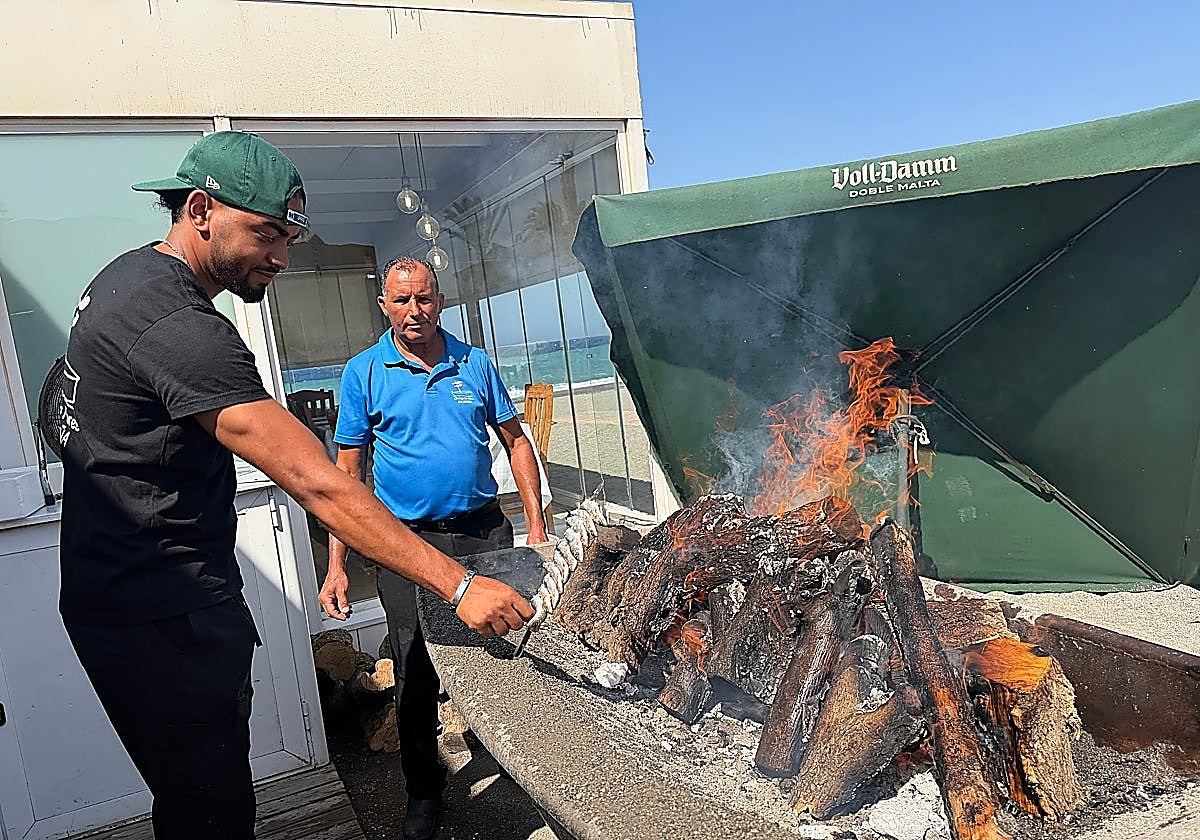
The dugout boats that act as grills to cook 'espetos' (skewered sardines) is synonymous with summer along the Costa del Sol and Costa Tropical. Every ... morning, the 'espetero' (the person who cooks the espetos) lights the fire, sticks the same bamboo skewers into the sand inside the boat and places the sardines, in the case of Granada province, fresh from the port of Motril, on top.
Behind this quintessentially summery scene lies a problem highlighted by the hospitality industry itself: "It’s becoming increasingly difficult to find anyone who wants to learn how to do it," says Francisco Trujillo, Chair of the Costa Tropical beach operators’ association.
The owners of Las Flores beach bar in Salobreña know this all too well. There, they reflect on how the trade began in the area. Javier Rodríguez, known to everyone as Javi Flores, the owner of the beach bar, recalls how his father turned a customer who used to pop in for a coffee every day into "the best espetero in the area".
Mansuri, who is from Morocco, has three years left until he retires and the beach bar has already set about finding his successor
That man is still cooking espetos. His name is Mansuri Lurigi and he’s been doing the job for 18 years. He arrives every morning before anyone else, cleans the table, prepares the firewood, checks that the skewers are in good condition and waits for the fish to arrive from the harbour. Sardines, squid, octopus, prawns, anchovies… everything passes through his hands before it goes on the grill.
Related story
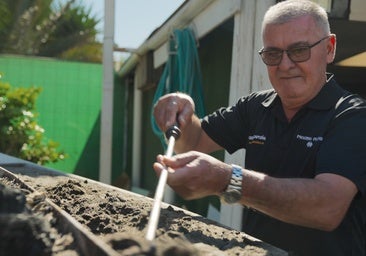
Now, Mansuri, who is originally from Morocco, has three years left until he retires and the beach bar has already set about finding his successor. “It’s a trade that’s in danger of dying out because there’s no one willing to put up with the heat,” Javi says.
“Young people aren’t cut out for this job,” sums up a young apprentice in his 20s, aware that every day he has to learn something new: how to tend the fire, how to skewer the sardines without them falling off, how to judge when they’re ready..
At the La Dorada de Plata beach bar in Almuñécar, Francisco Javier Ortuño has been working as an espetero since 2012 and he knows just how "difficult" this line of work is. It’s not just the heat from the embers; he describes the effect the job has had on his body over the years: "When I sleep, my bones start to creak because it gets so hot and at night I run a high temperature." He’s tried bringing in young people to learn the trade, but none of them lasted more than a couple of hours: “They’d get dizzy; not everyone can cope with this. Young people don’t want to work as espeteros, no matter how much money you offer them.”
The business, he says, has had an 'epetero wanted’ sign up for some time now, but nobody has come forward. Meanwhile, his 80-year-old father continues to lend a hand, because otherwise it would be “impossible” to cope at the weekend during the summer, when the queues are endless and they end up preparing between 14 and 15 crates of sardines a day.
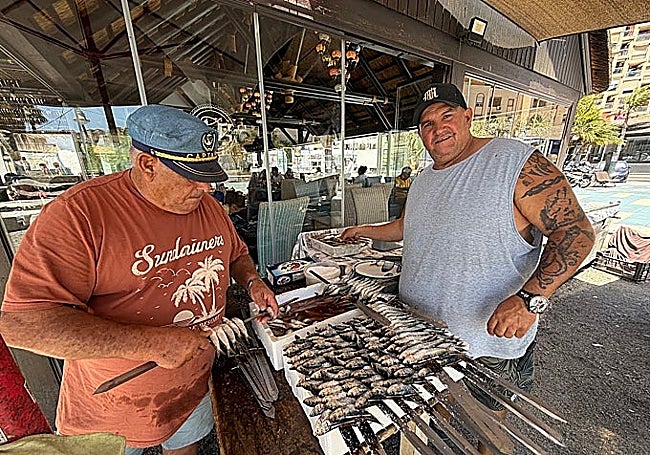
His father’s name is José; he has been a sailor since the age of eight and has been an espetero all his life. As he threads the sardines onto the skewer to hand it to his son, he explains that it is a "very tough" trade: constant exposure to the fire, he says, eventually damages the eyesight of anyone who spends years crouching over the embers: ‘The flame burns the pupil of your eye,’ he says.
For Francisco Mingorance, owner of the beach bar La Dorada de Plata, the espeto trade suffers from the same problem as other traditional crafts that are gradually disappearing – such as potters or farm labourers – but with one aggravating factor: “it only attracts tourists during the summer”: “Espetos are only eaten for three months. What future can there be for an espeto chef who’s going to be cooking fish on the grill for three months, only to be out of work by October?”
As well as the heat, the technique makes this craft much more complicated than it looks: the sardine’s backbone must always be positioned facing downwards on the skewer, because otherwise, when you turn it over the fire, the whole fish will fall off.
Despite the downsides of the trade, neither José nor his son would want to see it die out. He points out that, in the past, there used to be trade schools for certain professions such as carpenters or electricians, but there has never been one for espeteros. If there were one, he says, he himself would volunteer to teach any young people who wanted to learn. The problem, he admits, is that nobody comes knocking on that door, and that is "the saddest thing".
![[]](http://static.vocstatic.com/voc26/latest/assets/images/favicon/surinenglish/apple-touch-icon-57x57.png)