
Andalusian escapade
Medina Azahara: A majestic 'shining city'
The magnificent and enigmatic city that Abd al-Rahman III commanded to be built at the foot of the Sierra Morena, is just eight kilometres from the city of Cordoba
Tony Bryant
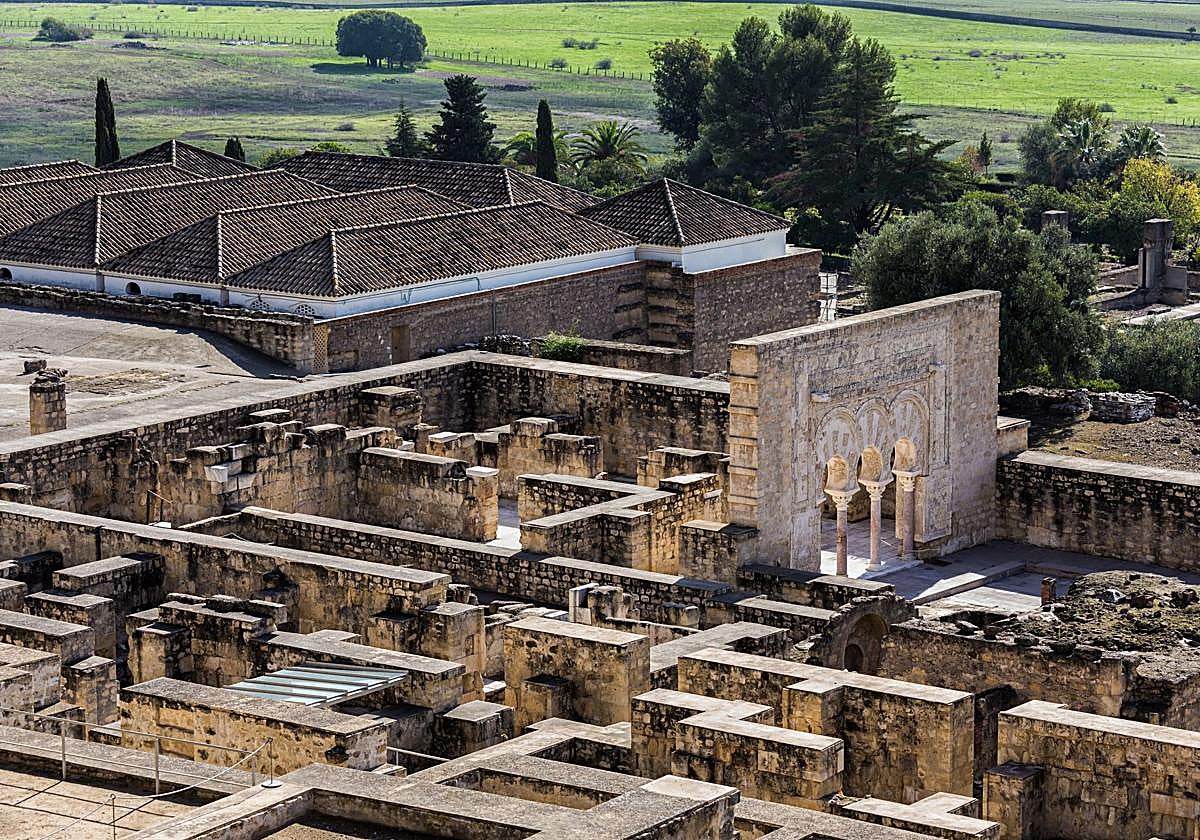
As summer temperatures begin to ease and tourist numbers decline, people are increasingly looking for alternative ideas for a day out. Andalucía offers a wealth of culturally and historically significant destinations, many of which bear the architectural, cultural and historical legacy of the region’s Islamic period. One of these is Medina Azahara, the magnificent and enigmatic city that Abd al-Rahman III commanded to be built at the foot of the Sierra Morena, just eight kilometres from the city of Cordoba. Abd al-Rahman was a great humanist and a generous patron of the arts, particularly architecture.
This remarkable site is steeped in legend, its name evoking a rich historical narrative and enduring cultural memory. According to popular tradition, eight years into his reign, after proclaiming himself caliph in 929 AD, Abd al-Rahman III commissioned a magnificent palatine city in honour of his beloved favourite, Azahara. However, Azahara is a somewhat mysterious figure and there is no solid historical evidence that she actually existed as the reason for the city’s construction.
Recent research suggests a far more compelling explanation for its foundation. Medina Azahara, ‘the shining city’, was conceived as the dazzling embodiment of a newly established power: the Independent Caliphate of the West, a formidable and prosperous realm and one of the greatest states of medieval Europe.
Power and splendour
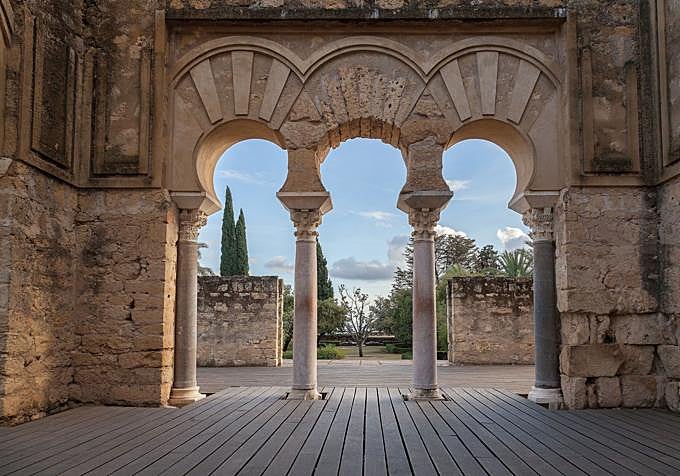
Above all, its creation was a statement of authority - a monumental declaration of a caliphate determined to project its power, wealth and splendour to the world.
Yet this majestic complex was not destined to endure. It is said that during the successive wars that ravaged al-Andalus, Medina Azahara was destroyed between 1010 and 1013. However, recent studies carried out by the geological and mining institute and four universities suggest that a series of earthquakes in the 10th and 11th centuries weakened and eventually caused the collapse of the complex.
The ruins of the city began to be professionally excavated in 1911 and were declared a site of cultural interest in 1923. Only ten of the city’s 112 hectares have been excavated, although this area includes the principal palaces.
In July 2018, the site was declared a Unesco World Heritage Site.
Extraordinary ambition
Historical sources indicate that as many as 10,000 people worked on the city each day, reflecting the extraordinary scale of Abd al-Rahman’s ambition. He spared no expense, regarding nothing as too precious for a city intended to embody the power and magnificence of his realm. Deep violet and crimson-veined marble, gold and precious stones, the exceptional craftsmanship of skilled stonemasons and the celebrated artistry brought from the Byzantine world all combined to create the splendour of this remarkable undertaking.
The city unfolded across three terraces, rising in majestic tiers within a surrounding fortified wall. The royal palace occupied the upper and middle terraces, commanding the landscape below, while the lowest level was set aside for residential quarters and the mosque, built just beyond the city walls.
At its highest point rises the ‘upper hall’, its space arranged in five arcaded aisles. Below it lies the ‘rich hall’, divided into three naves by arches of red and bluish marble. Its intricate ornamentation and the sumptuousness of its materials gave this richly adorned chamber its name. Beyond it lay the baths and, opening out from the palace, the upper garden, once a place of extraordinary beauty. The garden unfolded across four distinct quarters, their point of intersection marked by a pavilion and four pools. One of them, facing the rich hall, gave rise to a legend that mercury lay hidden beneath its waters, casting a thousand shifting colours across the splendour of the great chamber.
Guided tours are available, as well as personal and night visits. Those wishing to discover more about this historic city should visit the on-site Medina Azahara museum.
![[]](http://static.vocstatic.com/voc26/latest/assets/images/favicon/surinenglish/apple-touch-icon-57x57.png)