
Andalusian Summer escapade
Cool off in El Cantal
Discover the rich story behind La Cala del Moral’s coastal walk, from civil war refuges and pirate watchtowers to endangered local plant life
Javier Almellones
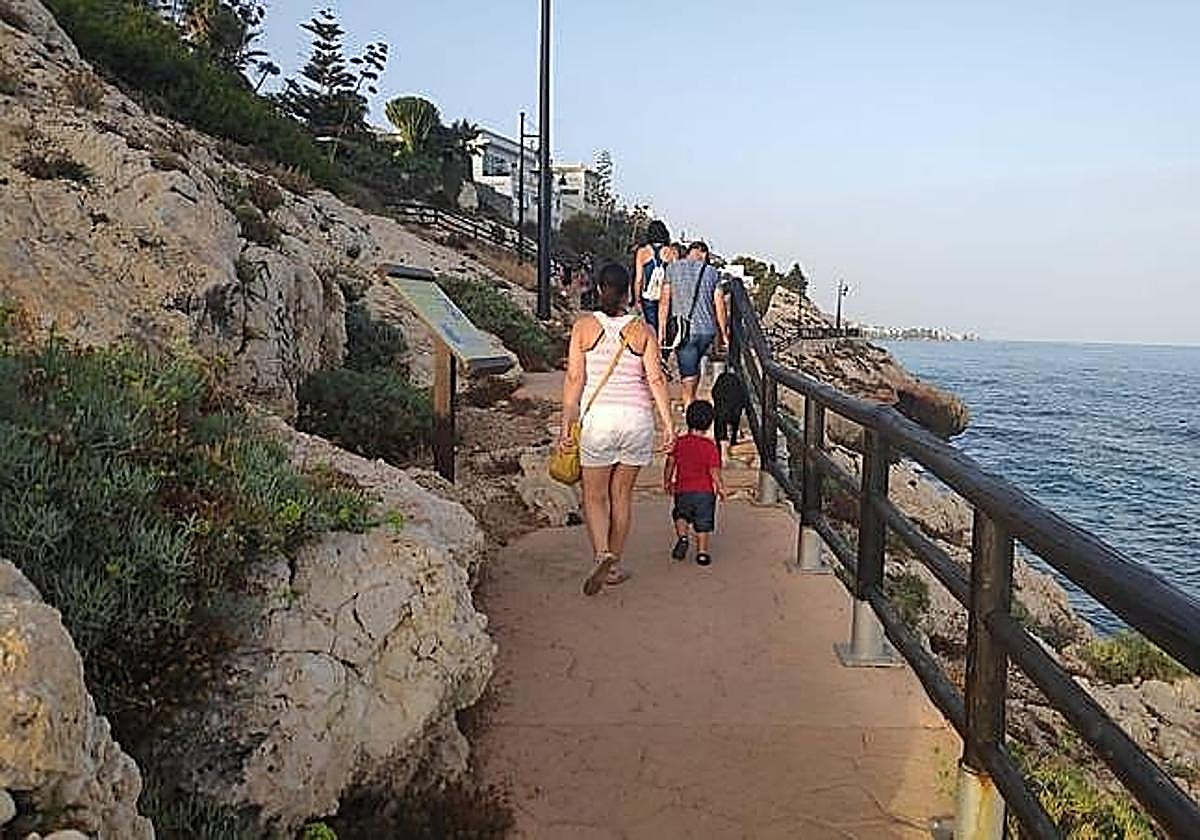
Every summer thousands of people stroll along the promenade in the El Cantal cliffs area of La Cala del Moral (Rincón de la Victoria) to enjoy the spectacular views over the Mediterranean and pass through its famous tunnels, which provide a brief but welcome respite from the heat.
However, this short one-kilometre stretch of coastline has much more to offer than sunsets and picture-postcard views. Hidden amongst its cliffs are traces of the old railway line, a plant found nowhere else in the world, remnants of the Civil War, vestiges of a complex defensive system and even clues that help us understand one of the province’s most unique geological landscapes.
It’s hard to imagine now, but the Cantal tunnels were excavated for the historic Malaga-Ventas de Zafarraya railway, popularly known as the ‘Cochinita’. For much of the first half of the 20th century, this train linked the city with the Axarquía along one of the greatest feats of engineering.
The train stopped running in the 1960s and now the tunnels remain the promenade’s defining feature, allowing visitors to walk along a stretch that retains much of its historic character.
Native plant
One of Andalucía’s great botanical treasures grows amongst the crevices of the cliffs. The Malaga evergreen (Limonium malacitanum) grows naturally only along a narrow stretch of coastline between Malaga and Granada.
The area known as the Cantal Bajo is home to one of its few remaining populations. It requires limestone, plenty of sun and sea spray to survive; a combination of conditions found in only a handful of coastal areas in Andalucía. Its vulnerable status has led to it being classified as an endangered species, so simply walking carefully without trampling its habitat is also a way of contributing to its conservation.
Very few walkers take the detour to climb up to the Cantal watchtower. However, it is well worth the effort. This structure, which was originally built in the 16th century, formed part of the coastal surveillance network that for centuries warned of the arrival of pirates using smoke and fire signals. Today it no longer keeps watch for enemy vessels, but it remains one of the best vantage points from which to admire the views. Late afternoon or early morning are the best times to visit.
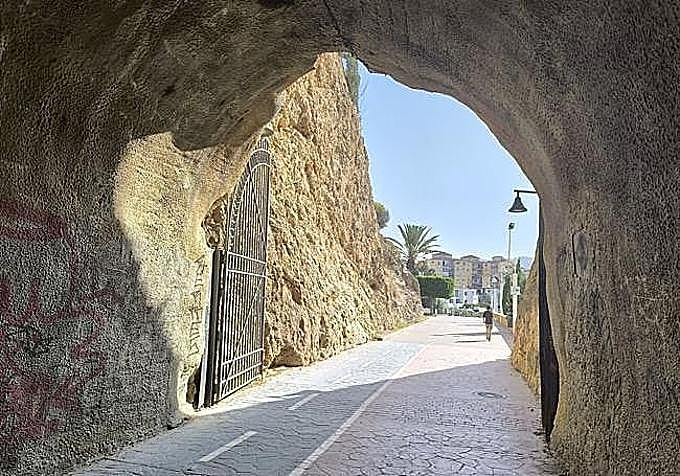
El Cantal was also the scene of one of the most dramatic episodes of the Civil War: La Desbandá. In February 1937 the railway tunnels served as a refuge for some of the population fleeing Malaga along the Almeria road (now the N340 coastal road) as they were bombarded by Spanish, Italian and German ships and planes. There are still bullet holes visible on the rock serving as a reminder that this landscape, now associated with leisure and tourism, has a tragic past.
Caves
Although the walk takes you along the Cantal Bajo, the area forms part of the same limestone cliffs that extend towards the area known as Cantal Alto, where the caves, Cueva del Tesoro and Cueva de la Victoria, the Higuerón gallery and others can be found.
They cannot be accessed from the walkway, but the walk goes over the very same geological formation that the sea has shaped over millions of years and which explains the existence of both these caves and the cliffs.
Most of the Malaga coastline consists of open beaches and promenades but El Cantal completely breaks with this image. This rocky landscape is one of the few areas of cliffs along the province’s coastline and offers a very different perspective of the Mediterranean.
Although, admittedly, it is not quite as spectacular as Maro-Cerro Gordo cliffs on the border between Malaga and Granada provinces, it is thanks to the unique geology of El Cantal that the native Malaga evergreen plant, the cave system and the old railway tunnels exist, making it one of the most distinctive landscapes on the Costa del Sol.
![[]](http://static.vocstatic.com/voc26/latest/assets/images/favicon/surinenglish/apple-touch-icon-57x57.png)