
Andalusian summer escapade
Can you see a monkey?
From historic watchtowers and summer music festivals to the debate over its mysterious name, Punta de la Mona offers one of the Costa Tropical's richest views
J. R. / C. R. / S. P.
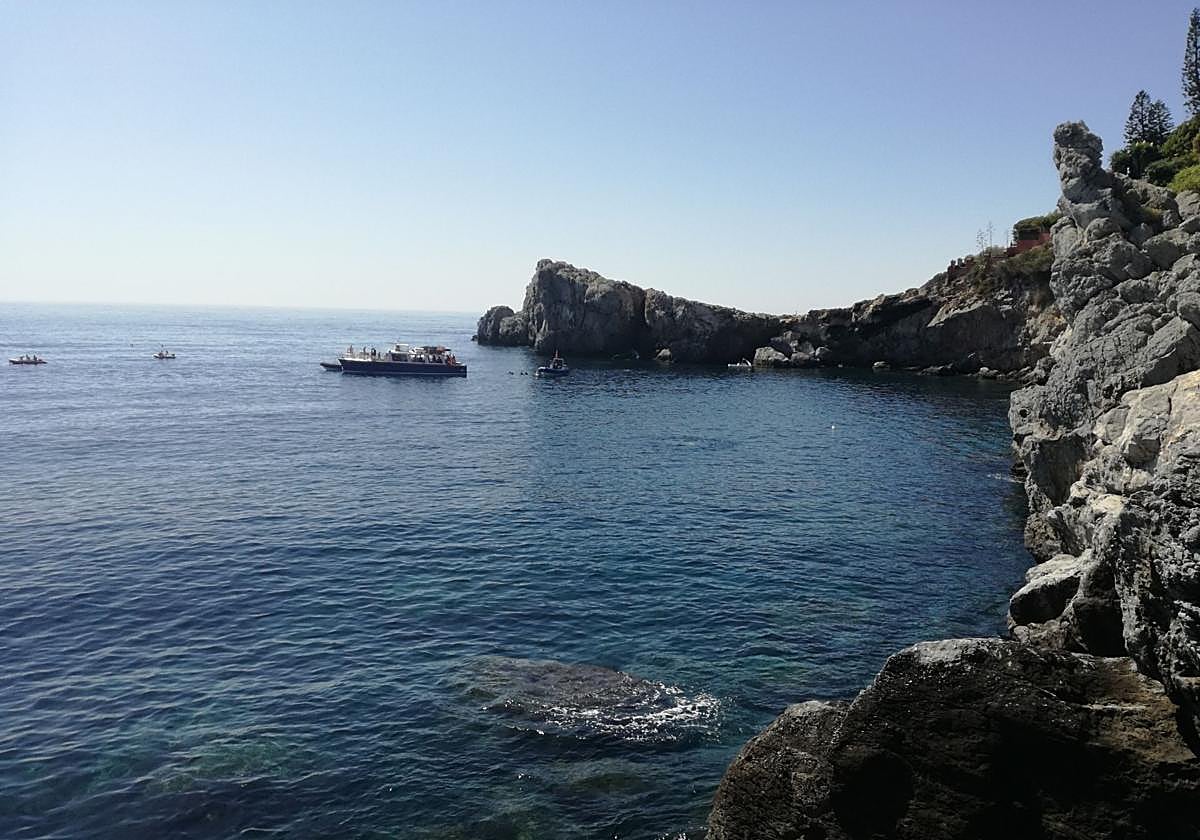
Punta de la Mona lighthouse on the headland of the same name serves not only as a navigation point, but also as one of the best viewpoints on Granada province’s Costa Tropical. It offers panoramic views of the Mediterranean Sea and surrounding mountains and is a quiet spot, making it ideal for getting away from busier areas along the coast.
A visit can be combined with a trip to La Herradura or Almuñécar (or both), which offer a wide range of summer activities from kayaking and snorkelling to enjoying a lazy day on one of the many beautiful beaches or exploring the cultural and historical sites of the area.
For nature lovers, the Punta de la Mona cliffs are home to some native Andalusian plant species and the lack of soil and presence of salt means that only a few types of plants are able to survive there. Three endangered species that can be found there include sea fennel, sea lavender and white rosemary.
The Torre Punta de la Mona was originally built as a watchtower in the 1700s and was converted to a lighthouse in 1992. When it was first built, communication signals could be sent between Almuñecar’s San Miguel castle, La Herradura castle and Torre de Cerro Gordo on the other side of La Herradura bay, to warn of pirates and other attacks. All of the castles and watchtowers can be visited today.
Festival
In fact the Noches en el Castillo de La Herradura (nights at La Herradura Castle) festival is taking place from Wednesday 19 to Saturday 22 August in the castle gardens, with a mix of classical and pop music, including Filip Miskovic, who was the winner of the 2025 Andrés Segovia international guitar competition in La Herradura in November 2025. He will be performing on Wednesday.
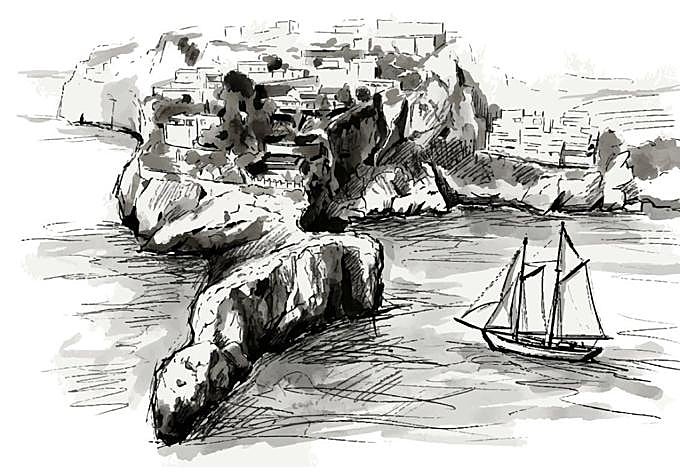
Punta de la Mona (literally monkey point) has a curious name with a number of theories behind its origins. Although there is no definitive explanation, researchers and historical archives agree that one of these theories has the strongest documentary support.
This history is closely linked to the Mediterranean of the 16th century, a sea that became the scene of constant clashes between the Spanish monarchy, the Ottoman Empire and Barbary pirates. Captain Martín de Figueroa documented that military context, which was later studied and compiled by the poet, professor and Hispanist Tomás Hernández Molina, who has researched the strategic importance of this stretch of Andalusian coastline.
The special plan for the protection of the historic-artistic site of Almuñécar and the documentation held by the Visit Almuñécar historical archive, indicate that the place name may derive from the Arabic term ‘muna’ or ‘munya’, a word used in the al-Andalus period to mean estates, places of recreation or elevated sites with sweeping panoramic views.
Sailors
Following the Reconquista, many names of Arabic origin were phonetically adapted to Spanish. Over the centuries, this linguistic evolution might have transformed the word ‘muna’ into the current ‘mona’, an explanation supported by experts.
However, among the sailors of the Costa Tropical, the strongest theory is that the name is linked to navigation rather than to linguistics. Those approaching La Herradura bay by sea claimed that the outline of the rocks, silhouetted against the horizon, resembled a reclining monkey with its head turned towards the water.
Before the advent of modern navigation systems, this sort of visual reference was common among sailors, who used mountains, cliffs or rock formations to recognise the coastline.
There is a third explanation which links the name to the presence of Barbary macaques in the caves and cliffs of this stretch of coastline during the Middle Ages, similar to the famous macaques of Gibraltar.
This story has been passed down through the generations among locals and fishermen, although to date there are no zoological records, historical documents or archaeological evidence to confirm the existence of macaques in the area. There are a number of other theories about where the name comes from and the debate remains open. If you go to Punta de la Mona, look to see if you can see the outline of a reclining monkey.
![[]](http://static.vocstatic.com/voc26/latest/assets/images/favicon/surinenglish/apple-touch-icon-57x57.png)