
Malaga CF: Plan confirmed for new 55,000-seater stadium at University site with completion targeted for 2032
A new report backed a move away from La Rosaleda, warning that rebuilding the current ground would restrict capacity and trigger strict financial fair play penalties

Malaga
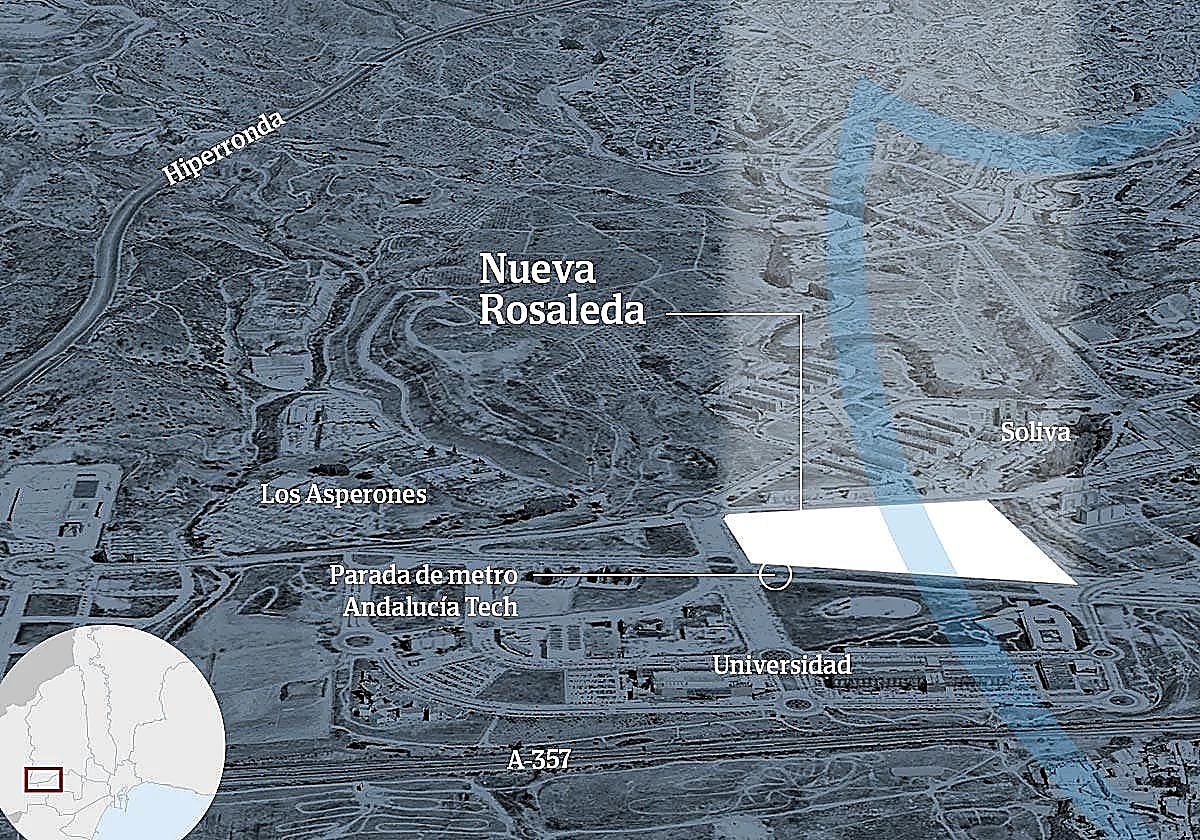
Malaga CF's new football stadium will be built on land in the University expansion area after the city's public authorities formally approved the ... site on Friday. This followed a detailed feasibility study comparing five potential locations.
The new stadium will have an initial capacity of 55,000 spectators on a 66,037-square-metre site in the Teatinos district.
The base tender budget has been set at 414 million euros, with Malaga mayor Francisco de la Torre saying the project could be completed by 2032 following three years of design work and a further three years of construction.
"Of course there's nostalgia for La Rosaleda, but being level-headed, this is the best solution," he said.
The decision was announced by the joint owners of the club's current La Rosaleda stadium (Malaga city hall, the Andalucía regional government and Malaga provincial authority), together with Juan Alba, the general coordinator for Infrastructure and Projects.
Study ranked University site highest overall
The study, commissioned by Promálaga and carried out by a consortium led by TYPSA and Fenwick Iribarren with the collaboration of Legends Global and Andersen, concluded that the University site was the strongest option in every category assessed.
Initially, five locations were considered. Two, Lagar de Oliveros and Manzana Verde, were ruled out early because of site constraints and the impact the latter would have had on plans to build 900 homes.
The remaining options were the University site, San Cayetano in Puerto de la Torre and the redevelopment of the existing La Rosaleda stadium.
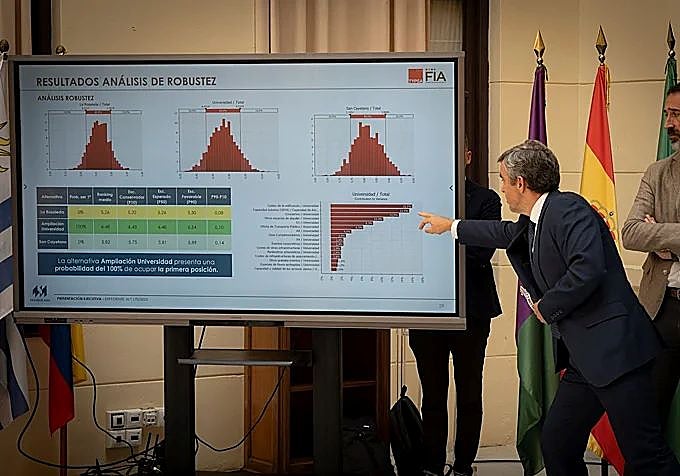
The assessment examined physical constraints, accessibility, site capacity, planning and urban integration before evaluating the three finalists against seven principal criteria and 68 measurable indicators. The University site achieved the highest overall score.
Located close to the university's Paraninfo assembly hall and The Green Ray innovation centre, the site is bordered by Bulevar Louis Pasteur, Avenida Francisco Trujillo Villanueva, the Arroyo de Las Cañas stream and Avenida Navarro Ledesma.
The study highlights its approved planning status, advanced infrastructure works and strong public transport connections, including the metro, bus network and nearby road links.
According to the report, the University site also requires the shortest planning process of the three finalists and offers the best balance between accessibility, urban integration and future expansion.
The study found that the location is best suited to meeting UEFA and FIFA requirements for major international tournaments because of its capacity and the surrounding space available for logistics, security screening and accreditation areas.
Why La Rosaleda redevelopment was rejected
The study also concluded that the University option represents the best value for money. Building the new stadium would cost an estimated 414 million euros, compared with 434 million euros to demolish and rebuild La Rosaleda with a reduced capacity of 43,000 seats.
Building a new stadium at San Cayetano would cost an estimated 588 million euros, largely due to the need to build extensive new parking facilities.
The report notes that redeveloping La Rosaleda would require the complete demolition of the existing stadium, forcing Malaga CF to play in a temporary venue throughout the construction period.
That, it says, would increase costs while reducing attendances and matchday income, with further sporting and financial consequences because lower revenues would reduce the club's spending limit under La Liga's financial regulations.
Better transport links
Transport was another key factor in the decision. The University site can accommodate around 4,300 public transport users per hour, compared with 2,300 at La Rosaleda and just 600 at San Cayetano. It also benefits from extensive surface parking, with spaces available at nearby university faculties that are typically unused during evening matches and weekend events.
The study also concluded that the University location offers the greatest potential to attract private investment, reducing the public contribution required for the project. It received the highest score for its ability to host concerts, conferences and other commercial events that can generate year-round revenue.
![[]](http://static.vocstatic.com/voc26/latest/assets/images/favicon/surinenglish/apple-touch-icon-57x57.png)