
Legal
Spanish Supreme Court sets new inheritance transmission precedent
The ruling adresses what happens when an heir dies before accepting their inheritance
Susana Zamora
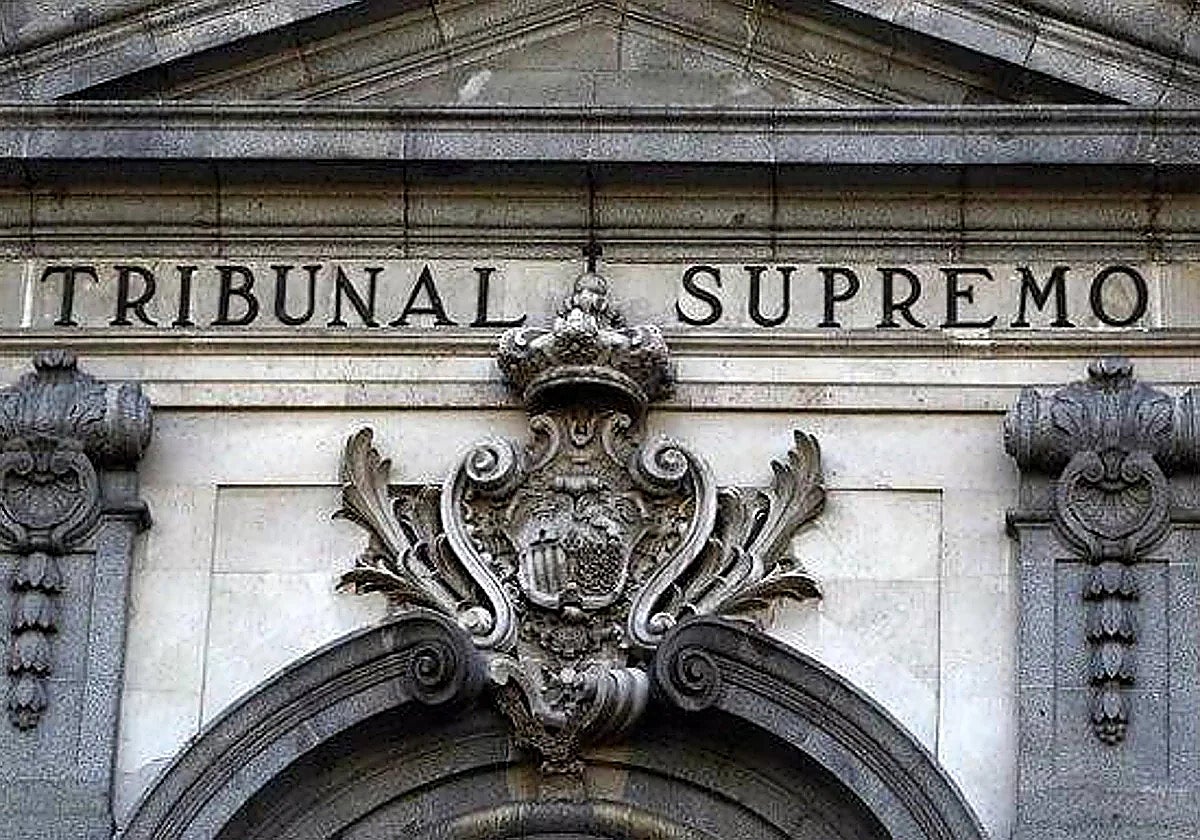
A ruling by Spain's Supreme Court has brought to an end years of debate among property registrars, notaries and lower courts over the scope of inheritance transmission rights.
The case dates back to 1990, when a woman died intestate, leaving behind her husband and three children. One of the children died in 2012 without either accepting or renouncing his mother's estate. He had no descendants and named his father as his sole universal heir.
However, the father also died years later without taking a position on either his late wife's estate or that of his son. The two surviving siblings eventually executed a deed of partition and distributed the assets between themselves, claiming entitlement both in their own right and through inheritance transmission rights.
The dispute arose when they attempted to register a property with the land registry. The registrar refused registration, arguing that the widow of the deceased son should have been involved in the inheritance proceedings because she might hold inheritance rights that required legal protection.
The courts reached conflicting conclusions. The trial court supported the registrar's position, while the provincial court of Valencia sided with the siblings and ruled that the widow did not need to participate. The case ultimately reached the Supreme Court.
Right of transmission
At the centre of the dispute lay the interpretation of a law.
Until now, Supreme Court doctrine established in 2013 held that when an heir dies without accepting or renouncing an inheritance, their successors acquire the position of the original deceased person directly. That ruling stated that the heirs would "inherit directly from the original deceased and, through a separate succession, from the deceased transmitting heir".
The siblings relied on that interpretation to argue that their mother's assets had never become part of their late brother's estate and therefore could not generate any compulsory inheritance rights in favour of his widow.
The Supreme Court has now taken a different view, acknowledging that the issue had generated significant practical difficulties and growing legal uncertainty, stating that it was causing "distortions in notarial and registry practice".
Return to the traditional approach
The court concluded that the traditional interpretation of Article 1006, which prevailed before the 2013 judgment, better reflects the principles of Spanish inheritance law.
Under this approach, the heirs of a deceased heir do not inherit assets directly from the original deceased person. Instead, they receive those rights through the estate of the heir who died before accepting or rejecting the inheritance.
The court justified the change on the grounds that the traditional approach fits more coherently within Spain's succession system and produces fairer outcomes in disputes involving creditors and beneficiaries entitled to a reserved share of an estate.
In particularly strong terms, the ruling states that the revised interpretation allows courts to reach "more socially appropriate and fairer solutions to the problems most commonly encountered in practice".
One immediate consequence of the new doctrine is that the assets to which the deceased son was entitled from his mother's estate must now be included when calculating his widow's statutory inheritance rights.
The Supreme Court held that the right to accept or renounce an inheritance forms part of the deceased heir's estate and must therefore be taken into account when determining the surviving spouse's usufruct entitlement.
According to the ruling, when the law provides that heirs acquire "the same right" held by the deceased, this occurs precisely because they succeed to the estate of the transmitting heir. As a result, the heirs "inherit from the original deceased through the estate of the transmitting heir".
On that basis, the court concluded that "for the purpose of calculating the widow's reserved share, the assets to which her late husband was entitled from his mother's estate must be included".
The court also highlighted a crucial practical consequence: "the widow's participation is required in the partition of the original deceased person's estate".
The Supreme Court therefore overturned the ruling of the provincial court of Valencia, upheld the registrar's decision and dismissed in full the claim brought by one of the heirs.
Review the latest crime and judicial news reports
![[]](http://static.vocstatic.com/voc26/latest/assets/images/favicon/surinenglish/apple-touch-icon-57x57.png)