
Economy
Spanish economy: arrival of more tourists will 'soften' impact of Iran war
Think tank Funcas warns that if tourists do not choose Spain or spend less during their trip, the situation will worsen over the year
Ana Cantero
At the press conference on Wednesday where think tank Funcas presented its updated economic forecasts for Spain, Director of Economic Outlook and International Economics Raymond Torres was more optimistic than expected.
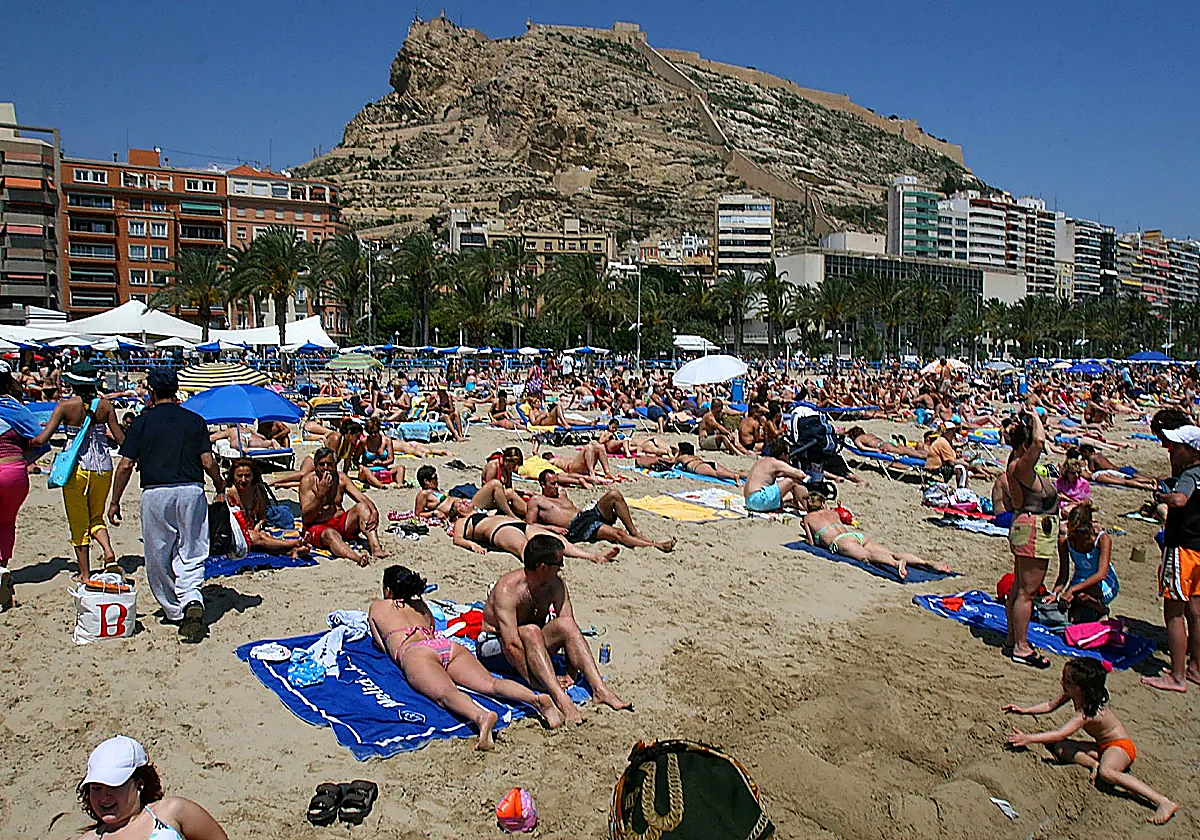
According to Funcas, tourism will grow again in Spain because destinations in the Middle East "are not at all attractive for obvious reasons". "Perhaps tourism will soften the blow of these two difficult quarters ahead and this makes our forecasts relatively optimistic. If tourists didn't come or if they came but spent less, the scenario would be worse," Director General Carlos Ocaña said.
"We don't have much experience with how tourism behaves in situations like the one we're in now," he stated. Ocaña pointed out that it's impossible to predict "how long tourists will stay or how much they'll spend" as well as whether they'll use "more expensive services or try to save money by going to cheaper accommodations or restaurants". However, his estimates point to record visitor numbers approaching or reaching 100 million tourists in 2026.
Taking all this into account, Funcas has cut its forecast for GDP growth in 2026 by two tenths to 2.2 per cent compared to the February estimate, but maintained the projection for 2027 at 1.8 per cent.
Torres said the slowdown in growth will mainly stem from weaker domestic demand and consumption, both under pressure from higher inflation, which is eroding the purchasing power of households and businesses. In particular, the think tank has raised its inflation forecast for this year from 2.5 per cent in February to 3.3 per cent in May, driven by rising energy and raw material costs.
This comes despite the package of measures the government approved, which are likely to remain in place until October. Reversing them, Torres warned, could prove difficult: it would push inflation 0.3 per cent above current forecasts.
"We believe it is necessary to support vulnerable sectors and households, but not through blanket cuts, because they benefit those who don't need them and are hard to reverse," he said, drawing on the experience following Russia's invasion of Ukraine.
If the measures are rolled back in June, as currently planned, inflation could rise to 3.8 per cent that month or even approach four per cent, according to the organisation's projections.
Eurozone stagnation
Funcas stated that the eurozone's economic growth during the first quarter of the year was "a meager tenth of a percent". "It's practically stagnant," Ocaña stated.
The good news, nonetheless, is that Spain's growth far exceeds that of the rest of Europe. This cannot be sustainable long-term, if the countries Spain trades with don't grow.
Asked whether this points to stagflation, Ocaña said the term "belongs to the last century", though he acknowledged that, in some ways, it applies. "Very weak growth and high inflation is something we already have in the eurozone."
The psychological factor
Neither markets nor consumers are behaving as if the war could drag on. According to Torres, they are perceiving the crisis as something temporary. Although the uncertainty is clearly impacting investment, Torres said that companies are maintaining or postponing projects, but not yet cancelling them.
For the time being, the loss of purchasing power resulting from war-induced inflation is absorbed by "saving less, but if the crisis were perceived as more permanent, the reaction would be different".
This shift in mindset could have a particular impact on the housing market, especially if banks raise interest rates and tighten lending requirements, leading to a loss of potential buyers.
![[]](http://static.vocstatic.com/voc26/latest/assets/images/favicon/surinenglish/apple-touch-icon-57x57.png)