
Economy
Spanish car industry profits plunge 56 per cent as electrification drive and geopolitical tensions take their toll
Manufacturers increased turnover and invested a record amount, but expect production to remain largely flat in 2026
José A. González
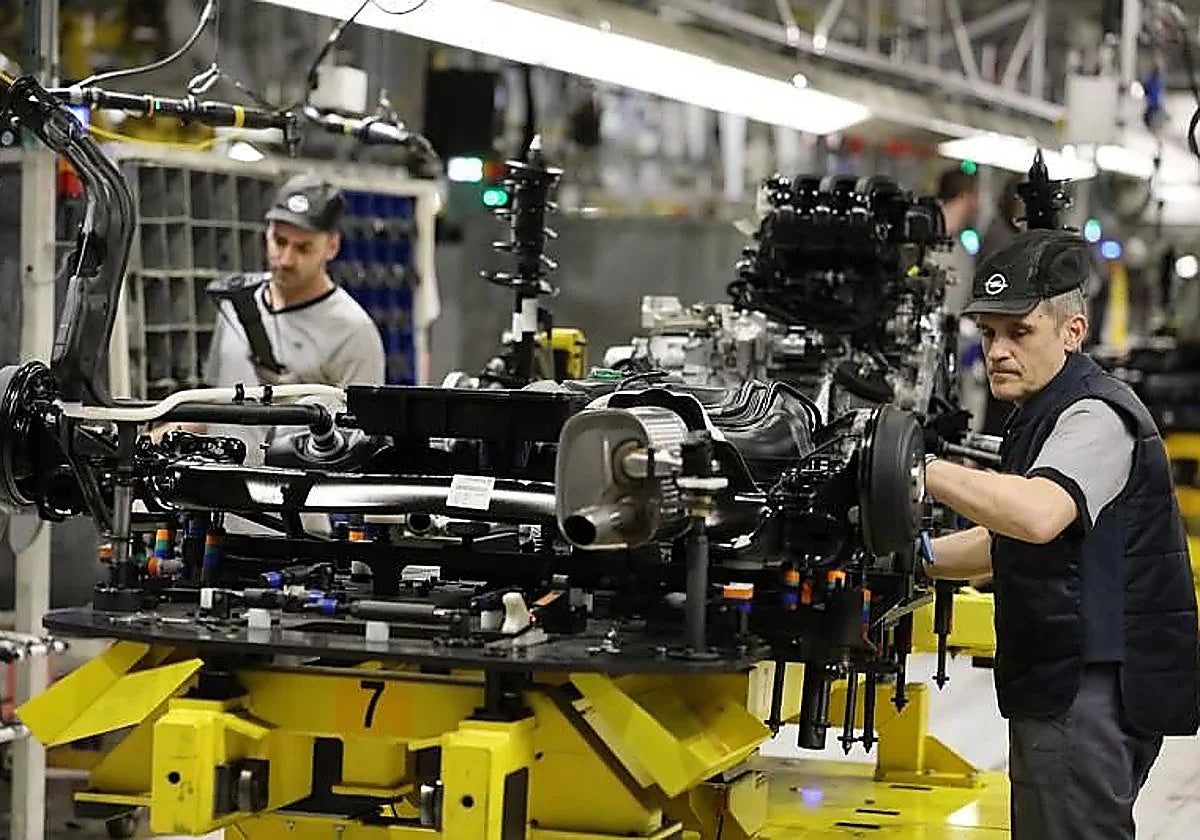
Tariffs, the shift to electric vehicles, geopolitical uncertainty, supply chain pressures and EU regulations under review combined to make 2025 one of the toughest years for Spain's automotive industry. Although vehicle manufacturers operating in Spain increased their turnover by 3.8 per cent to 80.3 billion euros, net profits fell by 56.3 per cent to 853 million.
"Global trade is undergoing a fundamental reshaping, and the automotive industry sits at the centre of it," José López-Tafall, director-general of Spanish car manufacturers' association Anfac, said as he presented the organisation's annual report.
The sector faces mounting geopolitical pressures, growing US protectionism, trade tensions and a costly technological transition that requires manufacturers to invest billions before demand for electric vehicles reaches the scale needed to deliver returns.
The collapse in profits stands in stark contrast to manufacturers' record investment. In 2025, Anfac members invested a record 3.2 billion euros to adapt their factories for electric vehicle production and secure new manufacturing projects.
"It is a huge effort to modernise plants and safeguard jobs in an economic environment that makes these transitions particularly difficult," López-Tafall said.
Despite the challenges, manufacturers maintained 53,943 direct jobs across their Spanish production sites.
The industry's transition has already affected production lines. Spain built 2.27 million vehicles last year, down 4.3 per cent from 2024 and almost 100,000 fewer than the previous year. It marked the second consecutive annual decline, leaving output close to 2020 levels, when the pandemic disrupted production.
Alongside the conversion of factories for new electric vehicle platforms, weak demand in Europe's largest markets has added further pressure. France and Germany, the main export destinations for Spanish-built vehicles, remain economically subdued, resulting in fewer orders for Spanish plants. Vehicle exports fell 8.2 per cent to 1.95 million units.
Clouded outlook for 2026
Anfac does not expect a significant recovery next year. It forecasts Spanish factories will assemble around 2.26 million vehicles in 2026, broadly unchanged from this year, meaning the industry faces a third consecutive year of stagnant production.
The association expects new car registrations to edge above 1.2 million, while sales of battery electric and plug-in hybrid vehicles should reach around 300,000 units, roughly a quarter of the market, once the new Auto+ incentive scheme comes into effect.
One of the biggest sources of uncertainty stems from Volkswagen, which is cutting costs and reviewing its global manufacturing plans. Asked about the potential implications for Spain, López-Tafall acknowledged that "cost-cutting measures and decisions over where future models are built could affect Spanish plants".
While manufacturing struggled, the domestic market performed more strongly. New car registrations rose 12.9 per cent to 1.15 million vehicles, although they remained below pre-pandemic levels.
Electrified vehicles drove much of that growth. Sales of battery electric vehicles and plug-in hybrids almost doubled to 245,629 units across all vehicle categories. Electrified passenger cars accounted for 225,617 registrations, representing 19.7 per cent of the market.
López-Tafall stated that Spain's transition to electric transport continues to gather pace, although it still lags behind the European average because it started later.
"We're creating an artificial sense of urgency that makes it seem as though we're falling behind," he said.
Anfac believes environmental targets must better reflect manufacturers' capacity, market demand and the pace at which charging infrastructure expands. The association says the successful rollout of the Auto+ incentive scheme will prove crucial to sustaining growth.
Although the programme applies retrospectively from January, the government has yet to publish its full details. López-Tafall warned that the 400 million euros allocated to the scheme would probably cover purchases only until October.
"We will fight to ensure that anyone buying an electrified vehicle after October can still receive financial support," he said.
Anfac fears that running out of funding would once again create uncertainty among consumers and slow sales just as demand begins to gather momentum.
The association also places its hopes in the Spain Auto 2030 Plan, developed jointly with the Ministry of Industry and the wider automotive sector. The strategy aims to strengthen battery production, improve access to competitively priced energy, encourage innovation and attract new manufacturing investment.
Industry targets absenteeism
Absenteeism has become one of the automotive industry's biggest concerns. Around 5,200 workers fail to report for work each day, equivalent to "having an entire factory shut every day".
Anfac states that absenteeism directly undermines the competitiveness of Spanish plants, which already face rising energy costs, the transition to electric vehicle production and intense competition to secure future vehicle programmes.
López-Tafall called for "constructive solutions" built on the industry's tradition of dialogue between employers and unions.
"If we turn this into a political confrontation, we'll be making a serious mistake," he said.
Reducing absenteeism forms one of the key priorities of the Spain Auto 2030 Plan, which aims to protect industrial jobs and improve productivity across Spain's automotive manufacturing sector.
Track regional finance, business and economy news
![[]](http://static.vocstatic.com/voc26/latest/assets/images/favicon/surinenglish/apple-touch-icon-57x57.png)